Issued by the Catholic Center for Studies and Media - Jordan. Editor-in-chief Fr. Rif'at Bader - موقع أبونا abouna.org

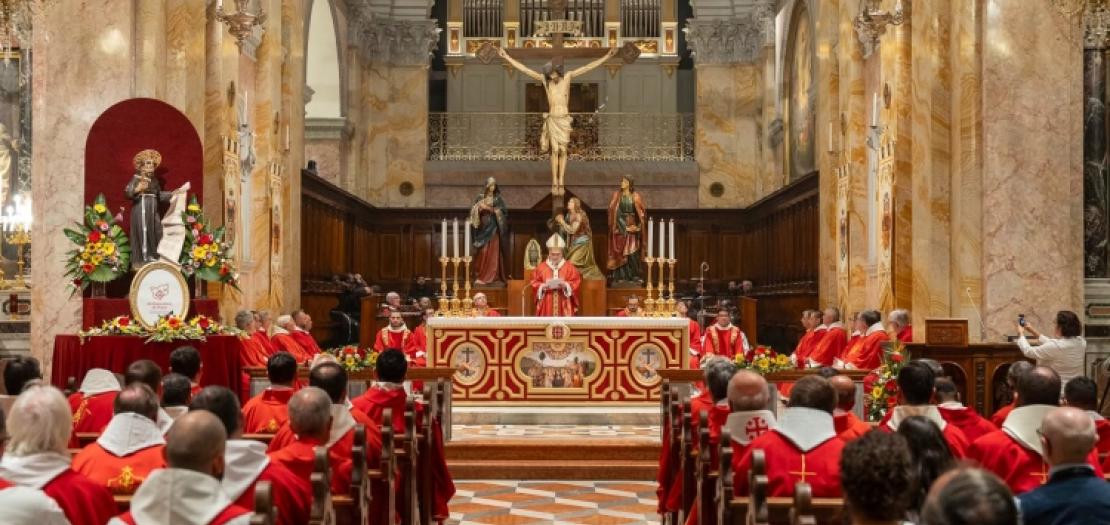
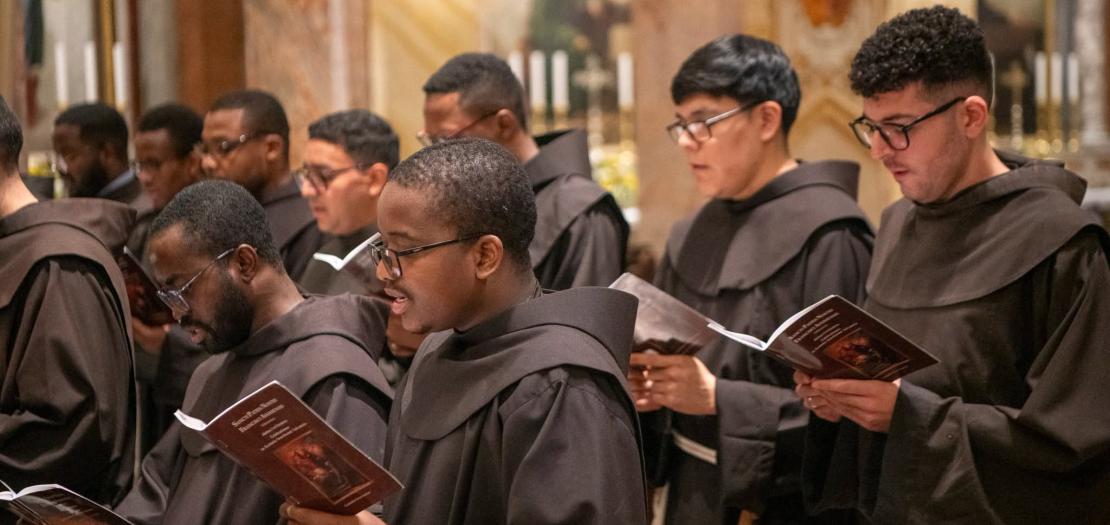
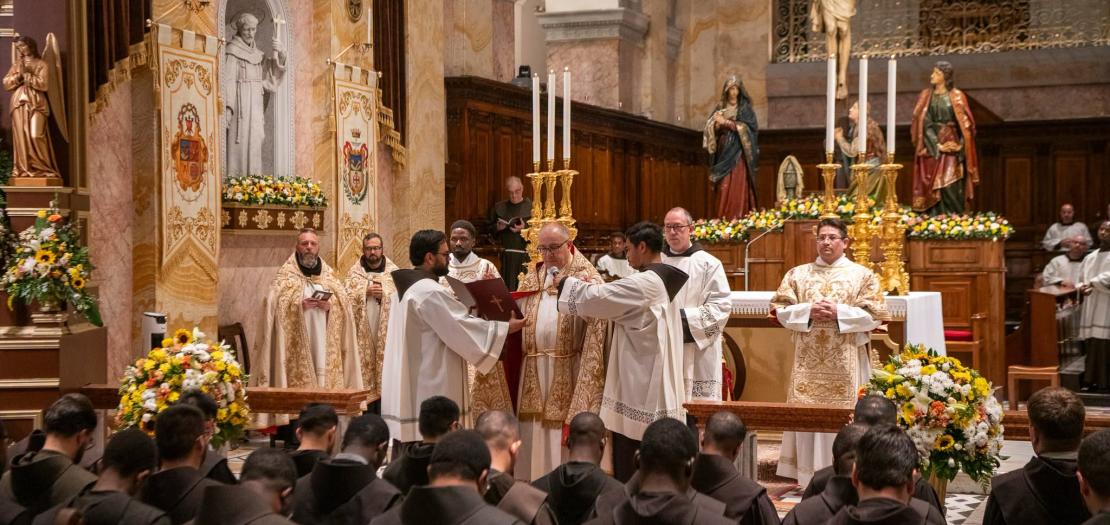
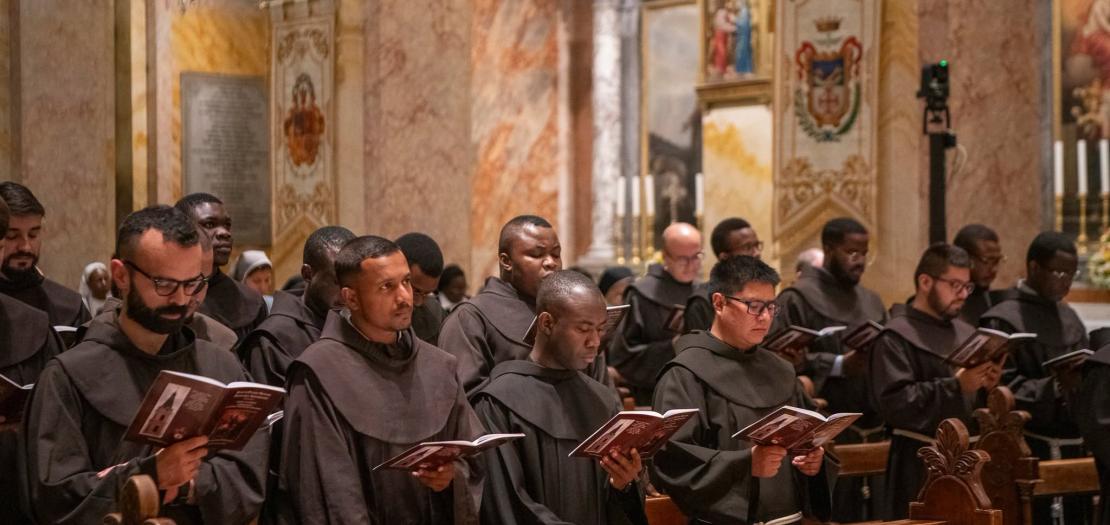
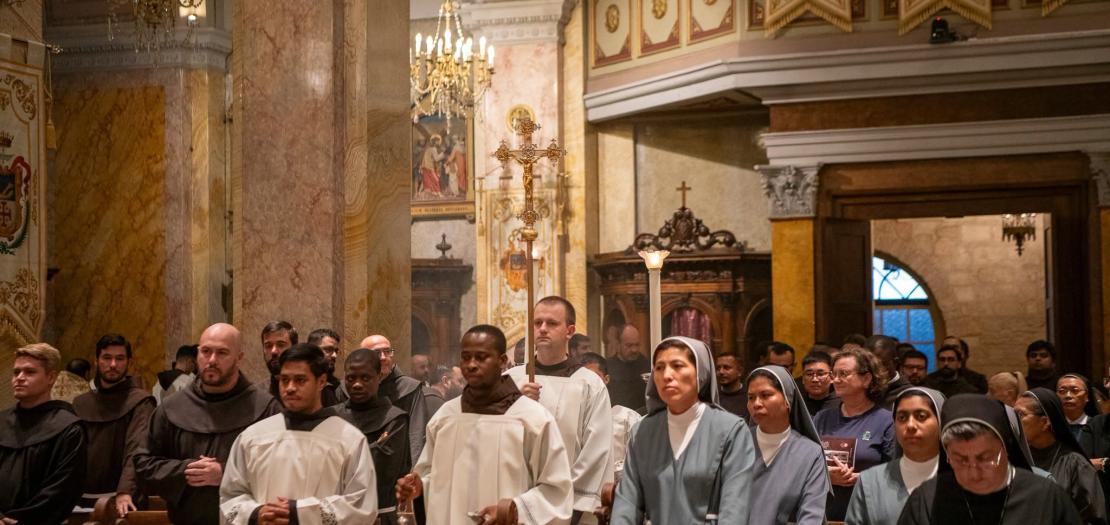
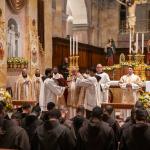
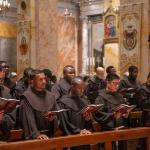
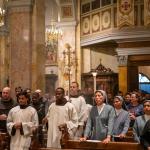
Eight hundred years after the Transitus, Saint Francis is still alive. His teachings, his spiritual legacy, and his charisma continue to represent pillars not only of the Franciscan family, but of the entire Catholic Church. And as every year, the Custody of the Holy Land has celebrated the Passover of the Seraphic Father in the church of Saint Savior in Jerusalem.
A celebration that this year took place in an extremely particular context. On one hand, there is a land wounded by violence, by war, and with a crisis looming over the entire Middle East. On the other hand, there is the eighth centenary of the Transitus that imposes on the Custody and the Order of Friars Minor that question raised by the Latin Patriarch of Jerusalem, Cardinal Pierbattista Pizzaballa, during Sunday morning's homily: "What form does the Gospel take today in our personal life and in our communities?"
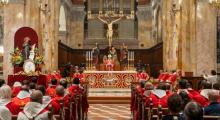
A question that questions Franciscans and faithful in a feast that had its first celebratory moment in the solemn Vespers of October 3, presided over by the Custos of the Holy Land, Fr. Francesco Ielpo. In a church that gathered the friars of the various convents and the faithful of the Old City, Fr. Ielpo guided the community in the memory of the last moment of Francis's life. A passage from life to death experienced as the fulfillment of an existence entirely surrendered to the Gospel. The celebration also took place by plastically representing the last days of the Poor Man of Assisi. In the presence of the Patriarch himself and the Apostolic Nuncio, Mons. Giorgio Lingua, Saturday evening's liturgy saw the historical and spiritual account of Francis's last minutes retraced. The friars read the passages from the sources closest to the Seraphic Father that recounted his last earthly moments. The choice to be laid on the bare earth, the request to read chapter 13 of the Gospel of John, proclaimed during the celebration. Subsequently, the blessing of the friars, as Francis blessed his companions, and that of the bread, then distributed to the faithful. Then, with the candles lit during the liturgy, semidarkness fell across the church. The lights went out leaving only the fire and the one near Francis's altar lit, symbolizing his death and the light of Christ that welcomed the Saint. A Transitus, indeed, marked by the evocation of the flight of a flock of larks that occurred on the evening of October 3, 1226, almost to greet the Alter Christus for the last time.
Sunday morning, however, the Feast took place, still at Saint Savior, with the solemn Mass presided over by the Patriarch (unlike usual, when the Dominicans lead the ceremony). In front of the consuls of Italy (of whom Saint Francis is patron), France, and Spain, representatives of other countries, and in a church crowded with the faithful, the cardinal indicated the Gospel as the starting point for the renewal of the Church and the Custody, called to communicate the life of Christ to the men and women of today.
A second element underlined by Pizzaballa is that of fraternity. Francis saw in the brothers a gift of God. And in a Holy Land crossed by divisions, borders, and different stories, the Patriarch underlined the importance of guarding this sense of fraternity. An ideal that must then become a mission. For the cardinal, in fact, just as the Saint of Assisi met the lepers, so the Church must always approach those who are on the margins. "Even for our Church, renewal passes through the neighbors we avoid, the poor and the sufferings we do not see, the questions that challenge our habits," said Pizzaballa. The eighth centenary, the Patriarch therefore hoped, will hopefully leave "a recognizable fruit" in the journey of the Church and the Custody of the Holy Land, which concluded the celebrations with the second solemn Vespers. During the liturgy, the friars confirmed their profession, renewing before God and the community the choice to follow Christ according to the Gospel in the Franciscan fraternity.
Thus, eight hundred years after the Transitus, the memory of Francis has become in Jerusalem a reminder of the past, a prayer in the present, and a gaze turned to the future: so that the Franciscans presence in the Holy Land may continue to be a service and witness of hope.