Issued by the Catholic Center for Studies and Media - Jordan. Editor-in-chief Fr. Rif'at Bader - موقع أبونا abouna.org

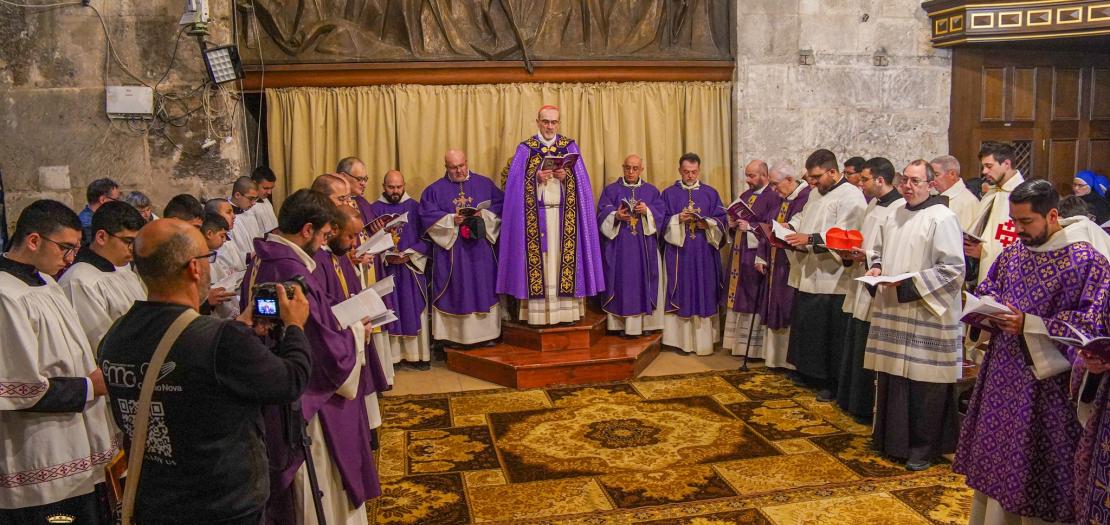
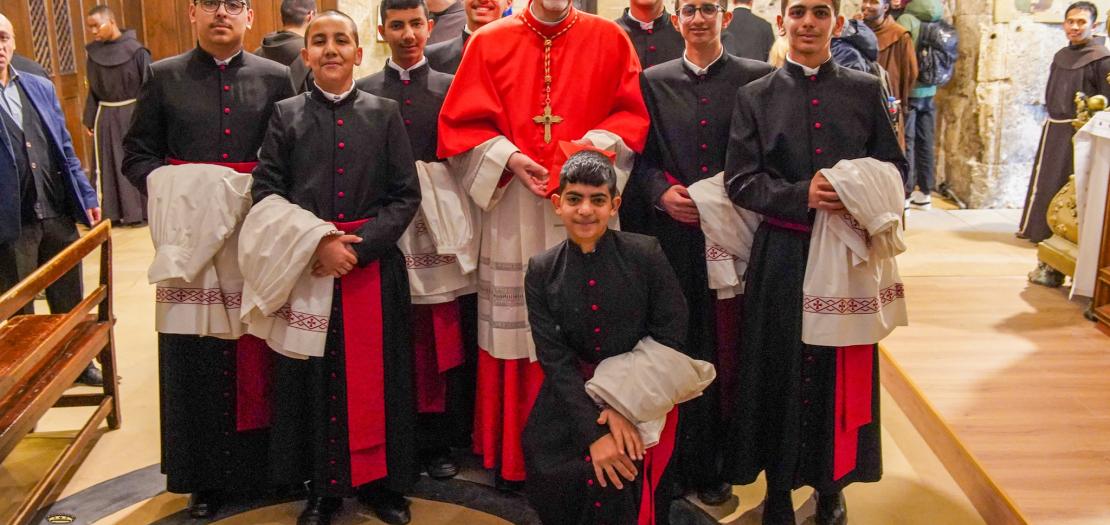
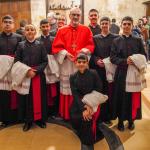
On the first Saturday of Lent, Jerusalem experienced one of the most solemn moments of its liturgical calendar: the official entrance of the Latin Patriarch into the Basilica of the Church of the Holy Sepulcher.
At 2:00pm on Saturday, February 21, Cardinal Pierbattista Pizzaballa crossed the threshold of the Sanctuary, accompanied by two rows of Franciscan friars of the Custody of the Holy Land. His entrance preceded by about thirty minutes that of the representative of the Armenian Church, in accordance with the provisions established by the Status Quo, the complex system of norms that regulates times and modalities of presence of the different Christian confessions in the Holy Places.
After the entrance, the traditional sung procession took place. Starting from the Chapel of the Apparition of the Risen One, the procession followed the route that the Franciscans have walked daily inside the Basilica since 1336, the year that marks the beginning of their stable and custodial presence in the Sanctuary.
After the stop at Calvary, the procession, formed by friars, religious, local faithful and pilgrims, proceeded to the Edicule, the Tomb of Christ, and carried out its traditional three turns around it.
The night vigil between Saturday and Sunday
The following night, the friars of the Custody gathered again at the Holy Sepulcher for the solemn Office of Readings and the vigil celebration, presided over by the Custos of the Holy Land, Fr. Francesco Ielpo. This custom, attested at least since 1754, accompanies all the Sundays of Lent, from the first until Palm Sunday.
According to what is provided by the Status Quo, the Office of Readings takes place in the Chapel of the Apparition with the chanting of the three canticles of the Old Testament. The entire liturgy, in its texts and gestures, highlights the paschal dimension of the celebration, which finds its summit in the proclamation of the Gospel of the Resurrection.
Particularly evocative is the moment of the procession around the empty tomb: here the Benedictus resounds, interspersed with the Latin antiphon recalling the announcement of the angel, "The Angel of the Lord descended from heaven: he rolled back the stone and sat upon it", followed by the Alleluia. The proclamation of the Alleluia, even during the Lenten season, is justified by the centrality of the very place of the Resurrection, where the memory of the paschal event prevails over the penitential expectation.
In the heart of the night, at the end of the Office, the Custos presided over the Sunday Mass at the Chapel of the Crucifixion, on Calvary, thus sealing a celebration that intertwines tradition, liturgy and living memory of the mysteries of Easter.
The Sunday Morning Mass
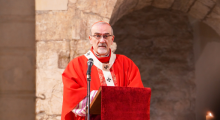
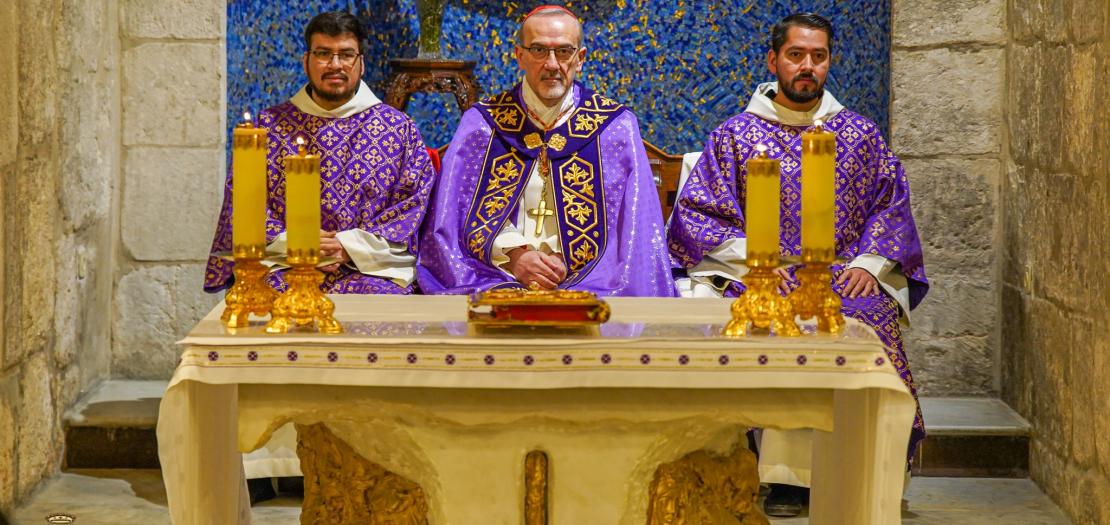
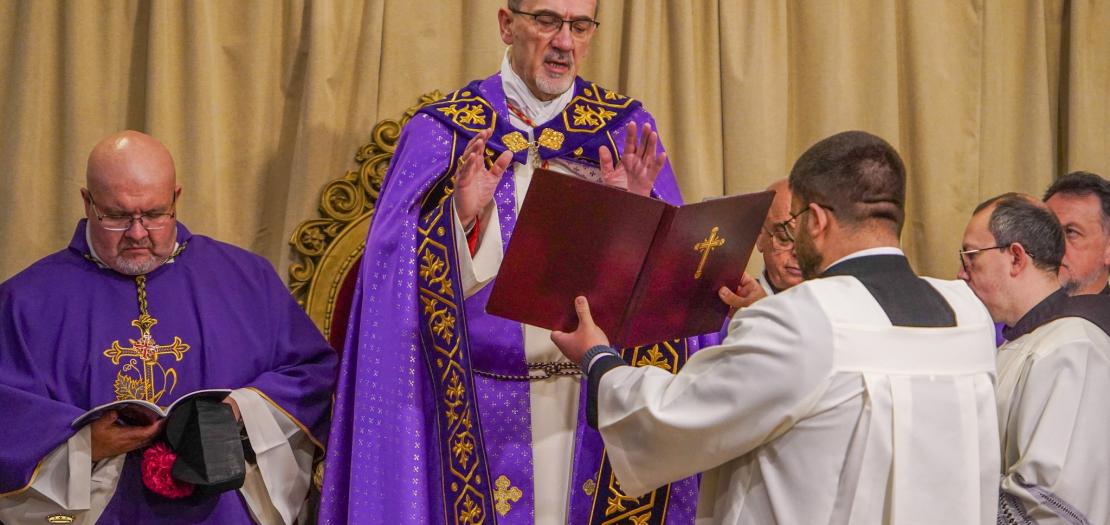
Today, Sunday, February 22, Card. Pizzaballa presided, at the Altar of Mary Magdalene, over the solemn Eucharistic Celebration of the First Sunday of Lent.
In the homily delivered for the First Sunday of Lent, the Patriarch reflected on the account of the temptations of Jesus in the Gospel according to Matthew Mt 4,1 11. It is read as a revelation of the deepest fears that dwell in the human heart: the fear of lack, of not being loved enough, of not being worthy. As in Genesis 3, also in the desert evil insinuates itself as an alternative voice to the Word of God, seeking to make one forget the identity received.
The tempter does not ask Jesus to perform extraordinary gestures, but to doubt his sonship: "If you are the Son…". Christ wins not by opposing force to force, but by remaining steadfast in relationship with the Father, trusting in his Word. Thus, affirms the Patriarch, Lent also becomes for every believer a time to rediscover one's identity as a beloved child and to learn to recognize, among many voices, the one that does not distance us from who we are, but leads us to the truth of ourselves.