Issued by the Catholic Center for Studies and Media - Jordan. Editor-in-chief Fr. Rif'at Bader - موقع أبونا abouna.org

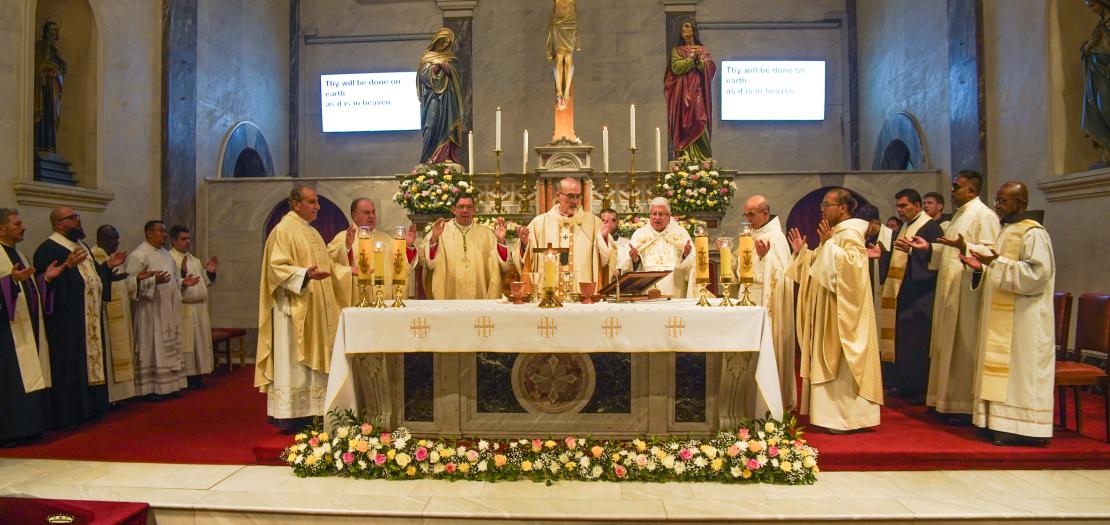
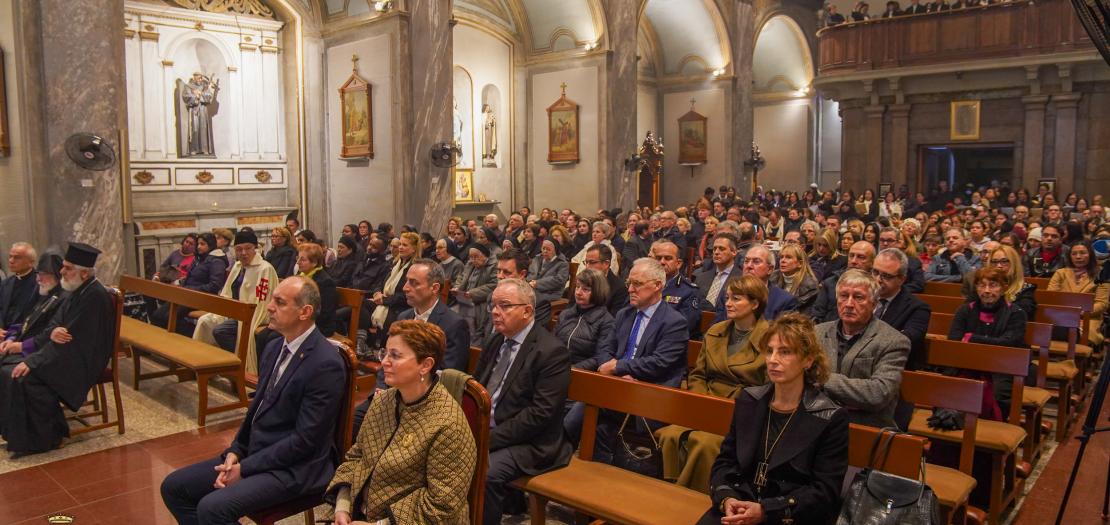
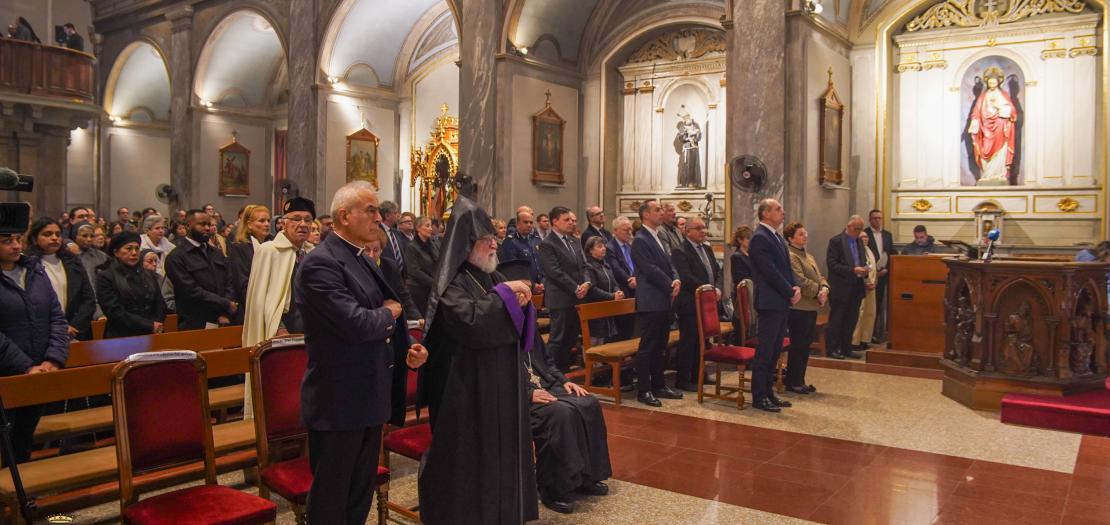
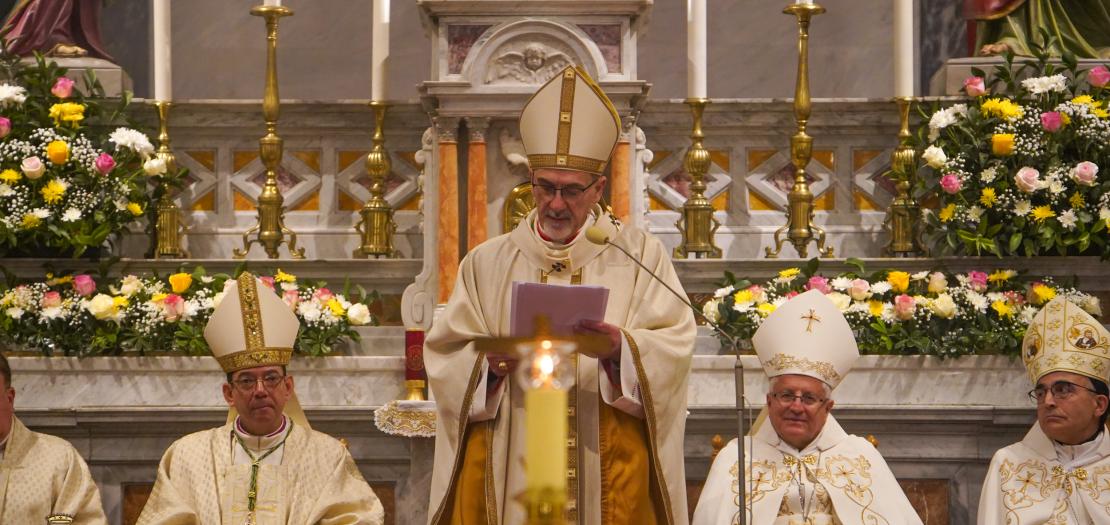
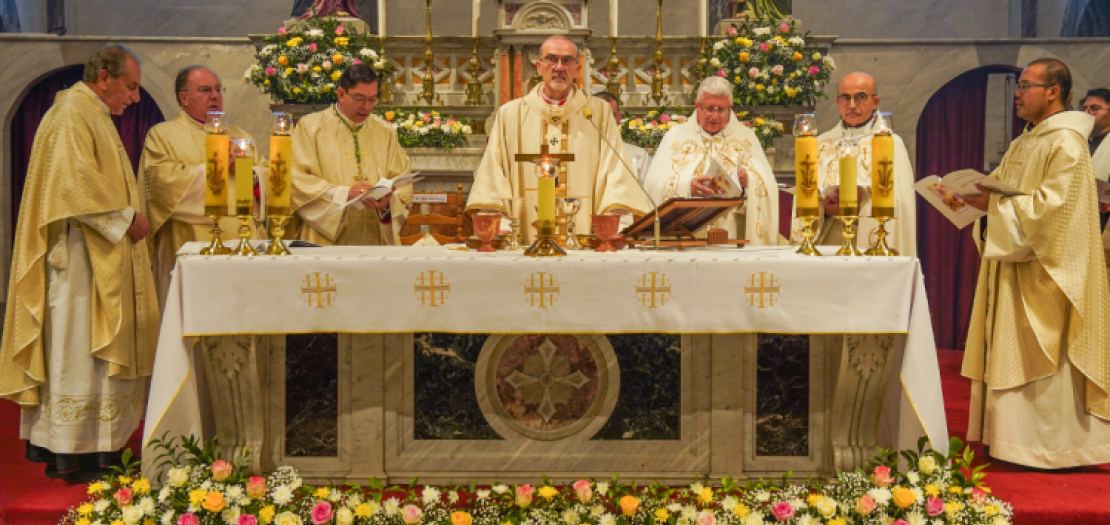
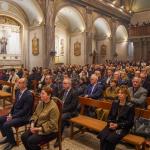
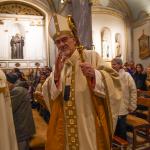
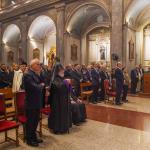
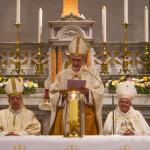
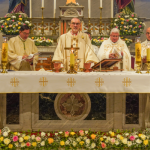
On Saturday, 24 January 2026, the Latin Church and Latin community in Cyprus celebrated the first official annual feast of the Latins of Cyprus, established on the Feast of the Conversion of Saint Paul. The event highlighted the unity and presence of Latin Catholics, as well as their longstanding relations with other Christian Churches and civil authorities.
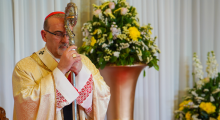
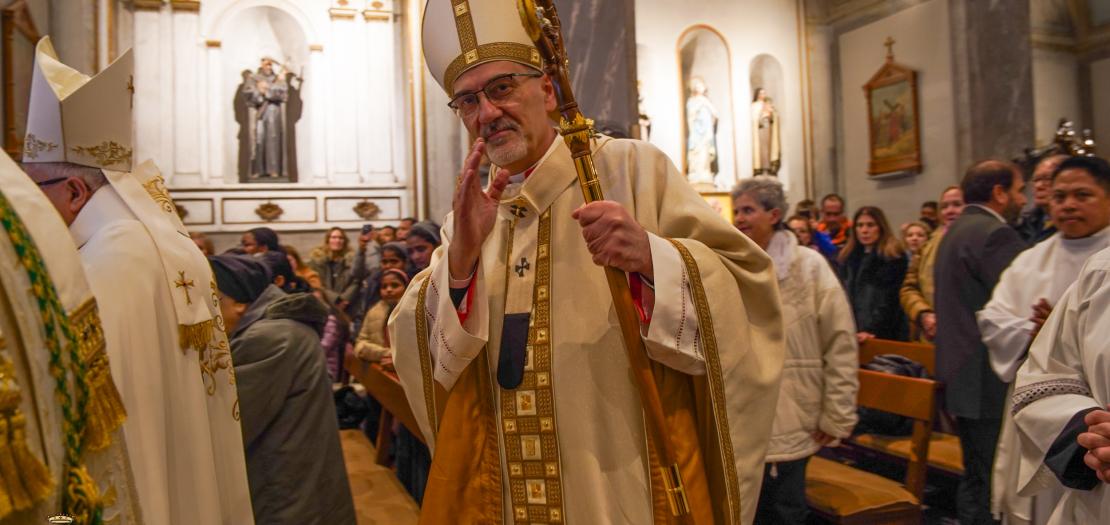
His Beatitude Cardinal Pierbattista Pizzaballa, Latin Patriarch of Jerusalem, presided over the Mass at the Holy Cross Latin Church in Nicosia, concelebrated by Mgr. Bruno Varriano, Patriarchal Vicar of Cyprus, along with clergy from the Maronite Church.
According to the official press release from the Holy Cross Parish, the feast “marks a historical continuity following the episcopal ordination of the first Latin Catholic bishop in Cyprus after four hundred years, a landmark event of exceptional ecclesial, historical, and institutional significance for our country. Through this annual celebration, the Latins of Cyprus, together with distinguished guests, will pray for Cyprus, its people, and all its communities, for peace and coexistence, while honoring their centuries-old presence on the island.”
The celebration was attended by His Eminence Archbishop Gomidas Ohanian, Vicar General of the Armenian Church of Cyprus; Very Reverend Archimandrite Venedictos Ioannou, on behalf of Archbishop Georgios of the Church of Cyprus; Mr. Marios Hartsiotis, Presidential Commissioner; Mrs. Antonella Mantovani, representative of the Latins in the Parliament; and other dignitaries.
In his homily, Cardinal Pizzaballa reflected on Saint Paul’s conversion as a story of encounter, emphasizing that God meets people not only in weakness but also in self-assurance: “God enters not only our obvious fragilities, but also our religious certainties, our well-constructed frameworks, our spiritual securities.”
He highlighted Christ’s question to Paul -“Why are you persecuting me?” - as a decisive revelation of the Christian mystery, affirming that Christ identifies himself with his Body and is present “in its fragility, in its wounds, and in the concrete flesh of brothers and sisters.” Any rupture of communion, he noted, wounds Christ himself, making Christian unity “not an ornament of faith, but an essential dimension of the mystery of Christ.”
Applying this reflection to Cyprus, the Cardinal described the island as a symbol of the vocation revealed in Saint Paul’s life. Paul, who once believed he was serving God by fighting, came to understand that true service to God is found in converting the human heart. “This insight extends to all areas of life, where the call is not only to manage power, but to safeguard what is human, protect the dignity of every person, and promote justice and peace,” he said.
Concluding his homily, Cardinal Pizzaballa recalled that the mandate of the Risen Lord - “Go into all the world and proclaim the Gospel” - is entrusted to all disciples, not to one Church alone. Conversion, he stressed, is a lifelong path, calling believers to a faith continually renewed so as to become credible witnesses of the Gospel “to the very edges of the sea and of history.”
At the conclusion of Mass, speeches highlighted the significance of the feast in emphasizing the unity and presence of Latin Catholics and their relations with other Churches and state authorities. Archimandrite Venedictos Ioannou recalled the missionary witness of Saints Paul and Barnabas as foundational to the Church in Cyprus and reaffirmed the Orthodox Church’s commitment to ongoing ecumenical dialogue with the Roman Catholic Church, continuing the legacy of Patriarch Athenagoras I and Pope Paul VI. He expressed the hope that Christians may one day “glorify God together for the gift of unity".
Although Catholics in Cyprus - including Latin rite faithful, Maronites, Armenians, and local residents - form a minority, their presence is deeply rooted in the island’s history and ecclesial life. Latin Catholics trace their presence back to 1192 and have long contributed to Cyprus’s cultural, social, and spiritual heritage. Education remains a major contribution, with institutions such as Terra Santa College in Nicosia (1646) and St. Mary’s School in Limassol (1923) continuing to serve students from diverse backgrounds.
 Conference of Caritas Jordan: "Localization in Action: Building Sustainable Partnerships" kicks off
 Father Faltas: In Christian schools, healing the human and social wounds from the Gaza war
  Archbishop Giorgio Lingua appointed apostolic delegate and chancellor of Bethlehem University