Issued by the Catholic Center for Studies and Media - Jordan. Editor-in-chief Fr. Rif'at Bader - موقع أبونا abouna.org

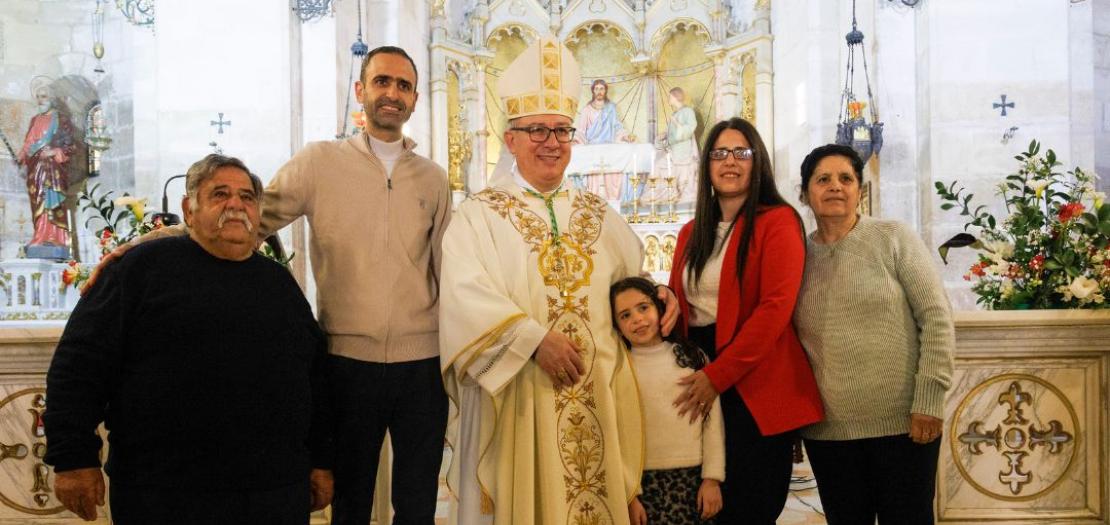



As is the case every year, according to a tradition deeply rooted in the life of the Church of Jerusalem, the Custody of the Holy Land experienced the day of Monday within the Octave of Easter in the small Palestinian village of Emmaus Qubeibeh, a few kilometers from Jerusalem, a place that tradition identifies with the Emmaus of the Gospel. (cf. Lk 24:13-35)
It is here, in the sanctuary kept by the Franciscan friars, that the Christian community usually gathers to celebrate the memory of the Risen Lord's encounter with the two disciples on the way, an event that continues to speak to the hearts of believers as an invitation to faith, hope, and the recognition of the living presence of Christ in history.
In ordinary times, the church of Emmaus would have been filled with faithful from the surrounding villages, from the parishes of the region, and also from groups of the parishes from Ramle and Tel Aviv.
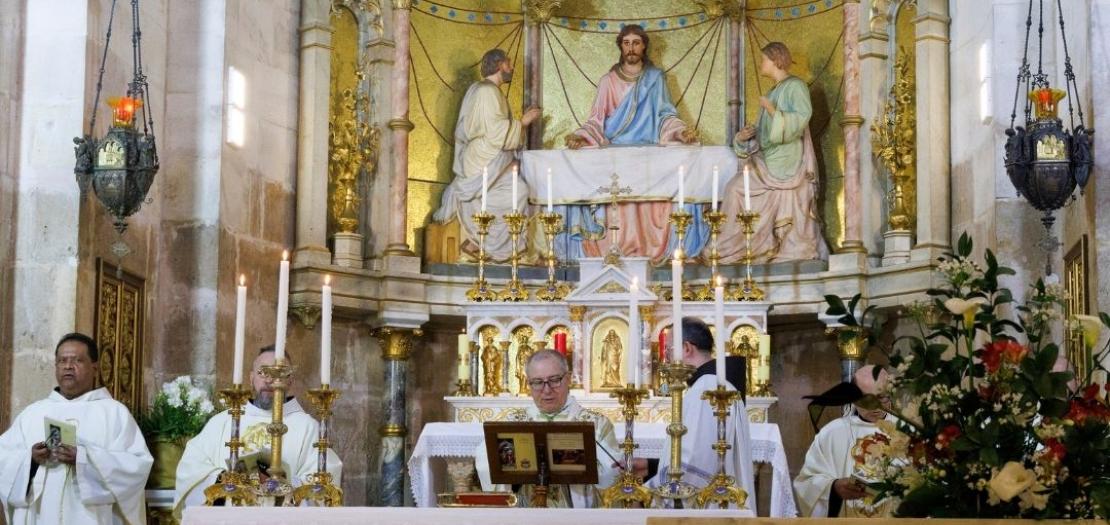
The central moment of the day is traditionally the Holy Mass presided over by the Custos of the Holy Land, which concludes with the blessing of the loaves, then distributed to those present by the hands of the Custos himself.
A simple and strongly evocative gesture, which recalls the sign through which the two disciples finally recognized the Master: "they recognized him in the breaking of the bread".
This year, however, circumstances related to the situation of war and the imposed limitations have deeply reduced participation.
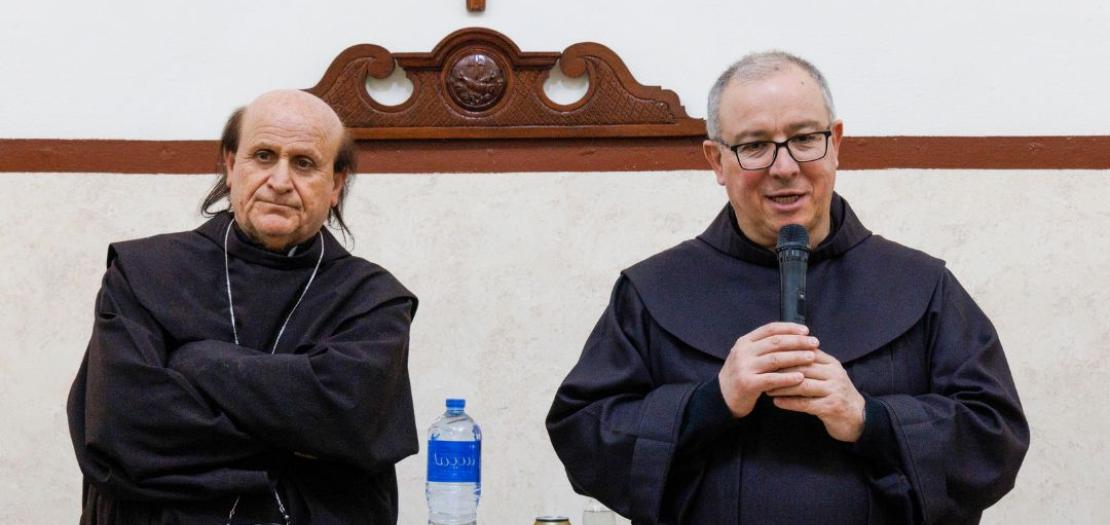
Only about ten friars were able to accompany the Custos, together with a few families from the local community, in an atmosphere of recollection and silent prayer, almost as if to reflect the intimacy and sobriety of the Gospel page.
Despite the limited number of those present, the celebration maintained its spiritual significance intact: the loaves were blessed and distributed, a concrete sign of communion and a living memory of the Christ who continues to walk beside his people, even when the road becomes dark.
In the homily, Fr. Sebastiano Eclimes, Superior of the local community, invited those present to recognize themselves in the experience of the disciples of Emmaus: men tried by disappointment and pain, with heavy hearts and eyes unable to recognize the presence of the Risen Lord. Even today, in this time marked by suffering and uncertainty, many live with the same inner struggle, with open questions and wounded hopes. Yet, Fr. Sebastiano recalled, just as happened to the disciples, we too are called to continue walking, to travel with faith the paths of life, opening ourselves to the possibility that the Lord is already beside us, even if we do not recognize him immediately. Only by persevering on the journey, and letting ourselves be enlightened by the Word and the broken bread, can we find again eyes capable of seeing and hearts ready to be rekindled.
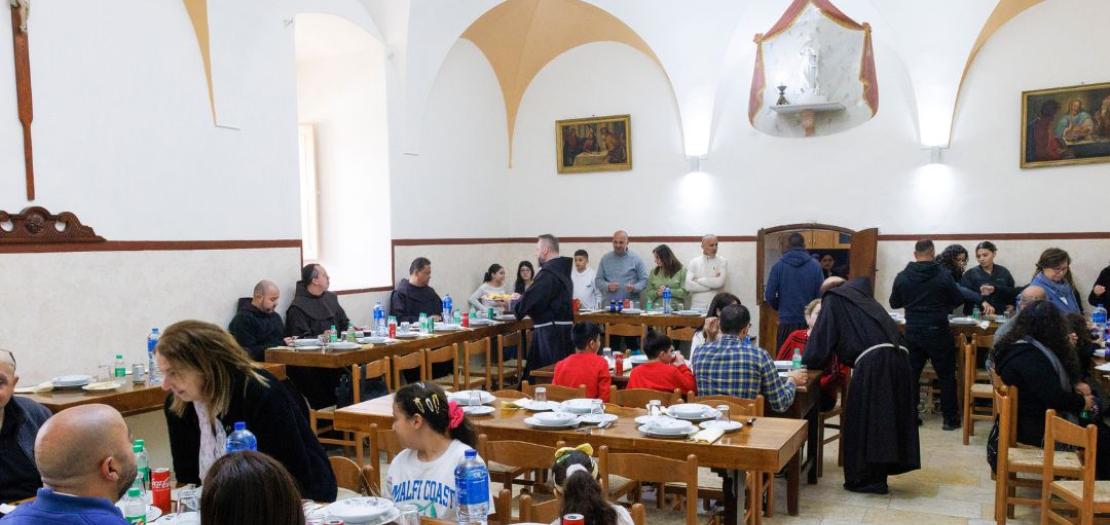
At the end of the celebration, friars and families gathered for a moment of fraternity sharing lunch, offered by Fr. Sebastiano and prepared with care by the Sisters of Evangelization, who serve at the sanctuary and daily accompany the life of this small but precious Christian community.
In a context marked by precariousness and restrictions, the day of Emmaus Qubeibeh has once again become a silent but powerful sign: the Risen Christ continues to walk with his people, and the Custody of the Holy Land continues to guard not only the Holy Places, but also the living faith of a Church that, although tried, does not stop hoping.
In the blessed and broken bread, and in the shared journey, Emmaus continues to announce to the world that the light of the Resurrection can still open paths even in the nights of history.