Issued by the Catholic Center for Studies and Media - Jordan. Editor-in-chief Fr. Rif'at Bader - موقع أبونا abouna.org

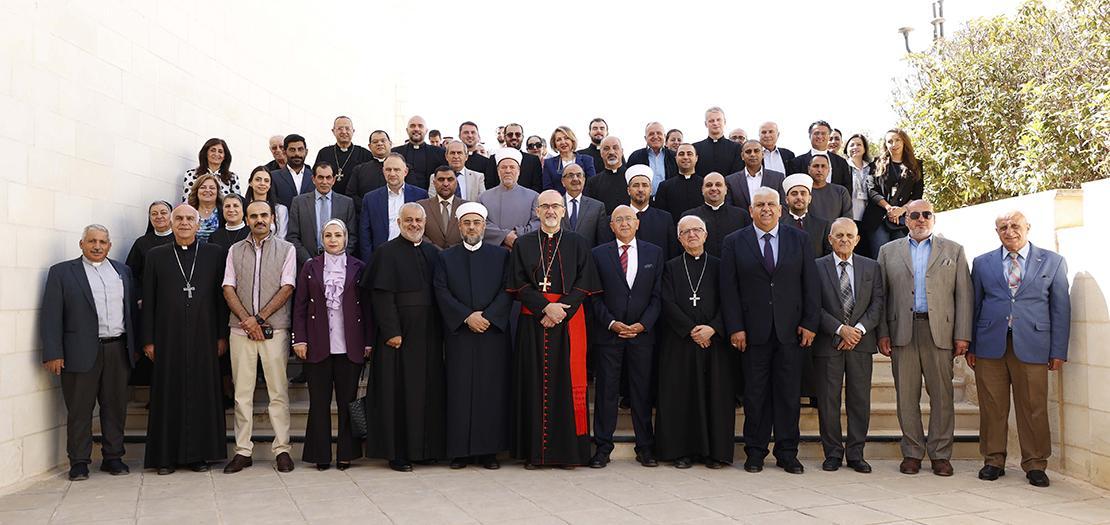
On Monday, October 20, 20225, the Catholic Center for Studies and Media (CCSM), in cooperation with the American University of Madaba (AUM), held a symposium marking the 60th anniversary of the issuance of the document "Nostra Aetate" which was issued by the Second Vatican Council in 1965. This document opened broad horizons for interfaith dialogue and the enhancement of mutual understanding.
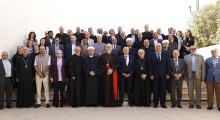
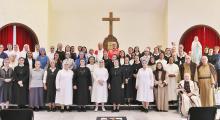
During the symposium, addresses were made by His Beatitude Cardinal Pierbattista Pizzaballa, Latin Patriarch of Jerusalem and member of the Vatican's Dicastery for Interreligious Dialogue, and Imam of the Hashemite Royal Court His Eminence Dr. Ahmad Al-Khalayleh. The symposium was also attended by Madaba Governor Hassan Al-Jbour, a number of bishops, priests, nuns, and Islamic clerics from the Department of the Chief Justice, the Iftaa Department, and the Ministry of Awqaf and Islamic Affairs, in addition to heads of religious departments in the governorate and AUM students.
In his address, His Beatitude Cardinal Pierbattista Pizzaballa thanked the CCSM and the AUM for organizing this symposium marking the 60th anniversary of the issuance of the Vatican Document "Nostra Aetate" which outlines a historic importance in opening a new chapter in the relations between Muslims and Christians based on mutual respect and faith in the one God.
He said, "Relations between the Catholic Church and Muslims have been marked by a growing commitment to dialogue and fraternity, fostered by esteem for these our brothers and sisters who "worship God, who is one, living and subsistent, merciful and almighty, the Creator of heaven and earth, who has spoken to humanity'. (Nostra Aetate, 3) This approach, based on mutual respect and freedom of conscience, is a solid foundation for building bridges between the communities."
He added that knowledge of the document among people is unknown beyond a few cultural circles. As it has not become part of the school curriculum, yet its spirit and content are evident practically in the dialogue and common living most notably are the initiatives of the Hashemite Kingdom of Jordan under the leadership of His Majesty King Abdullah who made dialogue and peace a pillar for Jordan's regional and international mission.
Cardinal Pizzaballa highlighted what he described as "bright models" that embody the document's message and affirm that dialogue is not an intellectual luxury, but rather a necessity for the life and stability of peoples. He also referred to Jordan's global dialogue initiatives, including the Amman Message, the Common Word between Us and You Initiative, and the Interfaith Harmony Week, in addition to the Hashemite Custodianship of the Holy Sites in Jerusalem and the numerous national institutions working in the field of dialogue in Jordan.
He emphasized that interreligious dialogue is "a pilgrimage towards hope and building trust," stressing that dialogue is not limited to re-reading history and past relationships among societies, but rather requires entrenching a culture of encounter in education and religious institutions, as well as strengthening cooperation among religious leaders in the face of schisms and conflicts, especially in light of the tragedies the region is going through, the most recent of which was the Gaza war.
Cardinal Pizzaballa concluded by emphasizing that peace in the Middle East begins with genuine dialogue among followers of religions. He stressed that Christian communities, like all other communities in the region, constitute an integral part of this land, and that the relationship with them is vital for building the future. He continued that the Christian-Muslim relationship is essential for the region's integration into the wider world and for confronting the global challenges that affect everybody
In another address, CCSM Director Fr. Dr. Rif'at Bader noted that the symposium was not intended to reflect on the past, but rather to look to the future. He stressed that Jordan has always been a pioneer in launching initiatives for dialogue and cooperation between Muslims and Christians since the 1980s, while being vibrant in the fields of common living and respect for religious diversity.
Fr. Bader expressed hope that this annual anniversary would contribute to raising new generations who heed the path of His Majesty King Abdullah II Ibn Al Hussein with regards to enhancing a culture of dialogue and peace, while considering dialogue seriously, so as to be able to continue to mark success stories with testimony to Jordan's procession on the path to peace, societal harmony, while promoting the shared values between the Islamic and Christian faiths.
For his part, AUM President Professor Mamoun Akroush expressed AUM's pride in hosting this important meeting at a time when the world is encountering numerous challenges that call for deeper understanding and cooperation among people of diverse religious and cultural backgrounds. He stressed that the AUM's hosting of this symposium in Madaba embodies its unwavering commitment to dialogue, openness, and building bridges among cultures and religions.
He continued that the Church, since its early days and up to this moment, has been a spiritual and humanitarian voice and an oasis of peace that welcomes all peoples in a spirit of respect, openness, and acceptance, while viewing religions and their followers with appreciation through participation in the moral and spiritual values that unite humanity. He concluded by noting that the Church plays a pivotal role in deepening mutual understanding and working jointly for the attainment of social justice, the common good, and lasting peace among peoples.
For his part, Dr. Ahmad Al-Khalayleh said that the relationship between God and humankind is unique and nonpareil, while being based on a profound association and constant need for the Creator. He pointed out that whoever seeks to know the Almighty God with His sublime qualities must know humans in their weakness and need for God.
He called for attaining human communication in the best possible way, namely in word and deed, and with respect for others, emphasizing that faith does not mean holding identical beliefs, but rather adhering to the right of others to believe, because God created humankind differently so that they may reflect on His creation and seek Him through this existence.
He valued Jordan's pioneering initiatives in the field of interfaith dialogue, such as "the Amman Message, "A Common Word between Us and You" Initiative and the Interfaith Harmony Week, in addition to Jordan's model of common living and its welcoming of the displaced people from Mosul. He added that these initiatives manifest Jordan's mission, under the leadership of His Majesty King Abdullah II, with regards to promoting peace and respect among humankind and defending the just humanitarian causes, foremost among which being Jerusalem and its holy sites.