Issued by the Catholic Center for Studies and Media - Jordan. Editor-in-chief Fr. Rif'at Bader - موقع أبونا abouna.org

Following is the text of the meditation by His Beatitude Cardinal Pierbattista Pizzaballa, Latin Patriarch of Jerusalem, on the 11th Sunday of ordinary time, dated June 14, 2026:
In the Gospel passage preceding today’s pericope, Jesus responds to the Pharisees, who were surprised to see Him eating with tax collectors and sinners, by using the image of a physician: “Those who are well have no need of a physician, but those who are sick.” (Mt 9:12) Through this image, Jesus encapsulates the whole of His mission among humanity, making it the interpretative key to His entire earthly ministry.
The image of the physician forms the backdrop of today’s entire passage. (Mt 9:36–10:8) It does not remain merely an image describing Jesus' own mission but becomes a reference point for the apostles’ way of life, the criterion and form of the Church. The verses we have heard also offer several insights on the manner in which Jesus exercises His ministry of healing, which He will then entrust to the apostles and to the whole Church.
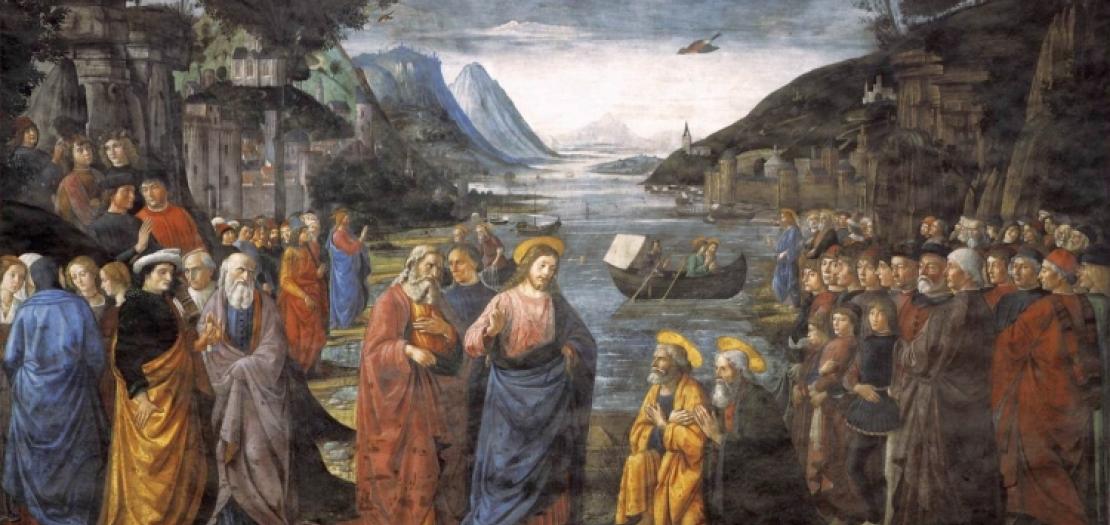
The first thing a physician does is look, to see. Jesus is travelling through towns and villages, teaching and healing, while great crowds gather around Him. And first of all, Jesus looks: “At the sight of the crowds…” (Mt 9:36)
Jesus’ ministry of healing always begins this way: with a gaze. He stops and looks, because the deepest wound of the human person is not being seen: Loneliness, abandonment, and invisibility, are wounds that precede all others.
The Gospel of Matthew recounts many moments of Jesus looking towards a person or entire crowds.
And from this gaze, something always follows. Jesus does not simply look, rather by gazing, words and gestures that bring about healing and salvation follow, opening the way to life.
The second step is significant: having looked upon the crowds, Jesus does not immediately proceed to give a diagnosis or remedy. Instead, He is moved with compassion:“ When Jesus saw the crowds, he had compassion on them…” (Mt 9:36) This is a significant step, because compassion shapes the way we perceive reality. Without compassion, a gaze becomes judgment. But compassion does not seek someone to blame. It doesn't close off possibilities, nor does it add to the burden, but it looks beyond what's present and offers hope.
The third step Jesus takes, like any good doctor, is to make a diagnosis: these are people “troubled and abandoned, like sheep without a shepherd.” (Mt 9:36) Jesus perceives not only the symptom but also the root cause, the deeper reason for the fatigue and discouragement weighing upon the crowds. They are weary and exhausted because they are like sheep without a shepherd; meaning, they are people whom no one truly sees, upon whom no one rests a caring gaze. They have no sense of direction.
The mission of the disciples is born here, in this lack of compassion and care. For this reason Jesus calls the disciples, because even He does not heal alone: He needs a community of care, people capable of seeing the weary, exhausted crowds the way he does.
And there are three aspects to the ministry that Jesus entrusts to the Twelve: they are to heal, to set people free and proclaim the Kingdom (“He called his twelve disciples to him… to cure every disease and every illness … As you go, make this proclamation, saying that the kingdom of heaven is near.” – Mt 10:1, 7)
First of all, they are called to heal: to touch the wounds of the people and tend to them, bringing the presence of the Kingdom that restores life to them. For the Kingdom is not an idea; it is a living power that, wherever it is present, brings about newness and salvation.
Then they are to set people free. Jesus gives the Twelve authority to “drive out unclean spirits” (Mt 10:1): in the Gospel of Matthew, unclean spirits represent everything that dehumanizes, imprisons, divides, and robs people of their freedom. For it is not enough to heal the body; the inner chains must also be broken.
Finally, Jesus commands his disciples to declare that the Kingdom of Heaven is near. (Mt 10:7) This is because healing and liberation are not miraculous acts: they are signs. Signs of a new world that is coming into being.
The remedy that Jesus prescribes, then, does not come through medicines or strategies, but through the living fabric of relationships: a healing born of mercy that lifts up, of selfless generosity that asks for nothing in return, and of compassion that is not scared to be wounded; for this is how the Kingdom heals—through people who know how to look, to touch, and how to take upon themselves the suffering of others.
+Pierbattista