Issued by the Catholic Center for Studies and Media - Jordan. Editor-in-chief Fr. Rif'at Bader - موقع أبونا abouna.org

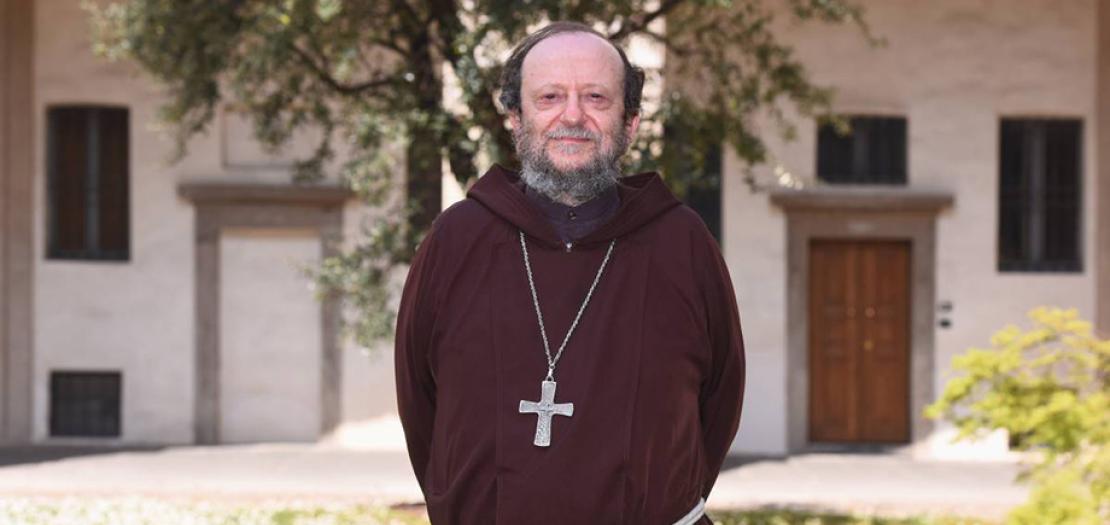
From 19 to 22 February, Bishop Paolo Martinelli carried out his pastoral visit to St. Francis Xavier Parish in Salalah, Oman, a time of prayer, encounter, and shared reflection on the life and mission of the Church.
As the first act of the pastoral visit, the Bishop installed the relic from the Porziuncola, which remained in the parish throughout the visit for the veneration of the faithful on the occasion of the Jubilee Year dedicated to Saint Francis of Assisi. Entrusting the parish to the saint’s intercession, the Bishop invited the community to walk together as “a synodal Church on mission.”
The Lenten Journey
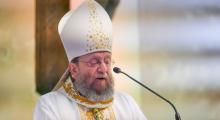
Taking place at the beginning of Lent, the pastoral visit was deeply shaped by the call to conversion. In his opening homily, Bishop Paolo encouraged the faithful to choose the path of life, leaving behind the ways of selfishness and sin and renewing their commitment to follow Christ.
During the Mass of the First Sunday of Lent, he continued this reflection, describing Lent as a journey of healing, purification, and freedom, in which God’s mercy restores humanity and opens a renewed path toward Easter.
In the concluding Eucharistic celebration, the Bishop returned to this theme, recalling that Lent reveals both the reality of temptation and the greater power of grace: Christ enters into human struggle to free humanity from evil and to lead believers toward a deeper union with God. “The great message of Lent is that we can be healed from the wounds of sin. Christ frees us from evil.”
Confirmation and Hope
Among the most joyful moments of the visit was the Mass with the Rite of Confirmation, during which 23 young people received the sacrament. Before entering the church, each candidate received a blessing from their parents — a meaningful gesture expressing the passage toward a more personal and mature commitment to faith. Meeting young people, the Bishop said, “is always a sign of hope”. He encouraged them to discover the joy of friendship with Christ and to courageously embrace their vocation.
Synodality at the heart of parish life
Throughout the visit, Bishop Paolo dedicated wide space to encounters with the Parish Council, the various ministries, as well as associations and ecclesial movements active in the parish. He encouraged them to build bridges, foster unity among cultures, and work at the service of the Church’s mission: “Only united can we be truly missionaries and bring the Gospel to the world.”
In all these meetings, the Bishop emphasized the importance of implementing the Final Document of the Synod, inviting the community to reflect more deeply on what image do we have of the Church and how can we be missionaries in the Gulf context.
Synodality, he explained, is above all a lifestyle rooted in mutual listening in the Holy Spirit and shared responsibility. At the same time, it takes concrete form in events and structures, such as pastoral councils and the collaboration among linguistic communities, rites, ministries, and movements. Bishop Paolo also reminded the faithful that synodality is not about democratizing the Church but about serving the Church’s mission.
The ministry of service and Christian formation
The Bishop also met representatives of the many ministries present in the parish and encouraged the community to continue promoting vocations, charisms, and new ministries capable of welcoming newcomers and reaching those who feel distant from the Church.
Particularly meaningful was the meeting with catechists, during which Bishop Paolo stressed that the communication of faith is not merely the transmission of doctrines or rules, but a communication of life. Christian formation, he said, remains a fundamental pillar of the Church, especially in the face of the challenges posed by new technologies and changing cultural contexts. Faith is transmitted above all through authentic witness and through families, where the Gospel first takes root in daily life.
Encountering the territory
Alongside the pastoral program, the visit also included moments of cultural visit and simple fraternity, allowing the Bishop to know more deeply not only the parish community but also the territory and social context in which it lives and serves.
Walking forward in hope
At the concluding Mass, Bishop Paolo expressed gratitude for the days spent together and encouraged the community to continue growing in unity and missionary spirit. The pastoral visit thus ended as it began: as a call to walk together — united, missionary, and renewed in faith — in the unique reality of the Church in the Gulf.