Issued by the Catholic Center for Studies and Media - Jordan. Editor-in-chief Fr. Rif'at Bader - موقع أبونا abouna.org


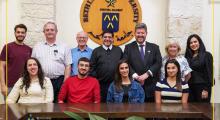
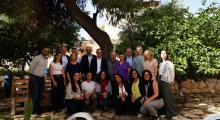
After five years of development work, Caritas Jerusalem marked the conclusion of the COHERENCE Program (2022–2026) under the theme “Paths to Resilience: Our Journey, Our People, Our Future,” celebrating a journey of community empowerment, sustainable development, and resilience across Jenin Governorate.
Implemented by Caritas Jerusalem in partnership with Caritas International Belgium and Caritas France, with support from Belgian Development Cooperation, the program aimed to strengthen social cohesion, sustainable livelihoods, food security, and the resilience of rural communities, with particular emphasis on women, youth, and vulnerable groups.
COHERENCE formed part of a broader international initiative implemented across seven countries: Palestine, Belgium, Burkina Faso, Burundi, Ethiopia, Niger, and the Democratic Republic of the Congo, promoting knowledge exchange and shared learning while responding to the specific needs of each country.
Five Years of Impact and Community Empowerment
Throughout its implementation, COHERENCE reached a cumulative total of 15,714 beneficiaries across 28 communities within four main geographical clusters: Marj Ibn Amer, Arraba, Zababdeh, and Burqin. Women and young people played a central role in this journey, with 7,722 women and 8,413 young people represented among those reached by the program.
Through its integrated approach, COHERENCE supported 179 microbusinesses and sustainable livelihood initiatives, helping families develop income-generating opportunities and strengthen their economic independence. Among these achievements, 141 supported households reported an income increase of at least 10 per cent, while ten community-based organizations received support to strengthen their capacities and services.
Youth empowerment was another key priority. A total of 419 young people gained vocational and economic knowledge and skills, while 40 participants benefited from technical and vocational education and training opportunities and internships, enhancing their readiness to enter the labor market.
In the field of food security and environmental sustainability, the program supported the establishment of 255 home gardens and the preservation of 20 varieties of indigenous local seeds, encouraging environmentally friendly agricultural practices and strengthening household self-reliance. Additionally, 268 individuals improved their knowledge of agroecology through practical learning activities, field demonstrations, and awareness initiatives.
The program also contributed to the rehabilitation of four public-benefit facilities, reaching 12,639 beneficiaries and improving access to essential community services.
Strengthening Social Cohesion and Local Ownership
Beyond its measurable achievements, COHERENCE placed community participation and local ownership at the heart of its approach.
Four Local Action Groups (LAGs), bringing together 52 members, were established and strengthened across the targeted clusters. These groups played an important role in identifying community priorities, developing four local strategic plans, and encouraging dialogue and cooperation between residents, local authorities, and civil society organizations.
Through training, consultation, and participatory planning, community members gained greater opportunities to contribute to decisions affecting their communities and to advocate for locally identified needs.
The program also strengthened cooperation between local institutions, academic and research bodies, civil society organizations, and the private sector. This collaborative approach was reflected in 104 meetings and consultations dedicated to learning, knowledge exchange, and joint action, alongside eight action-research initiatives that contributed to evidence-based community development.
Furthermore, 52 individuals strengthened their advocacy skills, while 56 developed competencies in monitoring, evaluation, accountability, and learning (MEAL), reinforcing local capacities for participation, accountability, and sustainable development.
Building resilience amid growing challenges
Since its launch in 2022, COHERENCE has operated in an increasingly challenging environment. Movement restrictions, repeated incursions, economic instability, displacement, and growing pressures on agricultural livelihoods have significantly affected communities throughout Jenin Governorate.
Despite these challenges, the program continuously adapted its interventions to emerging needs, placing greater emphasis on food security, livelihood protection, environmentally sustainable agriculture, and preparedness for crises.
By bringing together economic empowerment, community participation, environmental sustainability, research, and advocacy, COHERENCE went beyond implementing individual activities. It fostered stronger relationships between communities and institutions, encouraged local leadership, and provided families with practical tools and knowledge to respond to ongoing challenges.
From COHERENCE to RISE: Continuing the Journey
As the five-year program comes to a close, its achievements represent more than statistics. They reflect stronger communities, expanded economic opportunities, increased agricultural knowledge, and greater participation by women and young people in shaping their own futures.
The culmination of COHERENCE also introduces RISE, the next chapter in this development journey. Building on the foundations established over the past five years, RISE aims to carry forward the spirit of local ownership, shared knowledge, and collective action to support stronger and more resilient communities.
Through this journey, Caritas Jerusalem reaffirms its commitment to community-driven development, social cohesion, environmental sustainability, and the empowerment of vulnerable populations, ensuring that the knowledge, partnerships, and capacities developed through COHERENCE continue to contribute to lasting positive change in Palestine.