Issued by the Catholic Center for Studies and Media - Jordan. Editor-in-chief Fr. Rif'at Bader - موقع أبونا abouna.org

Following is the text of the meditation by His Beatitude Cardinal Pierbattista Pizzaballa, Latin Patriarch of Jerusalem, marking the 16th Sunday of ordinary time, dated July 19, 2026:
To better understand today’s Gospel passage (Matthew 13:24–43) we have to look back at last Sunday’s reading (Mattew 13:1–23).
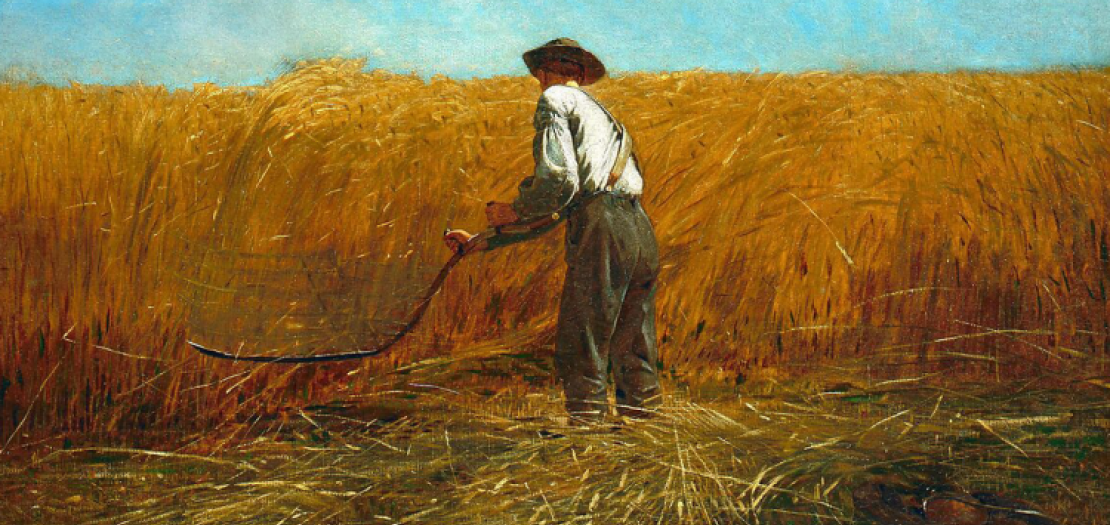
The parable of the weeds we hear today (Mt 13:24–30) naturally follows that of the Sower. Last Sunday we saw how the Father speaks His Word to all, just like the sower who scatters his seed on every kind of soil: without measuring, or being selective, nor protecting the seed. He sows everywhere—on the path, among the rocks, among the thorns, and in the good soil. His is an economy of abundance, of trust, and of generosity. This is, in fact, God’s will: that every person may be full of life, fertile, and bearing abundant fruit.
But a disruptive element—namely, evil—interferes with this plan of God, with His will for the good of all. There is a disturbing reality that gives rise to a question each of us is sooner or later compelled to ask: what are we to do with the evil we see growing both within us and around us?
The parable does not stop to explain the origin of evil. It simply takes its existence as a given reality. The question it raises instead is what we are to do with evil, and how we can live in a world where good and evil are mixed together. We will discover that God has a plan even for this—a plan that, in some way, embraces even what seems to hinder the growth of the Kingdom.
The first piece of good news is precisely this: evil is not capable of destroying good, and so we can be certain that, at the end of time, at the harvest, (Matthew 13:30) both good and evil will still exist.
There will not be only good, but neither will there be only evil; both will have grown together. "Let both of them grow together until the harvest; and at harvest time I will tell the reapers: Gather the weeds first and bind them in bundles to be burned, but gather the wheat into my barn." (Matthew 13:30)
Before anything else, the parable tells us what not to do. It tells us that evil is not overcome by uprooting it: "Do you want us to go and gather them? 'No,' he answered, 'for in gathering the weeds you would uproot the wheat along with them.'" (Matthew 13:28–29) When the servants see the weeds, they are immediately ready to remove them from the field. It seems the most obvious solution—the quickest and most straightforward one: eliminate evil, exclude it from the community, and try to create a world where evil no longer exists.
But the owner of the field rejects this option with a clear "no" and asks that the weeds grow alongside the wheat. (Matthew 13:29) The owner does not uproot the weeds for the same reason that the sower does not sow only on potentially good soil - namely, because of the mysterious working of the Spirit of God, who knows how to bring good out of evil and to transform death into life.
But the question remains: what should we do, then? One possible answer to this question comes from the very structure of this passage, which, at a certain point, seems to shift the focus to another theme.
In the first part, (Matthew 13:24–30) we find the parable of the wheat and the weeds. At the center, the Evangelist Matthew places two other parables: the mustard seed and the yeast. (Matthew 13:31–33) Finally, after a brief aside in which the narrator explains why Jesus speaks in parables (Mt 13:34–35), we are given the explanation of the parable of the weeds.
The explanation is not given immediately after the parable because Matthew wants the reader not to become fixated on evil, but to turn his gaze toward the mystery of the Kingdom, toward the wheat that is growing.
And so he leads the reader through two images of growth: only then will they be able to understand the parable of the weeds.
This simply means that one way of facing the problem of evil is to shift our perspective. We are invited to contemplate what the mustard seed and the yeast teach us: that the Kingdom grows beyond all expectation, like the mustard seed; and that it grows from within, silently and invisibly, transforming everything, like yeast working through the dough.
The parable of the weeds is, as it were, "embraced" by two parables of growth. This tells us that the key to understanding the weeds is not the weeds themselves, but the growth of the Kingdom. This frees us from a recurring temptation: becoming fixated on evil. Instead, we are invited to shift our attention, just as last Sunday's Gospel invited us to move our focus away from the different kinds of soil and toward the generosity of the sower and the power of the seed.
These parables all speak of the Kingdom of God. And ultimately, they all tell us—in different ways—that the Kingdom comes about where people turn to God’s way of thinking, which employs every possible means so that every person’s life may grow, become good, and bear fruit.
+Pierbattista