Issued by the Catholic Center for Studies and Media - Jordan. Editor-in-chief Fr. Rif'at Bader - موقع أبونا abouna.org

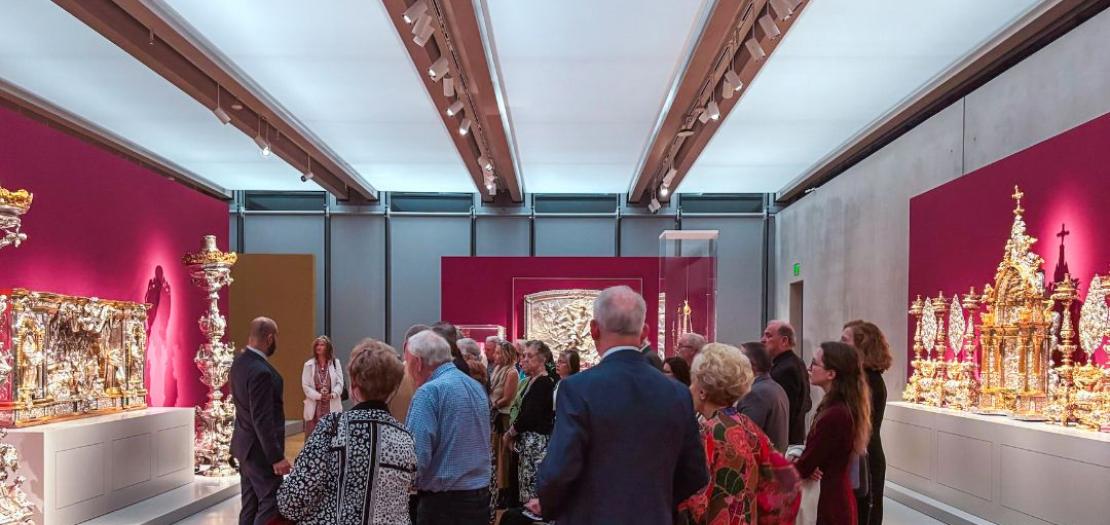
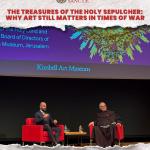
The “Treasures of the Holy Sepulcher” collection has arrived in Texas, bringing with it a powerful message, even amid the winds of war, the Terra Sancta Museum reaffirms why art still matters in times of violence.
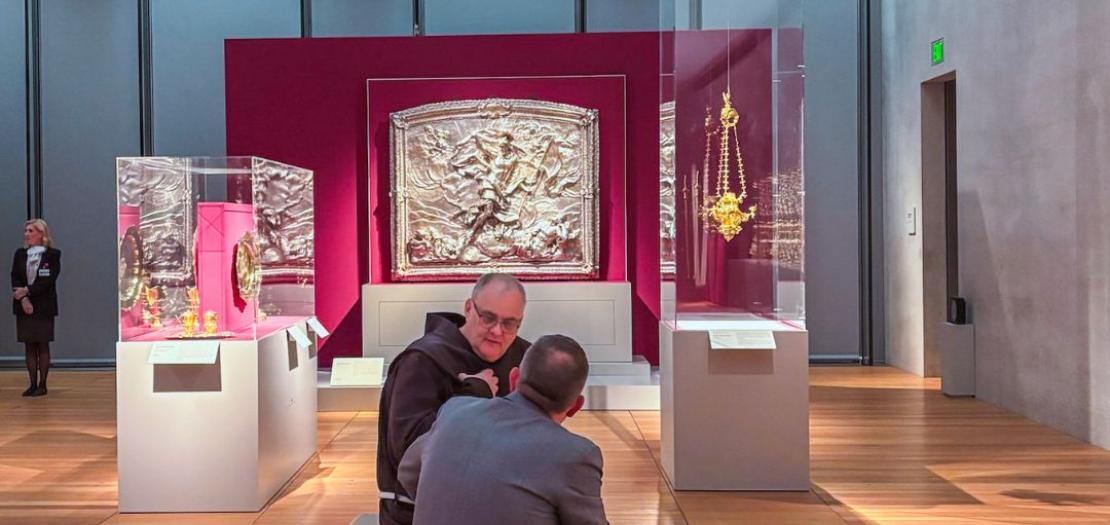
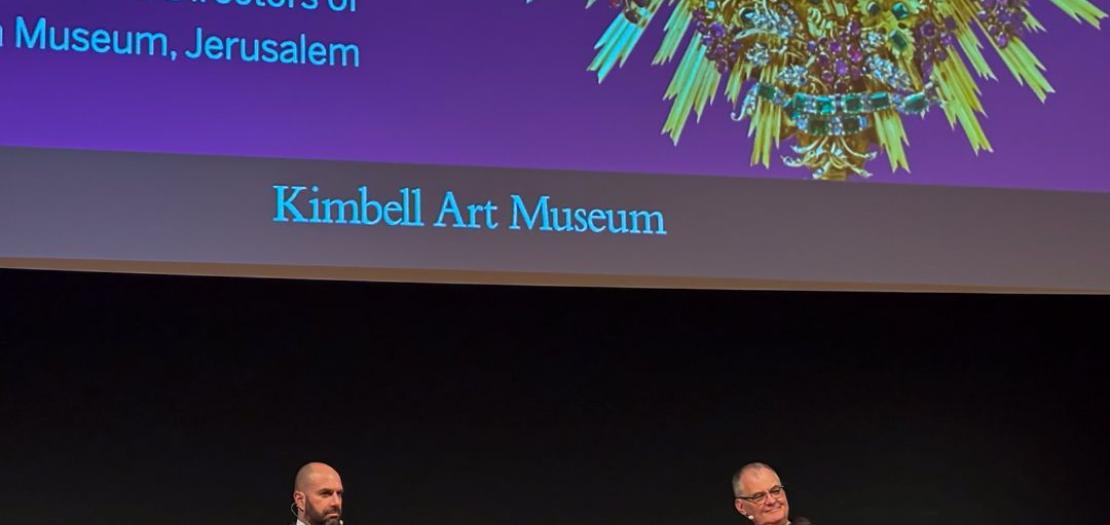
Despite the war looming over the Holy Land, part of the team of the Terra Sancta Museum , Art & History traveled to the United States. Fr. Stéphane Milovitch, President of the Board of Directors of the Terra Sancta Museum, and Claudio Domeneghetti, Project Coordinator, arrived in Texas in Fort Worth to attend the press preview and the opening ceremony of the exhibition “The Holy Sepulcher, Treasures from the Terra Sancta Museum, Jerusalem” held at the Kimbell Art Museum on March 15.
On display until June 28, the exhibition brings together a remarkable selection of objects from the Terra Sancta Museum , Art & History collection. These include vestments, liturgical objects and more than sixty extraordinary works made of solid silver, gold and enamel, enriched with precious stones, as well as garments richly embroidered with gold and silver threads. The exhibition was curated by Xavier F. Salomon of the Frick Collection, in collaboration with Benoît Constensoux and Jacques Charles-Gaffiot.
Crossing the Jordanian border and stopping in Paris along the way, the team finally arrived in Texas in time for the press preview, led by Eric Lee, Director of the Kimbell Art Museum.
George Shackerfield, Deputy Director of the Kimbell Art Museum, shared his view on the opening, "The Holy Sepulcher, Treasures from the Terra Sancta Museum presents works of art that are rarely seen by the public outside the context of a religious ceremony. Being able to get close to the works, to appreciate the craftsmanship of goldsmiths and textile artisans between the 16th and 18th centuries is a real opportunity. For the Kimbell, it is a chance to display types of ecclesiastical art that are not part of our collection, thus representing a new experience for most of our visitors."
This raises a further question around the collection, why sacred art still matters in today’s increasingly secular world and what it can still say to the world, "Our visitors, regardless of their faith, will appreciate the devotion behind the creation of the works on display. It is the devotion of the king and queen, the emperor or empress, or the Catholic republic that originally commissioned them. But it is also the devotion of the artisans who created them, goldsmiths, sculptors, designers, weavers, embroiderers." stated Shackerfield "in short, all those who made these works possible, this shines through in their beauty as works of art."
It is important for the Terra Sancta Museum to present these international traveling exhibitions. Just like the Frick Collection, the “Treasures of the Holy Sepulcher” collection reminds our supporters, funders and followers of the true mission of the Museum, to bring the rich heritage preserved by the Custos of the Holy Land beyond its walls, so that it may be known and appreciated by a wider audience. The many gifts offered over the centuries by European kingdoms to the Custody testify to an extraordinary artistic richness, remarkable craftsmanship and a deep devotion to the protection of the Holy Places. For this reason, we consider our traveling collections essential, they allow us to share part of the Museum with the world, while continuing the mission of the Custody to protect the heritage of the Church since the beginning of its presence in the Holy Land.
In these difficult times, marked by conflicts around the world, we as a team feel compelled to ask what art can do in the face of war. Claudio, our Project Manager, stated firmly, "I believe that art is not only important in difficult and dark times, but truly essential. Art and culture are not mere forms of entertainment, they are the result of skill and intellect, of love and suffering, of faith and pain. In the human being, all this finds expression in what we call art. One does not live by bread alone, we experience the world through the senses, the heart and memory, and the soul, at the center of this experience, needs nourishment. This nourishment passes through the senses that have been given to us, and, reflecting the Creator, the human being also tends to create. This is how art is born, as nourishment for the soul. Just as light was created from darkness, so too humanity creates its own light in moments of darkness."
And this is where the mission of the Museum comes into play, "We want to preserve, exhibit and safeguard a particular type of art, the kind that shines and radiates beauty. The exhibitions we curate bear witness to this. What the TSM, Terra Sancta Museum, will preserve is a beauty that represents the highest expression of the deep faith of the artisans, rooted in Jerusalem, a city of death and of life, a city of redemption. Today, therefore, we are not simply creating a museum, we are creating a treasure chest that will show the world what faith in Christ has been, and continues to be, capable of creating, rather than destroying."