Issued by the Catholic Center for Studies and Media - Jordan. Editor-in-chief Fr. Rif'at Bader - موقع أبونا abouna.org

Pausini’s opening and the echo of the Pope’s message: Sport as the language of peace
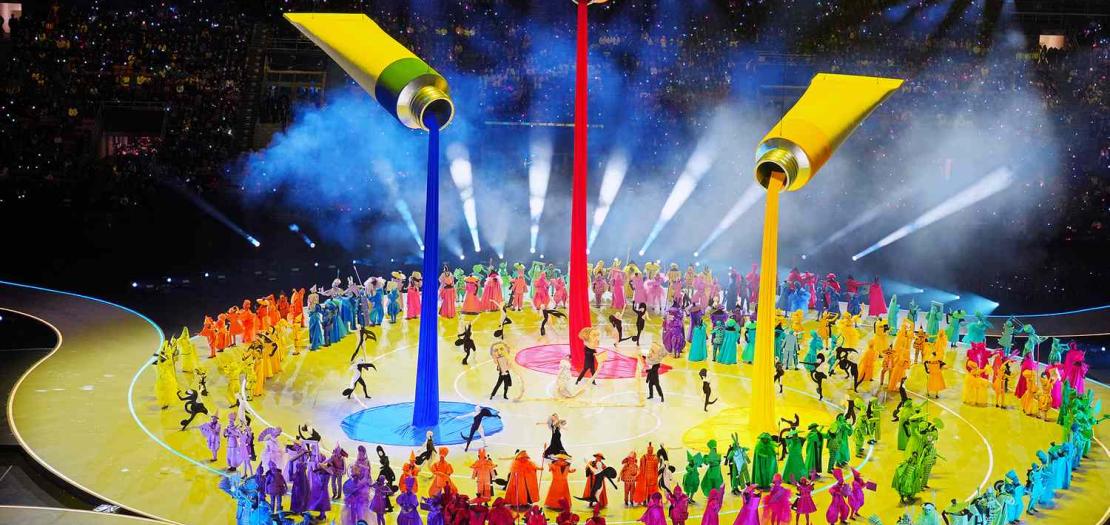
The opening ceremony of the Winter Olympic Games has kicked off in Milan and Cortina with a deeply moving artistic scene, when world-renowned Italian singer Laura Pausini presented a breathtaking rendition of the Italian national anthem, which guided the audience into a shared national and human moment, that was attended by the Italian president and several heads of state from participating countries. This peaceful scene turned the launching ceremony into something that transcends a sporting competition, where it became a platform for dialogue and peace exactly as Pope Leo XIV envisioned in his message “Life in Abundance”.
In his address to athletes and spectators, Pope Leo XIV expands on the idea that sport is not merely a match or a successful industry, but rather a human, educational, and spiritual school capable of building peace and fostering unity among peoples. He revisits the roots of the ancient Olympic Truce, interpreting it as a modern call to suspend violence and political tensions in spaces of sporting encounter. He stresses that matches and sporting events can become a “gift to humanity” when practised in a spirit of respect and shared values.
The message focuses on two interconnected dimensions. First, the educational value of sport which shapes character of humans and teaches virtues such as self-discipline, cooperation, accepting defeat, and mutual respect—qualities that strengthen civil society and are assumed to penetrate public policies. Second, the ethical and economic dimension, where the Pope warns against allowing the concept of profit to dominate sport, and against turning athletes into commodities. He calls for a system that places human dignity at the gist of sporting activity, and ensures access for everyone including the vulnerable, refugees, and people with disabilities.
The message incorporates concrete calls to action: reviving the spirit of the Olympic truce as a symbol of peace; enhancing grassroots and educational sport in neighborhoods and schools; and supporting pastoral and educational accompaniment for athletes through local and church institutions. The Pope also presents a clear vision of fair competition, namely one that respects rules, confronts corruption and doping, and transforms the sporting arena from a space of mere display into a place of genuine human encounter.
The opening ceremony--which included Pausini and other great artists including legend Andrea Bocelli, the high-level international presence, the display of Italian elegance at the Milan–Cortina Winter Games, and the Italian Air Force’s striking aerial performances--symbolized the global nature of sport and its power to bring cultures together. Many responded to the call of “Life in Abundance,” which the Pope understands as an existential fullness that goes beyond victory: participation, respect, and the joy of walking together. If the international community embraces this vision, the Winter Games will not be just another media event, but rather a pivotal moment to reaffirm that sport for when it paves the way for peace and justice it can become a truly human act in a world fragmented and violence in many places of Earth.
It is worth noting that Laura Pausini began her professional singing career at just 17, and was rained in a poor family. What drove her along this artistic path was her firm desire to support her parents and stand by them in their financial hardship. Through decades of committed and sublime artistry, and by singing in Italian, Spanish, Portuguese, and English, she proves that art has the power to unite the world around the values of justice, love, and peace.
We conclude with the words shared at the ceremony by UN ambassador and South African native Charlize Theron, quoting her country’s former president Nelson Mandela: “Peace is not just the absence of conflict; peace is the creation of an environment where all can flourish, regardless of race, color, creed, religion, gender, class, caste, or any other social markers of difference.”