Issued by the Catholic Center for Studies and Media - Jordan. Editor-in-chief Fr. Rif'at Bader - موقع أبونا abouna.org

In a world where the strength of nations is measured by growth rates, and where human value is reduced to figures of production and consumption, justice appears as a postponed detail in a grand equation called “the economy.” Yet this reduction, which grants numbers an authority beyond their meaning, conceals a troubling ethical question: What happens when the economy succeeds… and the human being fails?
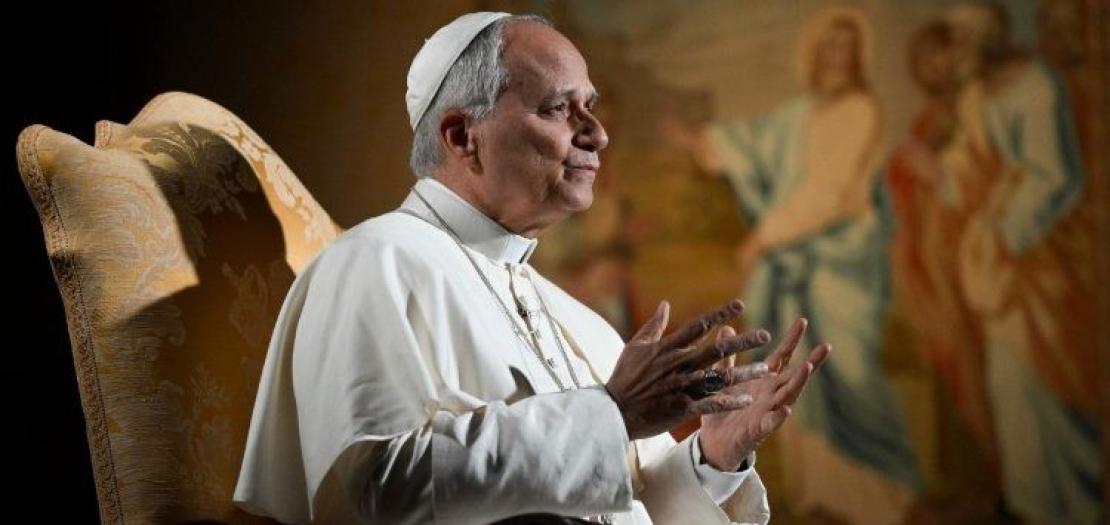
From Africa—where natural wealth coexists with some of the harshest forms of poverty—the words of Pope Leo XIV rose not as a conventional spiritual message, but as a sharp moral statement reopening a long-neglected file: Justice in the distribution of income, opportunities, and dignity. The address was less a sermon than a candid interrogation of the world’s conscience, calling things by their names and exposing a structural imbalance that turns abundance into a source of disparity, and growth into a cover for exclusion.
In this context, the Pope alluded to a dangerous equation: Poverty is not the problem in itself, but rather the misdistribution of wealth and opportunities. Here, the power of the Gospel metaphor becomes evident in recalling Christ’s words: “You give them something to eat,” a phrase that transcends its spiritual dimension to reveal a profound economic meaning. The issue is not scarcity of resources, but the absence of justice in their distribution. It is a direct call to transform surplus production into equitable sharing, not accumulation in the hands of a few.
The boldness of the Pope’s address lay in its clarity. He spoke of “chains of corruption” and an “economy of exclusion,” expressions that carry direct criticism of economic models that entrench privilege and reproduce inequality. This raises a fundamental question: Can an economic system be described as successful if it is unjust? Or does true success begin when policies are measured by their ability to narrow gaps rather than widen them?
In terms of income distribution, this perspective necessitates a reconsideration of the structure of fiscal policies, including taxation and public spending. Justice does not mean arithmetical equality, but rather equality of opportunity and the guarantee of a minimum level of human dignity. Public budgets are not merely numerical tables; they are explicit reflections of national priorities: to whom do we allocate resources, and whom do we leave behind?
As for labor, the address reaffirmed its dignity as a human value before being an economic activity. Here, the Gospel principle—“the worker deserves his wages”—is invoked not only as an ethical rule, but as a foundation for social stability. Wage imbalances, precarious working conditions, and the erosion of the middle class are not merely technical phenomena; they are symptoms of an economy that has lost its moral balance.
Regarding spending on education and healthcare, one of the sharpest paradoxes emerges: these sectors are often treated as financial burdens, when in reality they are investments in human capital. Education is not a luxury, but a prerequisite for sustainable growth, and healthcare is not a secondary service, but the foundation of human dignity. Cutting expenditure in these areas only postpones crises and deepens inequalities.
Social programs, as the address emphasized, are not populist tools nor temporary safety valves, but part of a social contract that ensures cohesion and stability. The real challenge, however, lies in designing these programs in a way that balances protection with incentive, and support with independence.
Politically, the address carried an unusually frank tone, calling on leaders to assume their moral responsibilities and not hide behind technical complexities or international pressures. Corruption, as highlighted, is not merely an administrative flaw, but a system that undermines trust, wastes resources, and weakens the state from within.
When we widen the lens, this perspective intersects with intertwined global crises: widening income gaps, rising economically driven migration, declining trust in institutions, and a growing sense of injustice. These are not isolated phenomena, but reflections of an economic model in need of fundamental reconsideration rather than superficial reform.
What distinguishes Pope Leo XIV’s address is that it reintroduces the moral dimension into the heart of economic debate, reminding us that numbers—however neutral they may appear—conceal value-based choices that determine who wins and who loses. Here, a profound Gospel question emerges: “What does it profit a man to gain the whole world and forfeit his soul?”—a question that extends beyond individuals to judge policies and test the humanity of economic models.
Pope Leo XIV does not call for dismantling the economy, but for re-humanizing it—for achieving a delicate balance between efficiency and justice, between growth and distribution, and between the market and conscience. The choice is clear: either we continue to manage an economy without a heart… or we find the courage to restore the heart to it.