Issued by the Catholic Center for Studies and Media - Jordan. Editor-in-chief Fr. Rif'at Bader - موقع أبونا abouna.org

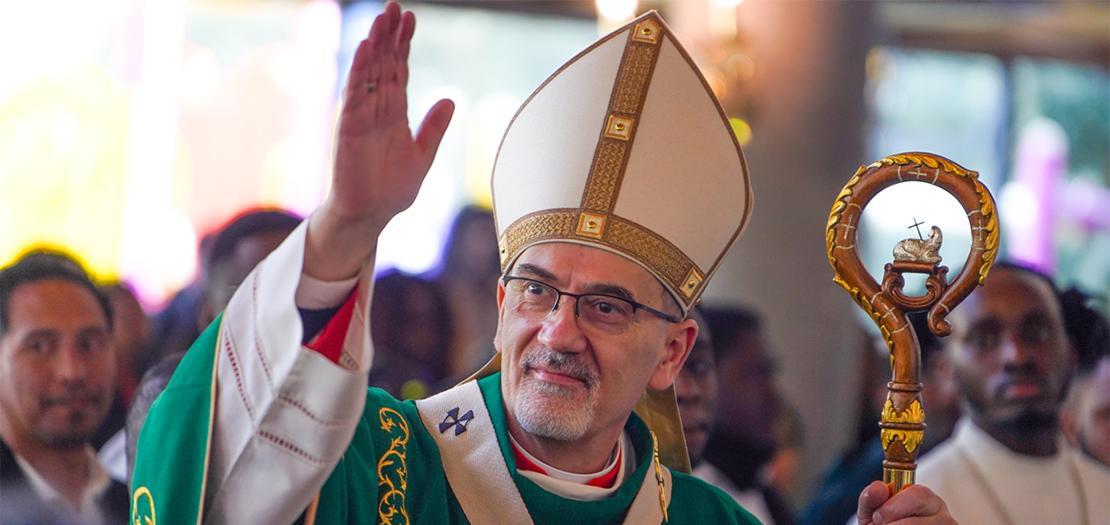
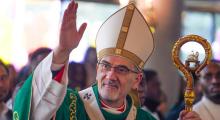
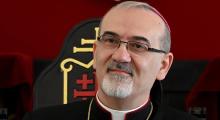
Following is the text of the proposal presented by His Beatitude Cardinal Pierbattista Pizzaballa, Latin Patriarch of Jerusalem, for living the vocation of the Church in the Holy Land, dated April 25, 2026:
Dearly beloved,
May the Lord give you peace!
During these years of pastoral ministry, I have addressed you, our beloved Church of Jerusalem, in various ways: through homilies, brief letters, and, above all, during my pastoral visits. In a particular way, these visits were moments of encounter and sharing with the communities that shape the life of the local Church, and my own life as well. They have permitted me to get to know our Diocese more deeply, and they have given concrete expression to the unity between pastor and community that constitutes the foundation of our life as Church.
In recent times, we have been plunged into yet another tragic war, with all its consequences in our daily lives. It has forced us to rethink the ways and means of our ministry, a ministry I have tried to carry out as faithfully as possible. The dramatic times we are living in have obligated us all to engage more assiduously in serving the poor, denouncing injustice, being present in our community, and, above all, in praying and listening to the Word of God, always seeking unity and truth as we stand before Him and one another.
In the light of all that is happening – and the impact that it has had and will have on the life of our Church – I feel the need to offer a deeper word and a fuller reflection, one that is considerably longer. This Letter is not intended for a quick or partial reading, nor is it to be used as a text of political analysis. It is offered as one to be read slowly, as a tool for discernment and the promotion of conversation and reflection within our ecclesial contexts, our communities, monasteries, and families. Its purpose is not to propose immediate answers or technical solutions, but rather to help each person reflect on how to live our Christian faith in this land today in the light of the Gospel.
It is difficult to limit myself to the habitual statements regarding current events, which often follow one another, almost identical in tone and content. I feel it is urgent to say something truer and perhaps more meaningful. Our shared suffering in these times, in fact, does not allow us to limit ourselves to sugar-coated, abstract words – words that lack credibility. Nor can we limit ourselves to yet another analysis of the situation or a condemnation of some injustice.
Analyses and condemnations such as these have been regularly published, and we have said much about all of this. Although these remain necessary, and we cannot cease publishing them, they do not establish horizons of trust. Even though there are those outside of our community who identify with these assessments, they are not enough. These statements must be accompanied by a reflection on what the Lord is asking of us at this moment. Furthermore, we must ask ourselves how we might express our faith in this difficult context, both in words and in actions. This question has accompanied my ministry as pastor: how can we, as Christians, as an ecclesial assembly, navigate our way in this situation of conflict – political, military, spiritual – a conflict we fear will continue for years to come? This conflict is an integral part of the life of our Church, as it is of our daily existence. Unfortunately, likewise, it has become part of the culture of this Land. Therefore, the conflict is not something to be overcome, but rather the very place in which our Church is called to carry out its specific mission as a community of believers in Christ. In this Land where the contours of identity are so fiercely defended, our Christian existence must become a witness to a particular style of living, even amidst conflict, and must find visible and recognizable expression in what we say and do. We are called to propose an understanding of these times from a Christian perspective that clearly and recognizably characterizes us as Christians.
With this Letter, I tackle this question. It is the laborious and painful fruit – as is every attempt at spiritual synthesis – of my reflection and prayer, and of what I have matured over time. Obviously, it is not a perfect synthesis. Rather, it should be understood as an initial proposal for reflection that will ripen further over time, refining and completing itself, especially through discussion, even debate, if necessary, with others who wish to embark on this attempt at synthesis and rereading our reality. The only condition for this exchange is that we be all moved by a sincere desire to seek to understand God’s will for each of us. Here, I also gather together, in a more systematic and orderly manner, what I have already presented piecemeal on various occasions in recent years.
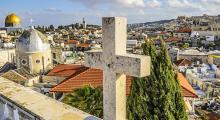
My reflection will revolve around a biblical icon of the city, and in particular, the City of Jerusalem. The image of the city is widespread and familiar. It signifies coexistence and relationship, both civil and religious. We will not focus on a generic idea of the city, but rather on Jerusalem, as representing an ideal model of reference, and we will recall passages from the Scriptures in this regard. We are the Church of Jerusalem, and the Holy City is not only our geographical locus but also the spiritual heart of our church community. It is the Place that preserves the heart of our faith – the Redemption. Jerusalem is therefore also the geographical and spiritual place that preserves the identity of our Church, the center to which we return in order to find the inspiration needed for this time. Our Church has a multifaceted face, expressing the richness of its rites and traditions. From its origins to the present day, it has essentially been plural, given that Jerusalem is the mother of all peoples. Moreover, for many centuries, it has had a clear configuration: a Church predominantly immersed in an Arab context. Our gaze on the events we are experiencing, therefore, begins with this Church, spread across its vast territory. It is a gaze that, precisely because it is rooted in this Land, aspires to embrace and include all its inhabitants.
It is in the Holy City that each individual community can recognize itself – from the smallest parish to the most populous in Jordan, from the vibrant reality in Cyprus to the Hebrew-speaking faithful in Israel, from the tried and tested parishes in Palestine to those present and rooted in Israel, from the migrants and asylum seekers to all the other diverse realities of our Diocese. Jerusalem is the spiritual model that unifies our Church, despite our being scattered across such diverse territories and political situations.
The Letter is structured in three parts: the first begins with my assessment of the current state of disorder. Before speaking of ideals, it is necessary to anchor ourselves firmly in reality as it is, while recognizing God’s active presence in it.
In the second part, I would like to share a vision for our community, inspired and anchored in Scripture, specifically anchored in Jerusalem.
The third will seek to translate that same vision into pastoral implications for our church community, addressing the activities of our parishes, families, schools, and institutions.
As I have already said, this Letter is primarily pastoral in nature: it does not contain purely political considerations and analyses. It is “political” only in the broader sense, in that it concerns our remaining in the polis as Christians, that is, remaining in our real world and in our City of Jerusalem, while always oriented toward the true and definitive polis, the heavenly Jerusalem.
Part I
Reading the reality: considering the present
Before dealing with our mission as believers, we must take an honest look at the context in which we are called to live. We must begin from the reality in which we find ourselves if we wish to concretely answer the question that will accompany us throughout the Letter: how can we, as Christians, live within this conflict?
In a complex reality such as ours, any attempt at synthesis is by its nature partial. I accept the risk that this implies.
I do not intend to reconstruct a chronicle of the events here. Rather, I seek to understand their overall significance. October 7, 2023, and the war in Gaza meant something different and disruptive for each of the two peoples living in this land. For the Palestinians, these events represent yet another dramatic phase in a long history of humiliation and displacement. For the Israelis, on the other hand, these events represent something unprecedented, a violence that has brought back the horrors that occurred in Europe eighty years ago. Without entering into this debate, which is beyond our scope, we would like to point out that October 7 and the Gaza war are now largely considered watershed events that brought one era to a close and opened another, doing so in the worst possible way.
In this sense, we have been plunged into an “after” that we struggle to understand, but whose contours are already discernible.
What we are experiencing is not merely a local conflict. The local conflict is the symptom of a much deeper crisis, a global paradigm shift. For decades, the international community, and particularly the Western world, believed in an international order based on rules, treaties, and multilateralism. Not without a hint of hypocrisy, it declared that international law, the Geneva Conventions, and UN resolutions, though imperfect, were necessary instruments to regulate coexistence among peoples, protecting the weakest from the law of the strongest. Today, everyone seems to have woken up to the weakness in this system, evidenced by the inability to manage these conflicts. In Israel and Palestine, for different and opposing reasons, trust in this system has long evaporated.
We are witnessing a renewed reliance on the use of force as a decisive means for resolving disputes, increasingly reduced almost exclusively to its violent and military forms, at the expense of all other avenues grounded in law, dialogue, and responsibility toward civilians. War has become the object of an idolatrous cult: we no longer sit down at table to avoid conflict, but rather consider war a possible, or even inevitable, outcome. Civilians are no longer simply considered collateral damage, rather this damage is blamed on the enemy’s failure to surrender, or they are seen as instruments used to achieve the goals of war. War serves as an end in itself. Some world powers, who once presented themselves as guarantors of international order, today reveal a different face: they choose sides, not on the basis of justice, but on their own strategic and economic interests. Many institutions – civil, political, religious – thus end up remaining silent and powerless spectators in the face of this new global disorder.
The logic of deterrence as an instrument of security, the falling back on the use of weapons and force in conflict management, and the very concept of defense, raise profound ethical and political questions today: their legitimacy, the methods of their use, the economic and social costs, the concrete consequences for the civilian population, and much more.
To these questions, we add an element that cannot be overlooked: the civic conscience of peoples, which has matured over time, and is profoundly shaped by the assimilation of the values of human dignity, respect for life, and fundamental rights. This moral heritage, now engraved in the heart of contemporary societies, questions every political and military choice, and sets clear limits on the use of force.
The history of this Land, marked by ancient and recurring conflicts, also teaches us that it is illusory to think that force, even when deemed necessary in the short term, can alone offer a lasting solution. When force becomes common exchange and the dominant criterion, it ends up fueling a spiral of violence that is truly difficult to halt.
This violence leaves deep wounds: material destruction and moral lacerations that weigh on future generations. Therefore, while not ignoring the complexity of the choices authorities must face, we cannot fail to call to mind that force cannot be the ultimate horizon, nor can it serve as the foundation on which to build a peaceful future.
The role of the media today is more central than ever. On the one hand, they are the window through which we receive information from places otherwise inaccessible. On the other hand, they have become the preferred vector for disseminating narratives, often conflicting and increasingly difficult to verify. In a conflict like the current one, war is waged not only on the ground, but also with words and images: every photograph, every video, every headline can become a weapon. There is a real risk of losing our bearings, of no longer being able to distinguish between truth and fiction, between news and propaganda.
In addition to all of this, there is yet another element, perhaps even newer and more disturbing. The ongoing war has raised even more ethical questions for which we are unprepared. I am thinking, in particular, of the use of artificial intelligence in warfare. It is no longer only about increasingly sophisticated weapons or remote-controlled drones: we are entering a phase in which algorithms select targets, making choices that until recently were exclusively human. What happens when a machine decides who lives and who dies? Where is there still human responsibility? These are new questions, for which we still have no answers, but which we can no longer afford to ignore.
I do not intend to delve into these complex considerations. I am simply emphasizing that this new era also raises unprecedented questions, which demand serious consideration. It must be said that the crises of multilateralism and of institutions, and all these new interrogations, are not intellectual abstractions, distant from our daily experiences. Instead, they have a direct impact on the life of our community; they are the framework within which our daily lives careen out of control in recent years, causing profound suffering. I have often asked myself, for example, how many people in these recent wars in our region have died because of “the decision of an algorithm”? It is against this backdrop that we must question the experience of our Diocese.
Without claiming to be exhaustive, let us try to make some order with regard to the consequences of this chaos on all of our lives by grouping these into five key areas:
1. The Dissolution of Bonds: Pain, Hatred, and Mistrust
The first rupture is the tearing of the fabric of human relationships. Pain – which always deserves respect – is rooted in the souls of far too many people.
In the face of the tragedies and injustices of our time, feeling like a victim is a deeply widespread reaction. Everyone tends to perceive their own tribulation as unique and absolute. This attitude makes it difficult to recognize another's experience and profoundly affects how individuals and communities live and interpret what happens around them.
It must be recognized, however, that the experience of being a victim can mean different things, depending on the circumstances. Some lose their lives while staying within the walls of their homes, and others die while fighting on the front. Some see their homes destroyed during a bombing, and others witness the progressive loss of their land year after year. Some live under siege, deprived of essential goods such as food and medicine, while others face the constant fear of terrorist attacks. Pain is always pain, and it is not our intention to rank suffering. While respecting diverse circumstances and acknowledging their complexity, we cannot consider them all identical. There is a difference between those who exercise power and those who suffer under it, between those who govern and those who are governed, between those who possess weapons and those who are threatened by them, between those who occupy and those who are occupied. Responsibilities are different. Recognizing this difference is an act of respect for justice and truth.
Hatred has dug deep furrows. We witness a painful dehumanization of the other: when they become merely “the enemy,” everything becomes permissible. Violence has not only destroyed cities and homes, people and hopes, but it has scarred consciences, poisoned public discourse, and generated a sense of betrayal, even with regard to ideals that were believed to be shared. It has created a cycle of victims struggling against other victims that, over time, hardens spirits and makes it increasingly difficult to open paths to reconciliation.
Political life and civil institutions seem incapable of nurturing a long-term vision that offers perspective, rather than deepening confusion and skepticism in a context dominated by mistrust. And this is why many – especially young people – are growing suspicious of any possibility of coexistence and of the belief that there is a credible alternative to the spiral of conflict and injustice.
Since the beginning of the war, the economic situation has worsened everywhere. The absence of pilgrims has left hundreds of families without work. The closure of the Palestinian territories has paralyzed many others. Communities struggle to make plans. Young people are not getting engaged, are marrying less frequently, and are having fewer children. The housing crisis for families is also becoming increasingly acute. Many are looking abroad and dreaming of a future far from their homeland. Emigration, an ancient wound, is reopened today, deeper than ever.
When the cry of the suffering seems to be unheard or go unanswered, there is the temptation to lose faith, even within communities of faith, which should serve as the voice of the weakest, faith even in God.
It would, however, be unfair to stop at this bleak description of the problems highlighted by reality. Precisely in that breach, in the void abandoned by politics and law, associations, movements, and grassroots groups have never stopped operating. They do so not out of some naïve vocation to dialogue, but rather out of a stubborn obstinacy, insisting on seeing others as human beings. This is not the place to list them, and there is no need to formulate a hagiography. However, it is they that constitute the fragments of concrete humanity, from among whom the project of a possible coexistence can emerge. If and when we emerge from the rubble, it will be they – not the great international organizations in crisis – who will be the architects of reconstruction. The debacle of the international system has at least the merit of having restored visibility and dignity to those who had never stopped working in the field.
2. Fragmentation and Fear: The Temptation of Enclaves
Added to this dissolution of bonds is a worrying phenomenon: growing polarization. Not only between Israelis and Palestinians – which we know well – but within the social structures of both societies. People are increasingly withdrawing into closed groups, into social enclaves where only like-minded people meet, those who speak the same language, who share the same fears. This trend is further reinforced by social media algorithms, which constantly feed users content that confirms their pre-existing beliefs, amplifying the echo of their own positions and widening gaps in mistrust, fear, and suspicion among groups.
Fear and radicalization generate fragmentation and isolation. People retreat into their own group as if into a shelter. They stop associating with those who are different, who think differently, who belong to another community, another faith, another political faction. Parallel bubbles form that do not communicate with each other. This polarization is harmful because it affects the very way each group builds the foundations of its belonging, nationally, socially, and personally. We increasingly define ourselves through opposition: we are what the other is not. In this game of mirrors, identity becomes rigid, defensive, and exclusive. It is as if there were no longer an “us” that includes everyone, but only many small “us” that oppose each other. When the “us” is reduced to opposing identities, it becomes easy to simplify the other and read the other as a uniform block. In every society, however, different voices and positions exist, and resisting the temptation to consider entire populations as monolithic entities is a necessary first step in rebuilding relationships.
A sense of community belonging, however, is not necessarily a negative element, because each community is characterized by its own physiognomy, a specific mission, and a particular charisma. This is a treasure in the unique mosaic of the Holy Land and should be preserved, but only on condition that these qualities do not assert themselves to the detriment of others or become instruments of opposition.
From this perspective, Christian life, grounded in solid roots, demonstrates how belonging can be strong without becoming rigid or defensive, and how the very depth of identity makes openness to others possible. In this way, the “us” can once again become inclusive, capable of holding together different affiliations without reducing them to opposing identities.
3. The sense of loss: worn-out words and the common good overshadowed
The third key area is the most profound: the loss of the coordinates that allowed us to orient ourselves. We have lost faith in certain words. “Coexistence,” “dialogue,” “justice,” “human rights,” “two peoples and two states”: these terms, which for years have nourished our discourse, today seem worn-out and devoid of meaning. When we use them in our communities, we sometimes encounter tired and disillusioned looks. Faced with the horror of the images we receive each day, these expressions truly seem to belong to another world. We are then left speechless, and in that silence, violence shrieks its brutal language.
In addition, the concept of “common good” has lost its meaning. We struggle to answer fundamental questions such as: what kind of society do we seek to establish? What is the good we want to pursue together, beyond partisan interests?
In this land, everyone seems to have sacrificed the common good on the altar of partisan interests, albeit in different ways. It seems that everyone thinks only of themselves, of their own survival, of their own security, in a perpetual existential war, on increasingly distant fronts.
However, reality imposes the strongest language. This reality, far beyond what we might think, feel, or believe, reminds us that we are destined to find ways to coexist. There is no alternative. This land – as contested as it is beloved – is the home of all: Jewish Israelis and Palestinian Arabs; Christians, Jews, Muslims, Druze, Samaritans, Bahais, and those of other faiths. It is God who placed us here. We Christians, in particular, have a precise mandate: to be salt and light wherever we are. And this means not giving up on creating opportunities for interaction among different national and religious communities, because, when words are no longer enough, that is when concrete actions are needed.
4. The specific challenge of the Holy Land: interreligious dialogue in difficulty
Another difficult aspect concerns relations with other faith communities. Interreligious dialogue – which has been central to our mission for years – is in difficulty. This is not because we have stopped meeting. Rather, the grounds for encounter have been affected by what we have described so far: suspicion, disillusionment, weariness.
We have had to deal with seemingly irreconcilable historical narratives, in which each side claims a monopoly on interpreting events. We have not felt supported or listened to by one another. It is a great bitterness, which challenges us in our depths.
The Holy Places, which should be spaces for prayer, are becoming battlegrounds about identity. Sacred texts are invoked to justify violence, occupation, and terrorism. I believe this abuse of God’s name is the gravest sin of our time. Many religious institutions seem to endorse rather than stem and denounce these tendencies, thereby demonstrating their lack of prophetic vigor.
Despite all this, for us Christians, dialogue is not an option, but an essential necessity. Our children – Christians and Muslims – go to school together, our sick are treated in the same hospitals, where no distinction is made on the basis of religious affiliation, whether Jews, Christians, Muslims, or those of other faiths. Our poor have the same needs. Without relationships with other faiths, we have no future. However, the challenge runs deeper: dialogue is our vocation and our destiny. It is one of the ways in which our faith manifests itself and is nourished.
5. The multifaceted face of our local Church in this turmoil
Our church community lives within this context of general disorientation. We are a Church that spans diverse territories – Israel, Palestine, Jordan, and Cyprus – each with its own history and dynamics. The political situation is not uniform nor is there a single pastoral context. Different circumstances all demand attention. This complexity constitutes both our wealth and our challenge. It forces us not to generalize, nor speak in the abstract, always keeping in mind the lived experiences of communities at home in different places. This obliges us to listen in nuanced ways and to engage in pastoral action that adapts to the needs of each region.
Let us now take a look at the tangible face of our Church in these most difficult of times:
In Gaza, our brothers and sisters are living in extreme tribulation. They have lived for years under bombs, without water, without food, without medicine. And now they live in the rubble. We have lost young people, old people, and children. Yet, the parish of the Holy Family and Caritas have been and remain the Face of Christ amidst the horrors. In churches transformed into shelters, hundreds of displaced people have shared life with each other.
In Palestine, the situation is deteriorating day by day. We have already spoken about this at length, but there is still no calm on the horizon. It is here that the future of the Israeli-Palestinian conflict is being quietly and structurally decided. Aggression caused by the occupation and the total absence of the rule of law is increasing, as settlements continue to expand. If this trend is not stopped, the risk is the crystallization of a permanent occupation, which undermines any possibility of a just, mutually agreed-upon solution. I fear that this will become a major concern, destined to define the forms of our engagement for a long time to come.
In Israel, our brothers and sisters live in a different context, but one not without its own challenges: social discrimination, economic inequality, and growing insecurity. Rising crime – which in certain areas dominates the entire territory, with a daily toll of deaths and injuries – is creating widespread fear that is reinforcing the temptation of many to leave. Israeli society has been traumatized since October 7, 2023, and this trauma has generated suspicion toward anything connected to the Arab world, resulting in growing mistrust between the Jewish and Arab populations.
The Hebrew-speaking Catholic community, in this polarizing conflict, has not always felt heard by its own Church and has expressed this clearly. Our Hebrew-speaking Catholic brothers and sisters experience a particular solitude in the Church. They are part of a Church in which they do not feel completely at home. In the coming months, I will seek opportunities to personally meet with this part of our Diocese to better listen to them.
Migrants and asylum seekers belonging to our communities live in situations of existential precarity, fearing deportation and facing discrimination and exploitation. They, too, have been caught up in the violence of the conflict, and some have been killed in various attacks in recent years.
Our schools, places of coexistence and a precious component of the Church, also struggle to provide guidance for pupils. Both teachers and pupils carry the burden of what they see on television and social media into the classroom; today, for them too, dialogue on the most divisive issues has become, to say the least, challenging.
Despite this desolation, our determination to build a fraternal society remains steadfast, and our Christian communities continue to be a tangible sign of hope. In Gaza, faith continues to bring light to the lives of local Christians. The daily celebrations of Mass, the recitation of the rosary, and the charitable works of the parish and Caritas keep Christian faith alive. Thousands of families, through the commitment of the parish and Caritas, have been able to receive help and support, even during the most difficult moments of the war. In Palestine, our parish priests have organized and united their communities, creating support and solidarity initiatives, especially for those families struggling the most. In Israel, too, priests do not spare themselves during the war's most difficult periods. In Jordan, life continues relatively normally, and despite the economic crisis, parishes have committed themselves to organizing collections for the poor, prayer vigils, and rosaries in solidarity with the Diocese’s parishes currently experiencing hardship. Cyprus, which was also recently affected by this war, has committed itself to solidarity and is consolidating its pastoral activities.
An important dimension in all of this is that the entire universal Church, from Pope Francis to Pope Leo XIV, down to the smallest and poorest dioceses, has shown its closeness, offering prayers and material support to our Church in the Holy Land. We want to thank all those who have worked – and continue to work – to enable us to continue addressing the many needs of these times; we wish to thank them above all for their affection and Christian closeness, which consoles and edifies us. The action of the entire Church has shown that hope is incarnate. Indeed, countless prayers have been organized, solidarity collections have been taken up, and so many other concrete expressions of communion have taken place.
In light of all this, we must truly question another important aspect of our mission. It is true that during this time, we have been present throughout the Diocese with gestures of closeness and solidarity. Our Church has made its voice heard, attempting to speak a word of truth – honest, clear, with parrhesia (boldness) – even amidst this chaos, often at the cost of misunderstanding. But, I wonder, has this been enough? Or, in this most challenging period, have we at times chosen prudence and sought institutional survival, sacrificing our prophetic witness? How can we speak a word of truth without creating new barriers and new victims? It is a question that haunts me every day, and one that is never easy to answer. We must ask ourselves this question sincerely, first and foremost before the Lord, knowing that discernment means listening to God’s voice, converting to the truth, seeking justice, and choosing the good of our brothers and sisters.
This is our situation: a valley of tears, of resignation, of empty words… and yet also containing courageous experiences of life and fraternity. It is in this wilderness that we are invited to recognise once again the voice of God calling us.
Faced with this chaos, the crucial question is neither how to escape from it nor how to resolve it, but how to live within it as believers, without allowing ourselves to be swallowed up by its logic and without giving up on the responsibility of evangelical witness. Therefore, it is time to lift our gaze and ask ourselves what the Lord might be saying to us in all this, allowing ourselves to be drawn by a light that comes from on High. We need to contemplate God’s dream for God’s City.
Part II
Vocation: God’s dream named Jerusalem
Having taken a general – and inevitably rough – look at our common yet variegated reality, let us now return to the initial question: what position should we, as Christians, adopt within this situation of conflict? We can now rephrase this as: what is God’s will for Jerusalem? Let us then try to examine together the image of the Holy City that God offers us.
Scripture, from its very first pages in the book of Genesis, provides the foundation of relationship as God intended it to be: between Him and humanity, among human beings, and between humanity and creation. This foundation provides the beginning of the entire history of salvation. Above all, however, it is the perspective of the Book of Revelation that guides us in our reflection here. This book often misunderstood – especially because of its symbolic language – is not meant to foster fear or fatalistic interpretations of history, but rather to help us recognize ultimate meaning in the light of God’s faithfulness and Christian hope.
According to Scripture, human history begins in a garden, Eden. The garden symbolizes a humanity still in a state of primordial innocence and, ultimately, loneliness. At the end, however, in the book of Revelation, the story concludes with a completely different, mirrored setting: a city. Not just any city, but the new Jerusalem. This transition is not a mere narrative detail, but a profound revelation about humanity’s destiny. The work of salvation is not a return to an idyllic and isolated past, but the building of a communal, complex, and reconciled future. The end of the story points toward a mature society – a “city,” in fact.
The first city mentioned in the Bible is built by Cain (Gen 4:17). After killing his brother, he builds a refuge: a place meant to set a limit to violence, where he can attempt to rebuild lost fraternal relations. In Scripture, the city thus arises as a human attempt to restore coexistence where relationships have been shattered. The last city in the Bible, by contrast, is the New Jerusalem that descends from heaven (Rev. 21–22).
Between these two poles – the city-refuge built by humanity out of fear, and the city-gift that descends from God out of love – the whole story of salvation unfolds. The Bible never presents an ideal, static image of a city; the “perfect” city does not exist. It is always a mirror of all human contradictions: of sin and greatness, of violence and trust. Every human context, every city, reflects and experiences this tension.
This tension runs throughout Scripture and is uniquely focused on Jerusalem. No other city in the Bible receives so much love and so much rebuke, so much promise and so much condemnation. This same tension, as we shall see, also inhabits the Church that was born in Jerusalem.
When we talk about Jerusalem today, we mainly focus on the political, historical, and sociological aspects. But we should never forget that what binds the whole world to this place goes beyond history, geography, and stones. When we speak of the Holy City in this context, we mean it not only as a physical reality, but also – and especially – as a symbol of the People of God and the Church, born at Pentecost in the Upper Room. At that moment, the Holy Spirit descended on the Twelve, that is, on the entire apostolic assembly gathered in the room where Jesus had instituted the Eucharist. It was on that Pentecost morning that the miracle described by the Acts of the Apostles occurred. The disciples, who had received the Spirit, went down to the square to announce what had happened, and “each one heard them speaking in the native language of each. Amazed and astonished, they asked, "Are not all these who are speaking Galileans? And how is it that we hear, each of us, in our own native language?” (Acts 2:6-8)
All the people present at that time, belonging to different nations and languages, through the work of the Spirit, were able to understand one another and build unity. From the beginning, the Church was universal, united, and diverse. From there, the Twelve set out to carry the proclamation of Good News to the whole world.
Even today, the Christian community in Jerusalem retains its universal character, which should not be confused with a merely “international” dimension but rather points to a deeper reality, exemplified in the Acts of the Apostles. Most Churches still have their ecclesiastical centers elsewhere in the world, yet each maintains its heart and a living presence in Jerusalem. In this city, the various Christian denominations share space and time, resulting in an imperfect but vital journey toward the unity of believers. Through different rites and languages, celebrated in the same places and lived within our families, these churches offer a living image of what occurred in Jerusalem on the day of Pentecost: different peoples gathered in the same Spirit. Just as the Apostles then set out to proclaim the Gospel to all nations, so today these communities, rooted in the same place and often within the same families, are called to rediscover full communion in faith and charity.
For believers, the bond with this Land also implies a constitutive relationship, however complex, with both Judaism and Islam. Here, interreligious dialogue over the centuries has become not only a condition for survival but also an element of fidelity to our universal identity. It is here that the Mother Church is challenged to generate life and care, promoting understanding of others, the demanding practice of forgiveness, and the effort of respectful comprehension.
The universality of the Church does not oppose the concreteness of the local Church and communities. Rather, it is precisely in the local Church that universality is made visible and operative. This is why St. John Paul II spoke of a “mutual interiority” between particular Churches and the universal Church.
Not only the Church, but the Holy City itself has preserved this universal character. Pope Benedict XVI described it with great clarity in a homily delivered in Jerusalem:
“Jerusalem, in fact, has always been a city whose streets echo with different languages, whose stones are trodden by people of every race and tongue, whose walls are a symbol of God’s provident care for the whole human family. As a microcosm of our globalized world, this City, if it is to live up to its universal vocation, must be a place which teaches universality, respect for others, dialogue, and mutual understanding; a place where prejudice, ignorance and the fear which fuels them are overcome by honesty, integrity and the pursuit of peace. There should be no place within these walls for narrowness, discrimination, violence and injustice. Believers in a God of mercy – whether they identify themselves as Jews, Christians, or Muslims – must be the first to promote this culture of reconciliation and peace, however painstakingly slow the process may be, and however burdensome the weight of past memories.” (Benedict XVI, Josafat Valley, Jerusalem, May 12, 2009).
The mission of earthly Jerusalem, in a sense, is to become the image and mirror of the heavenly Jerusalem, “a prophecy and promise of that universal reconciliation and peace which God desires for the whole human family” (Benedict XVI, ibid.). This is the mission we have lost sight of in the violent maelstrom of events in recent years. And it is to this mission that we must return.
In short, Jerusalem stands as a symbolic microcosm at the intersection of civilizations, religions, and ethnicities. It is paradigmatic of the world as a whole and thus encapsulates many of the contemporary issues we face globally. While it is at the center of the Israeli-Palestinian conflict, it also represents the complex interactions among different religions and nations. The conflict that divides this city alone has significant regional and global repercussions. A walk through the streets of Jerusalem reveals how much the city is truly a focal point for many other global clashes: the tension between modernity and tradition, liberal democracy and conservatism, universalism and particularism.
Jerusalem also embodies the diverse spirits of our Church and exemplifies its vocation. In this place, within a reality marked by strong contrasts – common to the course of human history – the Church is called to express itself.
The most powerful images in Scripture that reveal the profound identity of Jerusalem, and consequently the identity and mission of our Church, are found in John’s vision of the heavenly Jerusalem, described in the last two chapters of Revelation, from which we now draw our inspiration.
1. A New Heaven for a New City
“Then I saw a new heaven and a new earth; for the first heaven and the first earth had passed away, and the sea was no more.” (Rev. 21:1)
The first thing John sees is not the City, but a “New Heaven.” Jerusalem has a heaven. This may sound trite or obvious, but it is its most eloquent distinguishing feature. Its antagonist, Babylon, in Revelation, is also described in every detail. Yet, in Babylon, the sky is never seen. It is a city without heaven, and therefore without God – enclosed within a purely human and earthly horizon, and thus doomed to ruin.
Jerusalem’s heaven, moreover, is quite special: it is a “new” heaven. This is not the first time John speaks of heaven. In chapter 4 of Revelation, the visions begin with a significant announcement: the visionary glimpses an open door in heaven (Rev. 4:1). Heaven is new, then, first of all because it is open. It was opened because the Son of Man, who descended from Heaven, returned to Heaven after the Resurrection, taking humanity with him (cf. Jn. 1:51). The new Heaven is a Heaven already inhabited by humanity.
In this passage, we find an important indication: to build the city, to weave authentic relationships among ourselves and our communities, we must begin with an awareness of God’s presence, with the primacy of God, with faith. God must not be excluded. Jerusalem is not just a matter of political boundaries or technical arrangements. Its main identity – the most important characteristic of the city and of the entire Holy Land – is that of being the place of God’s revelation, the place where faiths are at home.
Even today, this dimension is made tangible and visible, especially in what is considered the Holy Basin, where almost all the main Holy Places are concentrated: the Old City and the Mount of Olives. The public celebrations of the different religious communities, marked by different and sometimes overlapping times, transform the city, especially at certain times of the year, resulting in an extraordinary symphony of different prayers, songs, and liturgies.
It is also common, at the first light of dawn or in the silence of night, to meet men and women of all ages – Jews, Christians, and Muslims – walking through the city’s streets, wrapped in their different cloaks and heading to their respective Holy Places, to join the religious men and women who pray there day and night. The prayers of the different religious communities ultimately set the rhythm of the entire city: they are its breath and light. This is the city’s most beautiful and engaging identity, its most precious characteristic, to be cherished and preserved.
Ignoring this “vertical” dimension of our land, the religious and spiritual sensitivity of the communities that belong to it – Jewish, Muslim, and Christian – is the deepest reason for the failure of the coexistence agreements that have taken place in recent decades. Future ones will also be doomed to failure if the specific, prophetic character of Jerusalem is not taken into account. It must be, first and foremost, a house of prayer for all peoples (cf. Is 56:7). We do not want to challenge, rather we do indeed confirm, the necessity of the various existing Status Quo accords, which are important for regulating relations among the various communities in the city. However, I believe there is also a need for the courage to embrace a new vision, to build new models of life and relationships where common faith in God becomes an opportunity for encounter rather than for exclusion. Faith opens us to Heaven and the world, where all believers feel urged to bring humanity to God. No project of coexistence in the Holy Land can ignore the vertical dimension, the awareness that this land is, first of all, the place of Revelation.
2. A City descending from Heaven
“And I saw the Holy City, the new Jerusalem, coming down out of heaven from God, prepared as a bride adorned for her husband.... And in the spirit, he carried me away to a great, high mountain and showed me the Holy City Jerusalem coming down out of heaven from God.” (Rev. 21:2, 10)
The Holy City does not rise proudly to heaven by its own strength. John sees it “coming down out of heaven from God,” and he sees it descending twice (three times if we also consider Rev 3:12). This descending movement is not something that happened once and for all but is its perpetual way of being. The new Jerusalem is a city that continually receives from God itself and its own life. Its existence is not a conquest but a gift.
It descends “prepared as a bride adorned for her husband.” This is an image of intimacy and relationship. John also uses the biblical image of the tent, where God chooses to dwell among humanity, a place of encounter between God and the human person (cf. Jn. 1:14). Therefore, it is a city whose most original nature is to experience deep intimacy with the Lord, but also to be, like the tent, a place of welcome. This twofold movement – intimacy and welcome – defines the life of the Church. In God’s dwelling among his people, fulfillment occurs, and victory over evil and death is achieved: not only is evil overcome, but humanity is consoled by God himself, who wipes away tears from eyes (cf. Rev. 21:4).
This passage gives us another significant indication. It is a crucial warning, especially for the religious institutions of the Holy City: without a continuous “coming down out of heaven,” that is, without humbly and constantly drawing on a relationship with God, letting God illuminate one’s way of thinking, without continually nourishing oneself with the Word of God, our institutions risk atrophying. They risk becoming impregnable fortresses closed to the world, instead of open cities and sources of new life. One does not receive from God the strength and possibility of a different perspective once and for all; these gifts require continuous striving of soul and heart.
Practically, for Churches and religious communities to set themselves up to listen to Scripture means to listen first of all to the cry of those who do not know Christ, do not know him sufficiently, or have drifted away from him, as well as to the cry of the poor, the marginalized, and those who suffer because of conflicts. It is there, in the active reception of the wounded flesh of humanity, that we can test the authenticity of our relationship with God. If our gaze on God does not open us to a gaze on the other who suffers, then we have not truly encountered the God who descends into the City. It is a call for religious authorities to hold together closeness to God and to their own people.
3. The Temple and the Lamb
“I saw no temple in the City, for its temple is the Lord God the Almighty and the Lamb.” (Rev. 21:22).
Scripture presents God as the One who desires to dwell among people. In the Old Testament, this presence was linked to the temple, the place of encounter between God and God’s people. The prophet Ezekiel also envisions a renewed city around the temple, the heart of the divine presence and a sign of his holiness.
In its vision of the new Jerusalem, Revelation uses different language. John states, “I saw no temple.” This is not because the Presence of God is diminished, but because it is no longer concentrated in a separate space. God Himself and the Lamb dwell among their people and constitute their living center. In this perspective, there is no longer a separation between sacred and profane places: God does not dwell in a building, but in relationship – not in a place to be conquered and possessed, but in history.
Consequently, there are no spaces where God is present and others where God is not. There are no places where God listens and others where God does not listen. Any distinction between included and excluded based on the criteria of purity also disappears. If in Ezekiel’s vision access to the temple was governed by strict distinctions, in the new Jerusalem all are welcomed: men and women, children and the elderly, the healthy and the sick, the free and the slaves.
This passage from Revelation offers a powerful lesson to earthly Jerusalem, which is torn by conflicts related to the possession of places and the definition of exclusive boundaries. Obsession with the occupation of spaces and ownership has become one of the main criteria for interpreting relationships among communities, often generating division and violence. It almost seems as if, in order to build relationships and to have the right to speak, it is necessary to own, to occupy, to justify one’s presence through territory.
We must not be naïve. There are spaces that must be guarded, places necessary for each community to live and bear witness to its faith. We must not forget that the Holy Land is also the Land of Holy Places, which guards the memory and historical identity of peoples. But borders serve to preserve freedom, not to stifle it. They must not become insurmountable barriers or grounds for exclusion. It is possible to coexist while respecting others’ spaces, considering everyone’s history and differing sensitivities.
In the New Jerusalem, then, there are no places to own, but relationships to build. If the God of the Holy City does not occupy spaces or erect barriers, then no one should feel excluded. Therefore, God cannot be used to justify choices of closure or exclusion.
This passage from Revelation, while inviting us to look up to heaven, actually brings us back down to earth: a city is alive to the extent that it recognizes that the true temple to be guarded, its vital center, is human relations and relationship with God. It is instead destined to wither and die when it allows itself to be dominated by the logic of possession, devaluation of the other, and self-referential narratives, instead of by the light of the Lamb, which is the logic of gift.
4. The Lamb’s lamp: a new way of seeing
“And the City has no need of sun or moon to shine on it, for the glory of God is its light, and its lamp is the Lamb… And there will be no more night; they need no light of lamp or sun, for the Lord God will be their light, and they will reign forever and ever.” (Rev. 21:23.22:5)
We have seen that in the new Jerusalem, there is no temple. But then, where is God, and how does God dwell in Jerusalem? Where does one encounter God? God’s presence in the City is not cumbersome, bulky, or imposing. God is present as a lamp that illuminates. God is present as the One who offers the possibility of a different perspective, and thus a new way of living; God illuminates relationships, life, and all things.
If the lamp is the Lamb, it means it is an “Easter” light: the light of the One who gave his life out of love, freely and unconditionally. Easter ushers in a new way of seeing reality. It is the Easter experience that allows us to see life even where our physical eyes see only death, defeat, or devastation.
This passage in Revelation takes us a step further, beyond the criterion of possession, asphyxiated spaces, closed boundaries, and idolized property that we have seen so far. Light is not owned; it is welcomed and spread. It thus becomes the criterion for interpreting reality and guiding choices. Through what eyes, with what spirit do we view others, especially those who are not “one of us”? With trust, with fear, or – worse still – with contempt?
To train one’s eyes to this light – which is life – becomes the first task of those who wish to belong to this City. It means recognizing each person – the poor, the stranger, and even the enemy – as a creature made in the image and likeness of God, looking at them as one looks at God. It is the same style of the Lamb that illuminates the City: an authority expressed in self-giving that transforms power into service, not possession and domination.
5. The Lifestyle of the City: welcome and memory
“It has a great, high wall with twelve gates, and at the gates twelve angels, and on the gates are inscribed the names of the twelve tribes of the Israelites: … And the wall of the City has twelve foundations, and on them are the twelve names of the twelve apostles of the Lamb.” (Rev. 21:12-14)
What stands out in this description is an apparent inconsistency. The names of the twelve apostles are placed as the foundation of the building, while the names of the twelve tribes of Israel appear on the doors. Chronologically, one would expect the reverse: Israel comes before the apostles. Yet, in the vision of Revelation, the old and the new are neither opposed nor overlapping but are instead recomposed into a redeemed unity. God does not erase history but recreates it by laying new foundations in which nothing is lost, and everything finds its proper place. Jerusalem thus becomes the fulfillment for both the twelve tribes and the twelve apostles. Only within this City can each one find the meaning of his own history and mission.
This is also a decisive point for us today. Violence often arises from the inability to reread one’s history in a redeeming way. This occurs when memory becomes a hermetically sealed narrative, constructed against the other and defended as an exclusive possession. The earlier preoccupation with ownership as a criterion for defining relationships is also reflected in the relationship with historical memory. There is a tendency to want to own the narrative of events, treating it as territory to be defended, while constantly questioning the other’s historical narrative. In doing so, memory no longer helps improve relationships but instead becomes “toxic memory” that pollutes them. Denying the historical memory of the other is a subtle but powerful form of exclusion.
What is needed instead is a rethinking of the very concepts of “history” and “memory,” and consequently, also of the categories of “guilt,” “justice,” and “forgiveness.” These are what place the religious sphere in direct contact with the moral, social, and political spheres. It is not a matter of denying the facts of the past, but of verifying their interpretations so that these do not violently determine today’s choices. Only through this honest reexamination can one redeem one’s historical understanding for the benefit of all humanity. Schools, universities, cultural centers, movements, and the media bear the primary responsibility for this mission to rethink and heal our collective memory. They can help build a different, positive, and inclusive historical narrative.
This purification is not a diplomatic operation or a political compromise; it is a deeply spiritual act because it touches the roots of identity and pain. It requires us to allow ourselves to be redeemed by God so that we, in turn, can become instruments and channels of healing for others. Only a redeemed memory can generate a different future. The mission of the Church is to promote a true “purification of historical memory.” St. John Paul II forcefully recalled this during the Jubilee of 2000, when he spoke of the need to purify memory as a deeply spiritual act, capable of touching the roots of identity and pain.
I am well aware that this is an unacceptable topic for many. For some, it may be “too Christian”; for others, it may seem utopian or even something to be outrightly rejected. However, this is the contribution, the mission, that the Lamb leaves to us. It is the witness to which we are called, the “promise and prophecy” that must sustain our pilgrimage in the Holy City, in our Church: to dare to envision a future not born of possession, fear, or vindication, but of the redemption of history. What kind of Church would we be if we did not have the courage to point to a world that is not yet here, but which God promises us, and which we already glimpse on the horizon?
6. The open doors
“Its gates will never be shut by day– and there will be no night there.” (Rev. 21:25)
The walls of a City are always built for defense. Here, however, they are not constructed to defend the City against threats from outside, as if what is outside were dangerous. Instead, they serve to define a way of life and a sense of belonging. And they remain open always. There is nothing to defend, only a way of life to propose. Open in all four directions, they allow anyone, at any time, to enter and become part of this new humanity. “My house shall be called a house of prayer for all peoples.” (Is 56:7)
What in the Old Covenant was the privilege of only one people, though, from the beginning, intended for all the peoples of the earth (cf. Gen. 12:3), is now prophesied for everyone. All can be part of the holy people of God. The Church today lives and proclaims this by carrying this prophetic treasure in clay vessels. This, too, is another clear indication that the Book of Revelation offers us. In the City that comes down from heaven, no one can exercise a monopoly, because the Holy City, by its very nature, is incompatible with any form of closure, exclusivity, or single-color identity. It does not belong to some against others, nor can it be reduced to the possession of one group. Its doors are always open; they are not merely an architectural detail, but the expression of an identity defined only by welcome and relationship. Coexistence results from sharing a common project, of which everyone is an integral part.
This also means keeping the doors open between the different communities that make up our society – not just “brushing past one another,” but rather “keeping the doors open”, in other words, getting to know one another, and supporting one another.
7. The shared heart of humanity
“The nations will walk by its light, and the kings of the earth will bring their glory into it... People will bring into it the glory and the honor of the nations.” (Rev. 21:24, 26)
The gates of the City are not only open. John specifies and adds that peoples, nations, and otherness are not a threat; on the contrary, they are considered an asset. It is the gold and incense of the nations that beautify the City. This is another of the great innovations described by the Apostle. The canons of beauty, holiness, and purity are completely reversed: what is beautiful is not what is pristine, solitary, or isolated, but what is open to the other. Jerusalem is enriched to the extent that it welcomes.
At the beginning, we saw that Jerusalem is built up to the extent that it receives itself from God. Now the vision is completed, and we also see that Jerusalem is enriched to the extent that it receives itself from others. The two go together. This appears to fulfill Isaiah’s prophecy: “all the nations shall stream to it. Many peoples shall come and say, «Come, let us go up to the mountain of the LORD, to the house of the God of Jacob; that he may teach us his ways and that we may walk in his paths»” (Isaiah 2:2-3).
The heart of the world is in Jerusalem, as witnessed by the millions of pilgrims who come from all over to the Holy City. Pilgrims are part of the life of the city. Without them, without this link to the world, the city is incomplete, and we unfortunately see this very clearly in these months marked by their absence. This means that local rulers must always keep in mind that what is experienced in Jerusalem involves the lives of billions of believers around the world. It is not just the private affair of those who have the grace to live there. Jerusalem belongs to no one exclusively; it belongs to everyone because it is not the spoils of war, but a gift, a common reference point, a heritage of humanity.
The world has the right and responsibility to take an interest in Jerusalem – not to impose solutions from above, disrespecting the sovereignty and self-determination of the peoples who reside there, but to exert constant and discreet pressure – diplomatic, cultural, and spiritual – so that no logic of exclusion, domination, or exclusive possession can prevail. The international community should guarantee Jerusalem’s universal mission, reminding everyone that what happens within its walls affects the hearts of billions of believers and the entire human family.
8. The vocation: to heal the world
The City is not an end in itself. Its mission is universal and its vocation is therapeutic.
“Then the angel showed me the river of the water of life, bright as crystal, flowing from the throne of God and of the Lamb through the middle of the street of the City. On either side of the river is the tree of life with its twelve kinds of fruit, producing its fruit each month; and the leaves of the tree are for the healing of the nations.” (Rev. 22:1-2)
From the throne of God and the Lamb flows a river of living water, and the tree of life, whose leaves “for the healing of the nations” grows on its banks. This is the ultimate and sublime task of Jerusalem. The tree of life, which in Eden was forbidden to humanity, is now in the heart of the City, accessible to all. Its leaves are not for a chosen few, but for the healing of the “nations,” a term in Revelation that often denotes the unbelieving world, those who stand outside and do not yet know God. Divine mercy is not a privilege for a few, but a destiny offered to all.
Jerusalem’s mission is not confined within its walls or closed within its gates. The spring of living water that flows from the heart of the Lamb irrigates the whole world. Jerusalem is an “outlooking” City, called to bear fruit for humanity. What it has received from on high is to be shared with all. It has a specific mission, which is uniquely its own: to “heal the nations.” Heal from what? The text does not specify, because it does not point to a single wound, but to the very root of wounded life. It does say, however, that what heals is its being alive, its participation in the life of God.
Healing will be needed in the Holy Land. Long paths of recovery will be required for the many and very painful wounds this conflict inflicts on all communities. Comfort will be needed for the tribulations caused by hatred and “toxic memory.” The mission of the Church is not to draw narrower borders, but to keep the doors open, witnessing to a love that never gives up and reaches out even to those who are distant, doubtful, or resistant. The responsibility of human freedom is affirmed, but so is the boundlessness of divine Grace.
The Holy Land and the small, vulnerable Christian community living there have much to share. It has no military or economic power but draws from the Lamb the “meekness” of those who, according to the Gospel beatitude, will inherit the earth. It has the power of self-giving love, the only power that evil cannot defeat.
Redeeming the consequences of conflict – hatred, fear, “toxic memory” – is the specific and sublime task of the Jerusalem Church for the whole world. Its roots are in the geography of salvation, but its gaze is universal: to be for the world not a utopia, but the seed of a real city, the city set on the mountain (cf. Mt. 5:14), radiating the light of Christ to all nations, where people learn the art of forgiveness, the power of equality, and the joy of service. Above all, it is the courage of forgiveness that is the most powerful medicine, capable of bringing healing, and it is also the most authentic witness our community can offer to the peoples of this Land.
This is not a matter of acting as a bridge between two conflicting parties, as if Christians were called to mediate from the outside. That is not their role. Christians in the Holy Land are not a third party, nor a neutral buffer between Israelis and Palestinians, nor a separate body from their non-Christian brethren. They are, rather, salt, light, and leaven within the societies to which they rightfully belong. Predominantly Palestinian or Jordanian citizens, Christian Arabs, but also Cypriots and Israelis, Christians share the history, language, wounds, and aspirations of their peoples. They are not called to enclose themselves in a protected enclave, nor to flee, but to live their vocation to the full: to be part and parcel of society, sharing its fortunes, and helping to ferment it from within with a vision of humanity – and society – rooted in the Gospel.
They do not offer the world an abstract utopia, but the seed – fragile, concrete, sometimes almost invisible – of a possible city. A city that rises from below, in the dough of daily life shared with their Muslim and Jewish fellow citizens, and that shows how coexistence, forgiveness, and reconciliation are possible. For everyone.
9. Rejection
These two chapters of Revelation that have accompanied us are not removed from reality. John is well aware that, in addition to the fascination and beauty found in the passages we have presented, there is also the possibility of rejection. Several passages address this (21:8, 27; 22:11, 15). Let us take just one as an example: “Outside are the dogs and sorcerers and fornicators and murderers and idolaters, and everyone who loves and practices falsehood.” (22:15)
This is strong language to which we may no longer be accustomed. However, it highlights an important element: living in the Holy City involves a choice and a responsibility. The walls of the City, as we have said, do not defend but define the way of life for those who have chosen to live enlightened by the Lamb. If one decides to live in a City full of splendor, with doors always open, eager to welcome and heal, one also assumes the responsibility to reject everything that does not belong to that way of life.
There is a choice to be made, a way of life to be adopted. Those who reject it cannot remain within the walls, cannot be part of the life of the City. It is not only a matter of choosing to live in the light of the Lamb, but also of working to ensure that darkness and everything belonging to the world of death does not dwell in the City.
It is important to understand the nature of this rejection. It is not a judgment on our humanity, which is always marked by imperfection, or on our being sinners in need of forgiveness; on the contrary, this is precisely why the Lamb is an inexhaustible source of mercy. The rejection described in Scripture is something more radical: it is the deliberate, obstinate, and unrepentant adherence to a lifestyle that is the very negation of the logic of the Lamb. It is the conscious choice of falsehood as a system, of violence as a method. It manifests itself in the claim to possess not only spaces, but the truth. It is building one’s own life and one’s own city upon that project of Babel which seeks to rise to the heavens by one’s own strength alone, excluding God and, consequently, setting aside one’s brother or sister.
The city with open doors does not expel, but clearly defines what is incompatible with its very existence. The choice is ours: to live by the light we receive, or to claim to be light ourselves. To those who make this choice, the city with open doors can only appear as a judgment of condemnation. But for those who embrace the way of the Lamb, it is, and remains forever, a home.
It is important to emphasize, however, that we should not deceive ourselves into thinking this choice is made once and for all, nor that the heavenly Jerusalem coincides perfectly with any earthly community, not even with our Church. As long as we are pilgrims in history, the Holy City will remain before us as a gift and a promise, not as a possession. Even our communities, our religious institutions, and our hearts still bear the scars of sin and division. The temptation to enclose ourselves in an “ideal city” built with our own hands is always present. This is why the Jerusalem that comes down from heaven never ceases to descend: we always need to receive it anew, because we never possess it.
10. A City for All: experiencing history through the eyes of the Lamb
The vision of the new Jerusalem, ultimately, is not an invitation to escape history, but rather a guide to walking within history. It is a model, a style, a real point of reference for the Christian community and for all those who care about the earthly city.
The principles that have emerged – rootedness in reality, the protection of the sacred, the universality of welcome, the strength of meekness, the primacy of relationship over possession, the need for a redemption of memory, openness to all nations – have immediate political, social, and interreligious implications. They tell us that:
The historical character of Jerusalem brings an awareness that the city is home to Israelis and Palestinians, claimed by both as their capital. However, exclusive claims run counter to Jerusalem’s vocation. It is instead a city to be shared, a place of encounter.
The religious character of Jerusalem cannot be ignored in any political agreement. Past failures demonstrate this. We must recognize that the Holy City's primary characteristic is its status as the place of God’s revelation.
Harmony between communities (Jews, Christians, and Muslims) remains the earthly reflection of intimacy with God. Divisions are a denial of this.
Religious institutions are called to continuous spiritual renewal so as not to become obstacles to knowing God and engaging with the world.
Possession of land and holy places cannot become an ideological absolute. We need new balances that take into account the vital needs of all, overcoming the logic of exclusion. It is possible to find ways of coexisting, respecting each other's places.
The international community has the duty and right to care for Jerusalem, because it belongs to everyone. The heart of the world is in Jerusalem, and what happens there affects billions of believers.
The Church of Jerusalem, small and resilient, finds itself living here and now the way of the heavenly Jerusalem: being a welcoming place, an Easter light that illuminates the darkness of resentment; being a home with open doors, an instrument of healing in the world. This is its dream, its mission, its gift to humanity.
Part III
Pastoral implications
After focusing on our reality and contemplating the future entrusted to us, we must now ask ourselves: how can we, as a community, live the lifestyle of “Jerusalem coming down from heaven” in the here and now? We cannot seek to apply an abstract blueprint; rather, we need to find ways to be inspired in our daily lives, in our parishes, families, and institutions. It is a long and wearisome journey, but it is the only one that can fill us with confidence.
We might think we cannot do anything because of the conflict. However, difficulties must not become a pretext for ceasing charity or for justifying omissions. Indeed, it is precisely in these cases that our pastoral action must become more incisive: not aiming to be heroes, but to open up spaces for the work of God.
Reflecting on what we have presented so far, I will now try to outline some pastoral areas in which it is clear that the mission of our Church is to be a concrete expression of the vision that God has entrusted to us.
1. The primacy of liturgy and prayer
We have seen that the first element of the City that descends from heaven is to continually receive itself from God, keeping alive the awareness of God’s presence. The sacramental life of the Church – the liturgy and prayer – safeguards and revives this awareness. This is an essential part of the Church's mission.
There is a subtle temptation that we must recognize: that of considering liturgy and prayer as an instrument, a means to obtain something else – even if this be peace, the end of war, solutions to problems. Prayer is not a means. It is a moment of love and encounter with God, in which we seek to see Him and to be seen by Him, as we do when we visit those we love. It is the heart, the breath. It is what keeps our community alive when everything else falters. Those who pray find trust, even when it seems impossible, because prayer may not change everything or bring immediate and tangible results, but it transforms the way we see things.
We must therefore keep the liturgy and prayer at the center of the life of our communities. Not just prayers for peace – which also need to be promoted – but prayer as a constant and enduring atmosphere of life, giving shape to our days, our weeks, our communities.
I am thinking in particular of the Liturgy of the Hours prayed in community, of lectio divina, of Eucharistic adoration: not practices for specialists, but simple and profound expressions of the Church’s prayer, capable of inserting our daily life – with all its fears and expectations – into a living relationship with God.
The community and healing dimension of the Sacrament of Reconciliation must also be promoted. Too often experienced as private and isolated, it is fully an ecclesial sacrament, which heals not only the individual but the entire community, re-establishing wounded communion. Well-prepared community penitential celebrations can give this encounter with God’s mercy all its power of rebirth.
Particular attention must also be paid to the Sacrament of Marriage and the pastoral care of families. In a period in which many struggle to believe in fidelity and durability, accompanying spouses means helping them to build their home not on the fragility of emotions, but on the rock of Christ’s love.
To put if it briefly: the liturgy is not a set of practices, but the very action of Christ who continues to shape, heal and support his Church. Let us make prayer the beating heart of our parishes, our families, our schools. A community that prays does not escape from reality but learns to live it under the gaze of God, in the Easter light that shines even when it is night all around. Parishes are indeed the beating heart of our community life; it is there that the sacraments are dispensed and the liturgies celebrated.
2. Families: Domestic Churches
If parishes are the beating heart of our community life, families are its daily breath. It is there that faith is learned, transmitted, and embodied. It is there that children have their first experiences of love, forgiveness, and trust. In them, each person forms the perspective with which they will view the world throughout their lives.
In this time of skepticism and fear, our families have an additional mission: to become laboratories of reconciliation, schools of humanity, domestic churches.
When reflecting on the “purification of memory”, where else can it begin than in the family? Parents are the first narrators of history. The way they recount the past – with venom or honesty, with resentment or trust – marks their children forever. Educating children to live together also means telling the truth, even a painful truth, without transmitting hatred. It means teaching that one can remember a painful story without seeking revenge, that one can mourn one's dead without wishing for the death of others.
Our families are the first place where we concretely learn to encounter others: our neighbors, our schoolmates of other faiths, and our coworkers. If parents live relationships of respect and openness, their children learn that such relationships are possible. If parents speak disparagingly of those who are different, their children absorb that poison and internalize it, shaping their view of the world.
And then prayer. A family that prays together, an ancient adage says, stays together. Complicated formulas are not necessary. The sign of the cross and prayer before meals, a short evening prayer, the Gospel opened and read together on Sundays, are small gestures that create an atmosphere, reminding everyone – children and adults – that God is at home within these walls.
I think in particular of mixed intra-Christian families, those where different traditions coexist. In a context that pushes toward separation, they stand out as a prophetic sign: they testify that love is stronger than barriers, that encounter is possible, that unity can be built in diversity. We offer our support for and express our admiration to them.
I know well that families today are under pressure: the economic crisis, fear of the future, the temptation to emigrate, and daily difficulties. So many families are tested, weary, and tired. We suffer with them. The Church desires to be at their side, to support them, and to help them rediscover the beauty of their journey.
To you families, I say: do not feel alone. The Church is with you. The parish is your home. We certainly cannot reach everyone or provide everything, but do not be afraid to share your struggles, to seek guidance when everything seems dark. And never forget your mission: you are the first witnesses of faith for your children. More than words, actions count. More than speeches, lives of love count.
May Mary, Mother of Nazareth, who in a small home treasured and pondered in her heart the wonders of God, accompany every family in our Diocese. May she teach us all the art of caring and putting things together, of waiting patiently, trusting in the waiting.
3. Schools: Laboratories of the Future
Our schools are perhaps among the greatest gifts the Church gives to our planet. Generations of men and women – Jews, Christians, and Muslims – have passed through the ranks of our institutions. This is not a detail: it is a true mission.
Today, our schools are called to do even more. They are not just places of instruction, but true workshops of a new humanity. They are spaces where we learn to live together, where difference does not frighten but enriches, and where encounters with others become opportunities for growth rather than conflict. Pope Leo XIV, recently commemorating the 60th anniversary of the conciliar document Gravissimum Educationis, said: “Education is an act of hope and a passion that is renewed because it manifests the promise we see in humanity's future.” (Drawing New Maps of Hope, 3.2.)
At the same time, they remain essential places for transmitting the Christian conscience. Our children must know who they are, what history they emerge from, and what treasures they carry in their hearts. A faith that is unknown cannot be witnessed to. A fragile conscience closes itself in fear, while a solid and mature conscience opens itself to encounter.
Let us imagine schools where not only knowledge is transmitted, but also the ability to reread history with eyes free from resentment; where conflict is not suppressed, but addressed with the tools of understanding others, dialogue, and respect, where the quality of teaching goes hand in hand with the quality of relationships. Schools where prayer, silence, and listening help young people interpret reality without fear, and where teachers and educators are not merely transmitters of content, but witnesses to a way of life.
Our schools must become the places where the vision we have outlined in this Letter – the Jerusalem of open doors, the redemption of memory, the rejection of violence – takes concrete form in educational method and daily lifestyle. This is where a decisive part of the future of this planet is played out.
I am clearly aware of the chronic problems – not only financial – that afflict most of our scholastic and academic institutions. Recently, the issue of permits for teachers from Bethlehem has emerged in Jerusalem, seriously jeopardizing the ability to maintain the Christian identity of our schools. In this area too, the political conflict has direct consequences for the life of the Church, and we must do everything possible to help and support our teachers, but without underestimating ourselves. Difficult times lie ahead in the coming years. Nevertheless, one thing is certain: with meekness and determination, we will continue to defend the Christian character of our institutions.
My most sincere thanks go to the administrators, teachers, and all the staff of our schools. Your work, often demanding and less visible, is an investment in the future. Day after day, you are building the city of possibility that we dream of a city where coexistence is not a utopia, but an experience learned from a young age.
4. Hospitals and Social Welfare: Leaves That Heal
There is a place where welcome, dialogue, and healing are already lived realities: our social welfare establishments: our hospitals, mobile clinics, homes for the handicapped, orphanages, Caritas centers, soup kitchens, and hostels. The Book of Revelation speaks of a tree of life whose leaves are “for the healing of the nations”: our works are like those leaves, silent and discreet, yet capable of bringing relief to anyone in need, without requiring an ID or a religious creed.
In our hospitals, Jews, Christians, and Muslims are born, are treated, suffer, and sometimes die together. Doctors and nurses of different faiths work side by side. In these daily gestures, God’s love becomes present and heals divisions that words often fail to heal.
This is where dialogue becomes flesh. No need for grand speeches. The gesture of someone who shoulders tribulation, who offers a glass of water, who stands beside a dying person, is enough. In these gestures, God’s love becomes present and heals.
Our pastoral task is twofold. First, we must generously support these works so that they can continue their mission. It is increasingly difficult to ensure their maintenance and development while also preserving their spirit of openness and welcome, as well as the professionalism of their commitment. This will be another test we face in the coming years.
Second, we must make these realities known in order to show that another way is possible. Too often, we listen only to the voices of hatred. We know too little about these silent gestures that keep the fabric of our coexistence alive.
To all those who work in our healthcare and social welfare facilities – doctors, nurses, volunteers, and workers – my deepest thanks. You are those leaves that, already today, silently, redeem the consequences of our time. In a land where everything divides, you build unity. In a time when hatred rages, you love in silence. Your work is precious in the eyes of God and the community.
5. Our Elderly: Living Memory
There is a treasure in our communities that we risk never paying enough attention to: our elderly. In an ageing land like ours, they, too, are a precious presence deserving of attention and gratitude.
Our grandparents, our elderly, are the living memory of the Church. They have lived through wars, experienced dashed expectations, endured exoduses, and worked to rebuild. They have seen borders, flags, and powers change. Yet, they have remained, preserved the faith, and transmitted it, often in silence, with the discretion that belongs to those who have truly learned that words carry weight and must be used with care. Today, many of them live alone. Their children have left, seeking a future elsewhere. Families are more fragmented than ever. The loneliness of the elderly is a challenge we must engage with new eyes.
In the new Jerusalem, as we have seen, everyone has a place. Even those who no longer produce, even those who are no longer fast, even those who need help with the simple things of everyday life. In a society that measures value by productivity and efficiency, they remind us that dignity is not lost with age and that life is valuable not for what we do, but for what we are. Wisdom is born from time and the trials we endure. Even when loneliness sets in – because children are far away or families have broken apart – the elderly remain a precious treasure to be cherished. “The elderly help us to appreciate the continuity of the generations, by their charism of bridging the gap.” (Amoris Laetitia, 192)
Our parishes stand out as places where the elderly feel at home. Where they are not only cared for, but listened to and loved. We need to create more opportunities to be with them, to hear their stories, to learn from their experience. Young people, families, and the Church need them.
To all the elderly in our Diocese, I say: thank you. Thank you for your silent fidelity. Thank you for the prayers you offer day and night. Thank you for the patience with which you bear the burden of years and loneliness. You are like deep roots, unseen, yet holding the tree upright. Without you, our Church would be more fragile.
Mary, in her advanced years, treasured the wonders of God in her heart. Let us learn from her, and from our elders, the art of caring for and confidently awaiting a better future.
6. Young People: Courage and Prophecy
If the elderly are memory, the young are prophecy. They are the concentration of our communities’ expectations, fears, and also their most vibrant energies. They demonstrate that this community still has a future.
Young people today are the first to suffer from the lack of work, unaffordable housing, and a seemingly barren future. Their questions about their belonging to this land and its future are mounting. But young people are also those who dare, who never give up asking questions, without taking anything for granted.
To young people, therefore, I say: do not believe those who tell you there is no future here. You will build the future with your own hands, with your intelligence, with your faith. The Church wants to be at your side. We have no ready-made solutions, but we have one certainty: without you, our home becomes poorer. I ask you to be bold. Not to shut yourselves away in fear, but to commit yourselves with confidence to building our city.
May our parishes be places where young people feel at home. Not just as recipients of activities, but as protagonists. Where they can express their talents, where their questions are not judged but welcomed, where they can fall in love with Christ and his Church.
May the Most Holy Virgin, who was little more than a girl when she said her “yes,” walk with you and teach you the courage to answer, “Here I am.”
7. Our Priests: a point of reference for the community
May I call to mind with gratitude our priests. They are those who, day after day, are among the people, sharing the struggles and hopes of our communities, breaking the Word and the Bread of Life.
Our parish priests are on the front lines. In this complex time, marked by confusion and mistrust, their task is more delicate and precious than ever. They shoulder the burden of pastoral care, striving to bring together different sensibilities, to listen to each person's pain without fueling divisions, to become a sign of unity in often fragmented contexts.
I ask our priests to be, for the communities, a firm and positive point of reference. Not simply those who administer the sacraments – which is also an essential task – but men capable of listening, encouraging, and healing. May your word, in a time of worn-out and often poisonous words, take on the tone of a word of trust and hope. May your presence be a presence that unites and welcomes.
I know well that loneliness, weariness, and occasional misunderstanding are real burdens. Yet so many of you continue to give unstintingly, with patience and generosity. My most sincere thanks, together with those of the entire Diocese, go to all of you: for the faithfulness with which you accompany your communities, for the courage with which, even in the most difficult situations, you continue to be the Church's presence.
8. Religious Life: Sentinels of the Dawn
There is another silent presence that pervades our entire Diocese, often hidden but essential: that of the men and women religious. They are the sentinels of the dawn and the night (cf. Is 21:11–12).
With their lives of prayer and consecration, they remind us every day that a “new heaven” exists. In a time when everything seems reduced to the narrow horizons of politics, survival, and fear, they lift their gaze and remind us that without God, every human construction sooner or later collapses. As Saint John Paul II recalled, theirs is a prophetic witness to the primacy of God and of future goodness, born of following Christ and love for our brothers and sisters (cf. Vita Consecrata, 85).
I think in particular of our monasteries and cloistered communities, of those who live and work on the outskirts of cities, and of those who serve in schools, hospitals, parishes, and homes. Often their presence is discreet and barely visible, but it is essential. In the silence of prayer and the faithfulness of daily service, they testify that Christian life is not measured by efficiency or visibility, but by fidelity and love. In a land marked by divisions, with their presence, they build models of possible coexistence, beyond borders of belonging.
I think with particular gratitude of those who, in these months of war, have shared the fate of the people to the full. Men and women religious have experienced hunger, fear, and bombing alongside the population. When everything seemed to be collapsing, their presence became a powerful sign: God does not abandon his people. When death seemed to prevail, they continued to pray, to serve, to remain close to everyone.
A word of thanks also goes to the Christian volunteers who, despite the war, continue to come to the Holy Land to serve in schools, parishes, and in situations of poverty. My most sincere thanks go to all the men and women religious of our Diocese: with your silent fidelity, you are experts in communion and builders of unity. Do not make noise, but build; do not seek visibility, but sow goodness. Your presence is a living prophecy in the Holy Land.
9. Ecumenical Dialogue
In our Diocese, Christian families are now almost all mixed. Our children go to school together, study the same books, and share the same future. Daily life very naturally transcends rigid denominational distinctions, demonstrating a capacity for intercommunal fraternity that we are called to preserve. In the Holy Land, ecumenical dialogue – or rather, the concrete relationship among the different Christian Churches – is not an option or an exercise reserved for specialists: it is a daily pastoral reality and a constitutive dimension of the life of our Church.
No parish priest can accompany his own community without considering the other Christian communities living in the same territory. Our mission inevitably unfolds within a network of relationships, which requires respect, coordination, and a sincere desire for communion.
One of the most deeply felt challenges concerns the differences in liturgical calendars, particularly for Easter. In some areas of the Diocese, it can happen that, at the same time, one community celebrates the Resurrection while another begins Lent. This is a painful situation, especially for families, and one that has long challenged the Church's conscience. There has been considerable discussion about how to resolve this situation, and at times we waver between adopting the Gregorian or Julian calendars, depending on the season. The truth is that a solution does not yet exist. Whatever choice is made, it will not be able to meet all the diverse and varied needs of our Church. Therefore, we are called to approach this challenge with a spirit of patience, encouraging mutual participation and fraternal sharing, continuing to pray and hope for a journey that cannot arise from abstract decisions, but from shared growth.
In Jerusalem, the burden of divisions among the Churches of the world is manifested in a particularly concrete way, in the very flesh of our communities. Our vocation is not only to be an instrument of healing for the city and its people, but also to bring into daily life this cross of the universal Church, which has its heart here. If, one day, we were to take significant steps in this area, the entire universal Church could benefit.
Relations among Churches are ordinarily lived in a spirit of courtesy and mutual respect, both at the level of the hierarchy and in parish life. This is a sign of maturity that must be preserved. We must, however, recognize that, in recent times, some positions have hardened, and that in some areas misunderstandings and tensions, sometimes painful, are emerging. In these situations, the temptation is to raise new barriers and adopt alienating language. Without naivety, we are called to remain faithful to a way of life of welcome and gentleness, maintaining an open and receptive outlook, without losing our identity, our history, and remaining faithful to our vocation.
This is why it is important to foster concrete opportunities for mutual understanding: exchanges between parishes of different denominations, meetings between priests and those responsible for youth ministry. Only by truly getting to know one another can we overcome prejudice and ignorance.
Our reality also demands that we speak with one voice. Not only on social and political issues, where we already do, but also on fundamental ethical issues, such as the defense of life, equality among peoples, respect for human dignity, social inequalities and the rights of the poor, and the various other issues that concern human life.
In our hearts, our intention must remain open to inclusivity, welcoming, and striving for unity, without naivety, but also without giving up. Let us not forget that the first effort of our ministry, and the first witness, must be unity among us.
10. Interreligious dialogue: not an island but a city
As we noted earlier, interreligious dialogue is in crisis today. Christians, Jews, and Muslims struggle to meet. Distrust has dug deep furrows, and many wonder whether it still makes sense to persist along this path.
Yet, precisely in these difficult times, dialogue is not the whim of a few, nor one option among many: it is a vital necessity. Our destinies are intertwined. We cannot build the future alone, nor imagine a coexistence that ignores the other. For us Christians, as we have made clear, dialogue is not a simple pastoral strategy, but an integral part of our vocation and our destiny, the very form of our being Church.
However, a transition is necessary: from the dialogue of elites to the dialogue of life. Meetings between specialists and official declarations are important, but not sufficient. Dialogue must penetrate our parishes, our neighborhoods, our daily relationships. We must learn to speak with others, not just about others; to truly listen to their story, their suffering, their fears. Only in this way can we escape the mindset that values only our own torment.
Schools represent a privileged place for this lived dialogue. Our classrooms are already, in effect, laboratories of coexistence. Here, it is possible to educate young people not only in the knowledge of religions, but in the art of encounter, helping them develop a critical outlook capable of resisting the single narrative of hatred.
Social welfare – hospitals, Caritas, listening centers – are also places where dialogue occurs daily, often in silence, through shared service to the poor and the sick. It is here that the “healing of the nations,” spoken of in the Book of Revelation, is already taking place, quietly and unconditionally.
And what about forgiveness? I know, it is a difficult word right now. But we are Christians, and Jesus is the undisputed master of forgiveness. Forgiveness does not mean forgetting, nor can it mean justifying evil. It means breaking the chain of hatred and bearing witness to this possibility, even when it seems impossible. I know this may all seem naïve. But it is our mission. The road is an uphill one, I know. But let us not close ourselves off to it. Our task remains to be salt and light, to create opportunities for trust, even when words seem insufficient.
11. Against the culture of violence
We have seen that those who love lies and violence will not enter the new Jerusalem. Our rejection of violence must be total and palpable. We have said it many times, but it is not enough: we must live it, not only in deeds, but also in words. We live immersed in a flood of violent words, which have become common parlance. And we Christians, too, risk falling into this trap.
What can we do? First, let us examine our conscience when it comes to our language. In homilies, in catechesis, in our families: let us learn to call things by their name without ever reducing others to enemies. In all circumstances, others always remain, people to be respected.
In families, let us educate our children not to use hateful words, not to share fake news, and to distinguish between legitimate criticism and insults. In our media, let us be exemplary: we offer information that seeks truth and fosters understanding, not confrontation.
We feel powerless before the law of the strongest. But the Book of Revelation reminds us that God’s strength is that of the Lamb: meekness that does not surrender, love that does not yield to hatred, and forgiveness that disarms the enemy. Let this be our “politics.” Pope Leo XIV reminds us of this very well in his first message of peace: “The world is not saved by sharpening swords, nor by judging, oppressing or eliminating our brothers and sisters. Rather, it is saved by tirelessly striving to understand, forgive, liberate and welcome everyone, without calculation and without fear.” (Eucharistic Celebration on the Feast of Mary Most Holy, Mother of God – LIX World Day of Peace, January 1, 2026)
We reject any complicity with the culture of violence. Our fidelity is to the Lamb, not to the logic of power. Wherever it comes from, whatever face it takes violence is never the path of the Gospel.
12. Trust: Countercurrent but Necessary
In the first part of this Letter, we spoke of skepticism. It is a widespread sentiment in our communities: skepticism concerning institutions, politics, words, and sometimes even concerning the future. We must recognize, however, that skepticism, when it becomes a permanent attitude, ends up paralyzing us. We are called to respond to this skepticism with trust.
This is not a naïve optimism or an attitude that ignores the harshness of reality. Christian trust is born of faith and is a choice that runs counter to the grain. It is the certainty that God has not abandoned history to chaos and remains close to those who suffer, those who are persecuted, those who are rejected. It is the conviction that a life spent, given for love, is never lost.
Let us think of Abraham and Sarah. Humanly, there was no longer any prospect for them. Yet God visited them and entrusted them with a promise. Trust always comes from a visit from God. Therefore, we must pray that the Lord may continue to visit our communities, our families, our hearts. Only in this way can a hope that does not disappoint be born.
In concrete terms, this trust drives us to support and make visible all the initiatives, people, and organizations in our region that continue to believe in others and promote the art of encounter. But it is not enough to simply follow what others do: we are called to become promoters of this style of presence ourselves, personally embracing the courage of unity.
Some might think these are insignificant gestures, because “nothing will ever change here.” However, even if that were the case, we cannot give up making a difference. We want to be that small, sometimes uncomfortable, presence that refuses to be guided by narratives of hate, but that, with meekness and determination, affirms its own: Christians do not hate. This is our testimony, and it is already a prophecy.
13. Welcome: The Breath of Love
We must reckon with the latent danger that plagues every community, especially when it is small like ours: the danger of closing in on ourselves and becoming a fortress. The temptation is to protect what remains, defend borders, preserve identity – an understandable attitude, certainly, but one that is not Christian. The love that Jesus teaches us knows no boundaries. When asked what the greatest commandment was, he inextricably linked love for God and love for neighbor. And that neighbor, in his parable, is a Samaritan – a stranger, someone different, someone with whom no one spoke. Jerusalem – as we have seen – always has its doors open and exists to the extent that it is welcoming.
Welcoming does not only mean opening the doors to those who come from outside – migrants, refugees, pilgrims, the poor of other faiths – but also welcoming one another, beyond the affiliations that divide us. In our own Diocese, we have Catholics of the Latin and Eastern rites, of Arab and Jewish origin, coming from diverse cultures and nations: Filipinos, Indians, Asians from other countries, Latin Americans, Africans, Europeans. We are all one family, not an archipelago of islands.
Welcoming means looking at others – anyone – not as strangers to be tolerated, but as a gift. It means allowing ourselves to be challenged by their diversity, allowing ourselves to be enriched. It means moving beyond the logic of “us” and “them” in order to enter that of the one “us” that includes us all.
I know well that all of this, in the situation we are immersed in, is not easy. There is so much fear. Identity seems fragile. But the Christian conscience is not a fortress to be defended; it is a flowing spring. A closed spring becomes clogged. Only flowing water remains vital and vibrant, bringing life, like the river that flows from the heart of the Lamb.
May our communities be places where everyone – regardless of origin, language, culture, or faith – can feel welcome, listened to, and loved. This is not to lose our identity, but to live it in its truest form: that of love that excludes no one.
Conclusion
Returning to Jerusalem
We have reached the end of this long Letter. Perhaps some of you, having reached this point, will feel tired or perplexed: so many topics, so many trials, so many indications. The risk is feeling overwhelmed and asking, “How can we accomplish all of this?”
The answer is simple: we cannot. At least, not alone. But we are not alone.
In fact, Jesus Christ said: “For where two or three are gathered in my name, I am there among them.” (Mt 18:20) This is true, and we are witnesses to this: we have experienced it even in our time. Therefore, we invite you not to neglect “to meet together” (cf. Heb 10:25). Jesus awaits us in our parishes, in our faith communities, in our ecclesial groups and movements. The inspiration of the Holy Spirit is accessible in our daily lives, through the Scriptures, personal prayer, encounters with others, and service to the poor. Even if we are tempted to retreat in the face of the suffering and wickedness that surround us, it is by turning toward others that we find Christ and his consolation.
We have spoken of ecumenical and interreligious dialogue, the rejection of violence, prayer, schools, families, social work, religious life, the elderly, trust, and acceptance. We have outlined a vision: that of the heavenly Jerusalem, a City with doors always open, illuminated by the splendor of the Lamb, the leaves that redeem the nations.
Now all of this must continue to take shape. Not all at once, nor with impossible heroism, but one step at a time: in our parishes, in our families, in our places of work and gathering and with our friends. By rereading these pages calmly, sharing and discussing them in different ecclesial and pastoral contexts, and doing so slowly and little by little, I hope they can become a concrete aid to better understanding our mission in the Holy Land.
Because in the end, what sustains us is not our own strength, but the joy of the Gospel. A joy that does not depend on circumstances, that does not wane even when everything seems shrouded in darkness. A joy born of the certainty that the Lord is with us, that he does not abandon us, that he walks beside us even in the darkest nights, because he is Risen. And he is alive among us.
The Gospel of Luke ends with a beautiful image: after Jesus’ ascension, the disciples “returned to Jerusalem with great joy” (Luke 24:52). They had been shocked, they had been afraid, they had doubted. Yet, in the end, they returned full of joy.
We, too, desire to return to our daily Jerusalem – our homes, our parishes, our communities, our daily commitments – with that same joy. Not a naïve joy that ignores hardships. But an Easter joy, that knows that light conquers darkness, that life defeats death, that love disarms hatred.
Let us return to Jerusalem with joy. Let us return to our lives with passion. Let us carry in our hearts God’s dream for God’s City, and let us allow that dream to become, step by step, day by day, our very lives.
May Mary, Mother of God and of the Church, Queen of Palestine and of all the Holy Land, Patroness of our Diocese, accompany us on this journey.
May the blessing of God the Almighty and Merciful Father of all, descend upon each one of you.
Jerusalem, 25th April 2026
+ Pierbattista Card. Pizzaballa
Latin Patriarch of Jerusalem