Issued by the Catholic Center for Studies and Media - Jordan. Editor-in-chief Fr. Rif'at Bader - موقع أبونا abouna.org

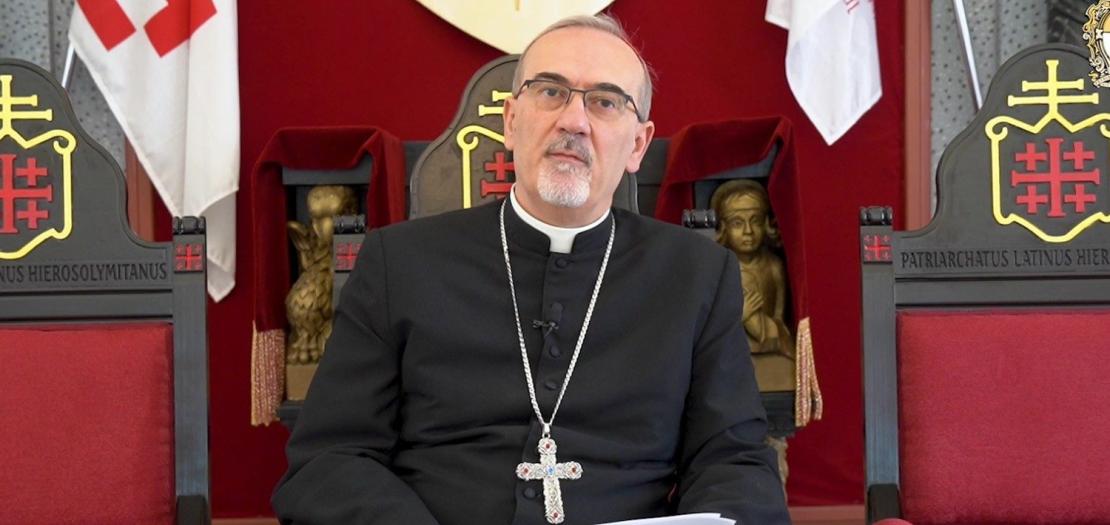
Amid the complex reality of the Holy Land in Palestine, fraught with political, religious, and ethnic conflicts, Cardinal Pierbattista Pizzaballa, Latin Patriarch of Jerusalem, has reiterated on multiple occasions his call for the emergence of new political and religious leaders. He considers this move essential for the path to peace and stability.
This appeal goes beyond mere political posturing; it springs from a deep spiritual vision and a long experience of service to the Church and society. It embodies his commitment to serving others, as Jesus taught in the Gospel: “whoever wishes to be great among you shall be your servant” (Matthew 20:26), underlining that true leadership is founded on service and sacrifice, not on power and domination.
This call emerges from the intricate reality in Palestine, where historical conflicts intersect with occupation, internal political divisions deepen, and a gap widens between religious and political authorities. This state of affairs has eroded trust in traditional leaders, expanded the divide between civil society and decision-making centers, and weakened interfaith and intercommunal dialogue.
Cardinal Pizzaballa warns that the continuation of this situation threatens reconciliation efforts and makes true peace increasingly elusive, particularly for the Christian community, which remains a minority in the Holy Land and bears a disproportionate share of the region’s burdens.
From a spiritual and theological perspective, the Patriarch of Jerusalem holds that legitimate leadership is service, not authority. He believes a leader’s responsibility lies in protecting human dignity and fostering values of justice, love, and reconciliation. His vision rests on the Church’s teaching about the integrated dignity of the human person — body and soul — created to live in love and mutual giving.
Cardinal Pizzaballa points to the Gospel’s own model: leadership should reflect God’s love and work in the world, drawing on Christ’s commands of love and justice: “love one another as I love you” (John 15:12), and “Blessed are the peacemakers, for they will be called children of God” (Matthew 5:9). In his view, these spiritual principles must be translated into practical action in both the social and political spheres, ensuring the protection of human rights and promoting harmony and unity among communities.
He argues that new leadership must strive to rebuild a different narrative, one based on mutual respect and constructive dialogue, in alignment with the Church’s vision of peace and justice. This vision resonates with Jesus’ prayer for unity and healing among humanity: “so that they may all be one, as you, Father, are in me and I in you.” (John 17:21) For Pizzaballa, this unity is not a mere political alliance but a spiritual and ethical union in love and collaborative action, aimed at healing old divisions, fostering reconciliation, and establishing justice and peace.
Cardinal Pizzaballa also identifies a range of underlying causes motivating his call: internal challenges within the Christian community, such as youth emigration, dwindling trust in traditional leadership, and declining civic engagement. The ongoing instability among other religious communities further intensifies the urgent need for bold and visionary leaders capable of initiating positive change and forging a safer environment that genuinely embraces openness and acceptance.
From a deeper spiritual perspective, the Cardinal sees this call as going beyond merely changing individuals, but as the renewal of a culture of leadership rooted in ethical and spiritual foundations.
Leadership, in his vision, must serve as a spiritual and moral force that defends minorities, guarantees the rights of all denominations, strengthens citizenship values, and opens new horizons of openness and acceptance, grounded in the Church’s principles of justice, reconciliation, and interreligious dialogue. He quotes the Gospel’s injunction: “judgment and mercy and fidelity. [But] these you should have done, without neglecting the others.” (Matthew 23:23)
In summary, Cardinal Pizzaballa’s appeal reflects an intersection of the Holy Land’s complex reality, his long ecclesial service, and his theological and Gospel vision. He regards new leadership as a means to rekindle peace, restore hope, and secure a better future for all communities in the region. It is a call for profound change, both political and spiritual, aimed at building a Holy Land anchored in justice, mercy, and authentic peace, and underlining the Christian leadership’s central role in safeguarding human and spiritual values.