Issued by the Catholic Center for Studies and Media - Jordan. Editor-in-chief Fr. Rif'at Bader - موقع أبونا abouna.org

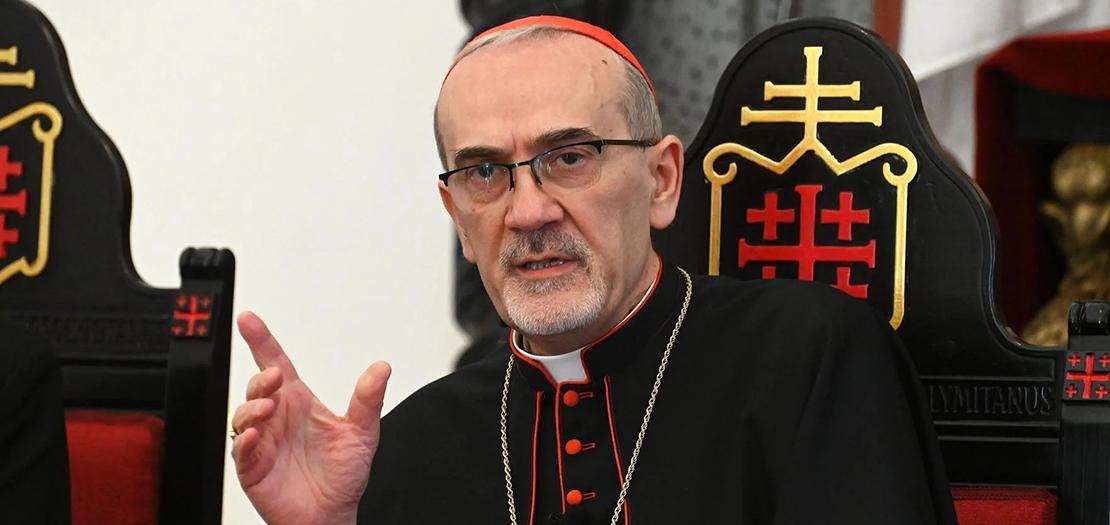
“We see how the desire of life, dignity, and justice is inside the heart of any human being”, Cardinal Pierbattista Pizzaballa said in an interview with Vatican News in Jordan, on Tuesday, 13 January.
The Latin Patriarch of Jerusalem was referring to the critical situation in Iran, where since the end of December, hundreds of protesters have been killed for demonstrating against the government over the country’s economic conditions. The people have been suffering for a long time, he said, expressing his hope that the situation “will not conclude in more violence and bloodshed”. No one, he said, “can deny or neglect” this desire for life, dignity and justice “that is part of the identity of each person and community”.
The Cardinal is in the Hashemite Kingdom for a multi-day meeting with nearly 60 priests and bishops of the Latin Patriarchate, who generally gather every two or three years to exchange information about their respective parishes. “Our diocese is complicated”, he explained. “It covers different countries, and in each country the dynamics are totally different”.
The situation in Gaza, for instance, remains one of “total devastation”, said the Cardinal. Despite the declaration of a ceasefire in October, and the consequent stop in blanket bombing of the Strip, targeted Israeli attacks continue to sow death and destruction, and the cold temperatures continue to claim lives. “People keep dying, not only because of the cold, but also because of a lack of medicines”, including antibiotics, said the Cardinal, who visited Gaza in December. He also reflected on the problematic situation in the West Bank, where permits are denied, movement is complicated, and settler attacks impact “the most basic things of the community”.
Amid the turmoil, Jordan continues to provide medical assistance to Palestinians from Gaza who are in urgent need of care. “In Jordan, the situation is more serene, of course. The conflict doesn’t affect Jordan directly, but indirectly yes, because of the connection, the commercial activities, the borders”. There is also an emotional toll, he said, as the “people are very involved”.
Jordan constitutes a large part of the Latin Patriarchate, which oversees 30 schools spread throughout the Muslim-majority country, including in remote areas. “This is constitutive of our identity, in a way, because it is important to give Christian formation to our children, but also to create important relations with the broad Muslim community”.
Among the challenges the Catholic Church in Jordan faces, the Patriarch said, is continuous internal migration. “It’s difficult to follow all this movement, and to be present where our community is moving and creating new contexts of life, and this also affects our pastoral activity”. Despite the complicated dynamics at play in the region, Cardinal Pizzaballa encouraged the faithful to resume their pilgrimages to the Holy Land, which he insisted are “absolutely safe”.
“The Holy Land is a fifth Gospel”, he said. “I also like to call it a kind of eighth sacrament, because it allows you to experience an encounter with Jesus–physically”. He added that “everyone can be perfectly Christian without going to the Holy Land, but if you go to the Holy Land, your Christian faith becomes stronger and more concrete”.
Cardinal Pizzaballa also briefly touched on the recent Extraordinary Consistory convened by Pope Leo XIV in Rome on 7 and 8 January. Reflecting on the themes of synodality and mission, the Cardinals were able to get to know each other better and discuss shared topics of interest, he said, “in order to open a new journey of reciprocal sharing about ourselves, about the Church, about the future of the Church”.