Issued by the Catholic Center for Studies and Media - Jordan. Editor-in-chief Fr. Rif'at Bader - موقع أبونا abouna.org

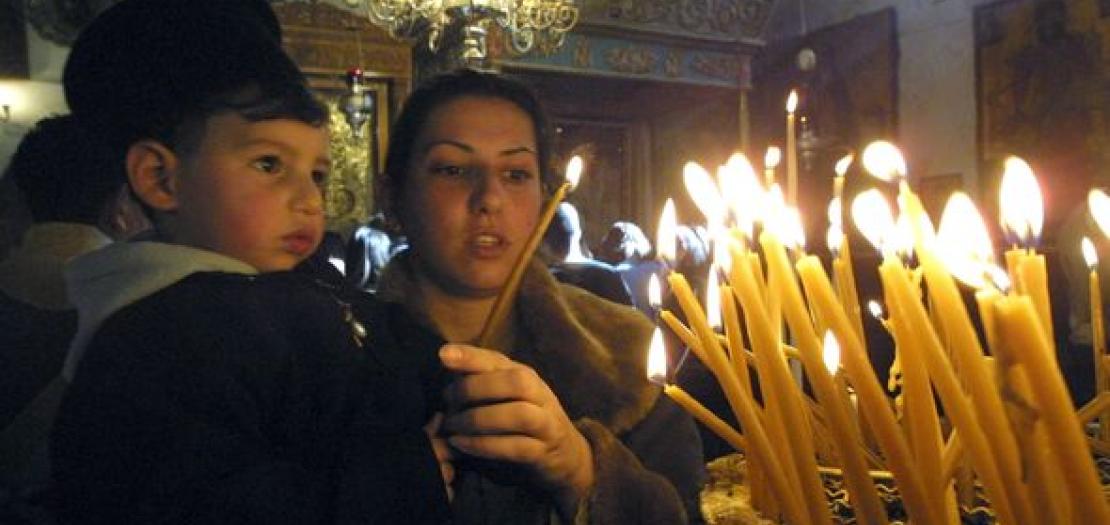
The last entirely Christian village in the West Bank, Taybeh, east of Ramallah, has been enduring a wave of attacks and intimidation by Israeli settlers. Hostile acts include setting fire to agricultural lands, cars, and the walls of an ancient church; hateful and threatening graffiti; releasing livestock into the village – not to mention the numerous military checkpoints at the entrances to the town.
On February 8, 2026, the Israeli government adopted an administrative decision strengthening the authority of its civil and military administration over land and real estate in the West Bank.
In an interview with Aid to the Church in Need, the priest of the Latin parish, Father Bashar Fawadleh, speaks of “mounting pressure” on the 1,400 souls of the village, as well as their “lack of protection.”
What was your reaction to the February 8, 2026 decision strengthening Israeli control in the West Bank?
The Israeli government’s security cabinet made a very serious decision regarding the West Bank, strengthening its direct control over this territory. This decision is considered one of the most dangerous since 1967, and many people see it as the beginning of an official annexation of the West Bank.
First, many administrative and civil responsibilities are being transferred to Israeli institutions, even in areas that were supposed to be under Palestinian management. The expansion of settlements is being encouraged. Settlers can buy more land and expand their outposts. This puts growing pressure on Palestinian towns and villages like ours. Israel is also taking full control of important religious sites, notably the Ibrahimi Mosque in Hebron [built over the Tomb of the Patriarchs]. The Palestinian authorities are losing their role there, and this affects the religious and cultural rights of the inhabitants. Finally, demolitions of homes and movement restrictions are increasing. Towns and villages are being isolated from one another.
What does this mean for a village like Taybeh?
This decision directly affects people’s daily lives, which are becoming more difficult. Families are losing their homes. Workers can no longer go to their jobs. Students struggle to get to school. Farmers can no longer access their lands.
For years, the inhabitants of Taybeh have suffered attacks from neighboring settlers: destruction of agricultural land as recently as February, burning of property, and preventing farmers from accessing their olive trees, which are their main source of income. On February 28, settlers entered land belonging to a family and stole a horse and its foal. Furthermore, the regional context – marked notably by the war in Gaza – continues to have profound repercussions on the West Bank. The general climate has become more fragile and tense, with an increase in military operations, traffic restrictions due to the installation of military gates at several entrances to the city, including a new one about two weeks ago. Israeli forces control when they are opened and closed, disrupting the daily lives of civilians.
With this new Israeli decision of February 2026, the pressure will increase even further. Settlement expansion threatens agricultural lands. The lack of protection leaves residents without legal support. The violence creates a climate of fear and insecurity.
All this has led many Christians in the Holy Land to consider emigration. What message do you have for them? How do you encourage those who remain?
Unfortunately, the idea of emigration is increasingly present in people’s minds. Several families have already left Taybeh – 16 between 2023 and 2025 – and others are seriously considering it, especially because of the insecurity and the lack of economic prospects.
The history of Taybeh speaks of empty houses, lost lands, broken communities, and the progressive disappearance of Christians from their historic land. As a priest and pastor, my message is, first and foremost, one of understanding and closeness: I understand the fear, and the responsibility of parents toward their children.
But I also want to remind them that the Christian presence in Taybeh is a mission and a living testimony: that of a faith rooted in this land where Christianity was born. Leaving the land is sometimes a human necessity, but staying is often an act of faith and hope. Hope does not deny the difficulties, but it reminds us that human dignity, justice, and peace remain possible. The Christians of the Holy Land want to continue to be artisans of dialogue, peace, and an evangelical presence in the heart of this wounded region.
However, to encourage those who remain, we need concrete support: creating jobs, accompanying young people, strengthening parish solidarity, and making every family feel that they are not alone.
What role do you hope for from the international community, the universal Church, and international Christian organizations?
As a priest on the ground, I expect the international community to visit us, document the incidents, and to take clear action to guarantee the safety of civilians; access to agricultural lands and sources of income; the protection of places of worship; and an end to impunity.
I expect from the universal Church a strong and constant voice in favor of the Christians of the Holy Land, as well as pastoral and material support to help families stay on their land.
Finally, I expect from international Christian organizations, such as Aid to the Church in Need, essential support through concrete projects in the fields of education, housing, employment, and psychological and spiritual support.
What message would you like to send to Christians around the world?
As the priest of Taybeh, I would like to say to Christians around the world that we need your solidarity. Taybeh is not just a village; it is a living sign of the Christian presence in the Holy Land.
Pray for us, but also support us through your actions, your commitment, and your testimony. Help us ensure that the Christians of this land remain a living community, rooted in faith, and not a mere memory of the past. Thank you again for your support and your prayers for the communities of the Holy Land.