Issued by the Catholic Center for Studies and Media - Jordan. Editor-in-chief Fr. Rif'at Bader - موقع أبونا abouna.org

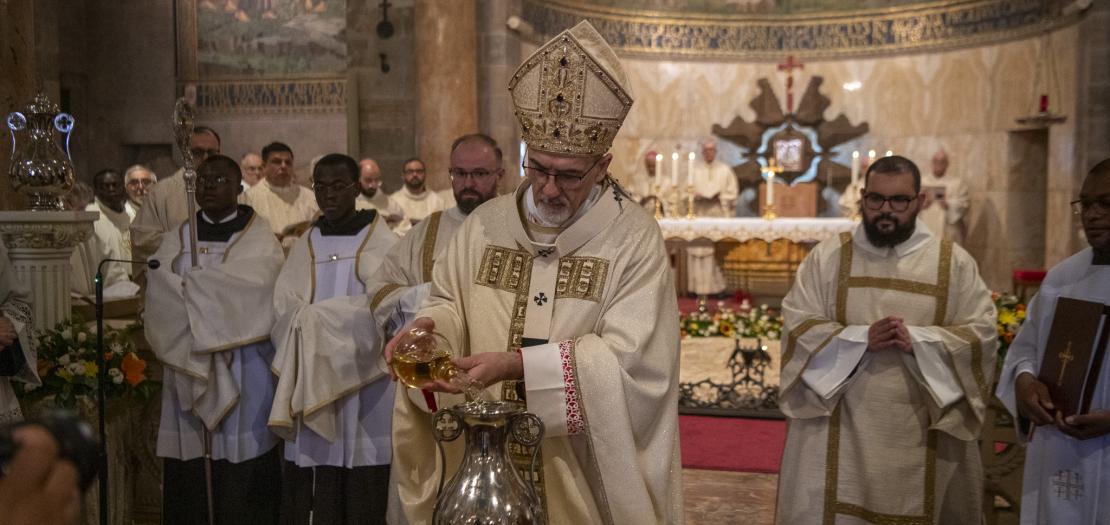
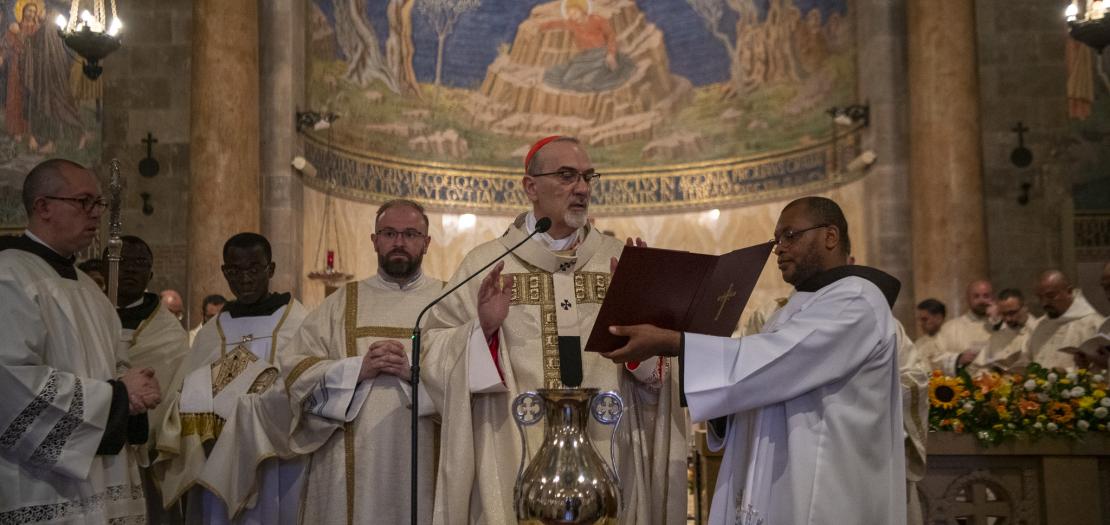
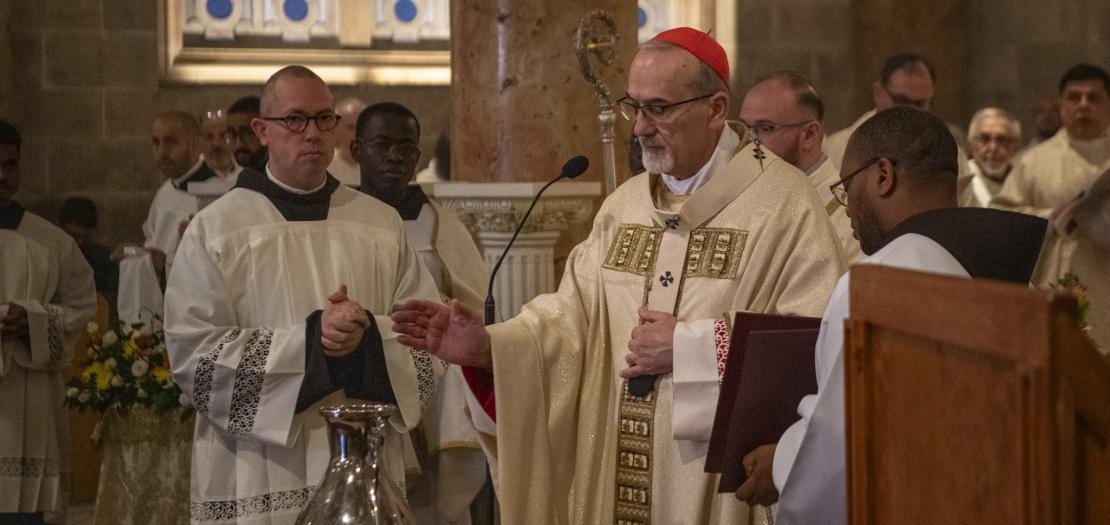
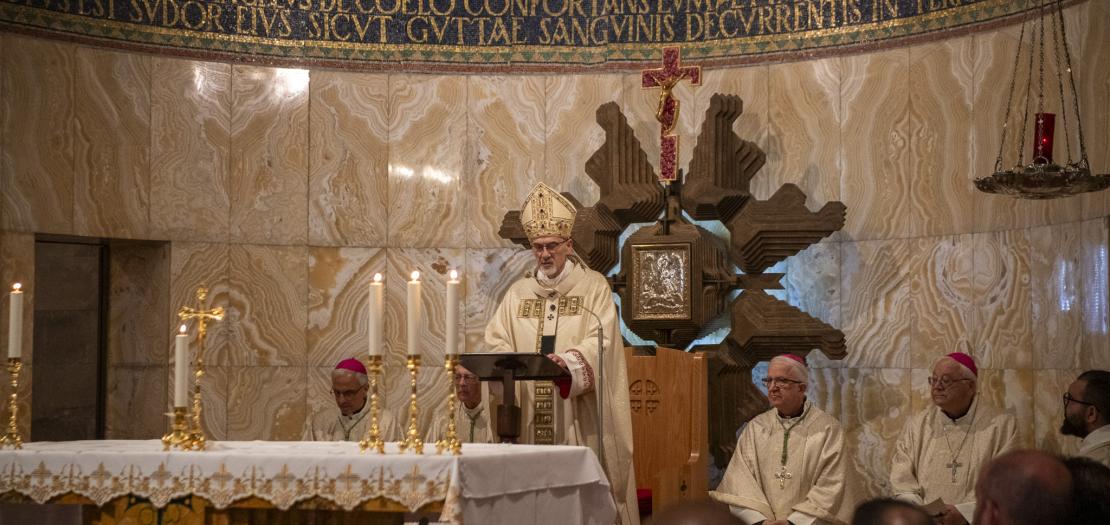
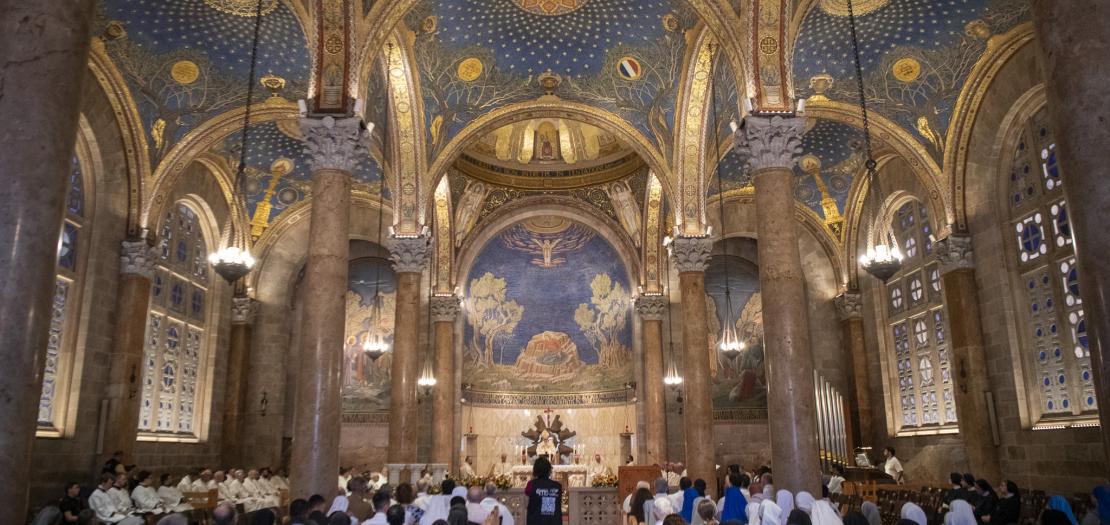
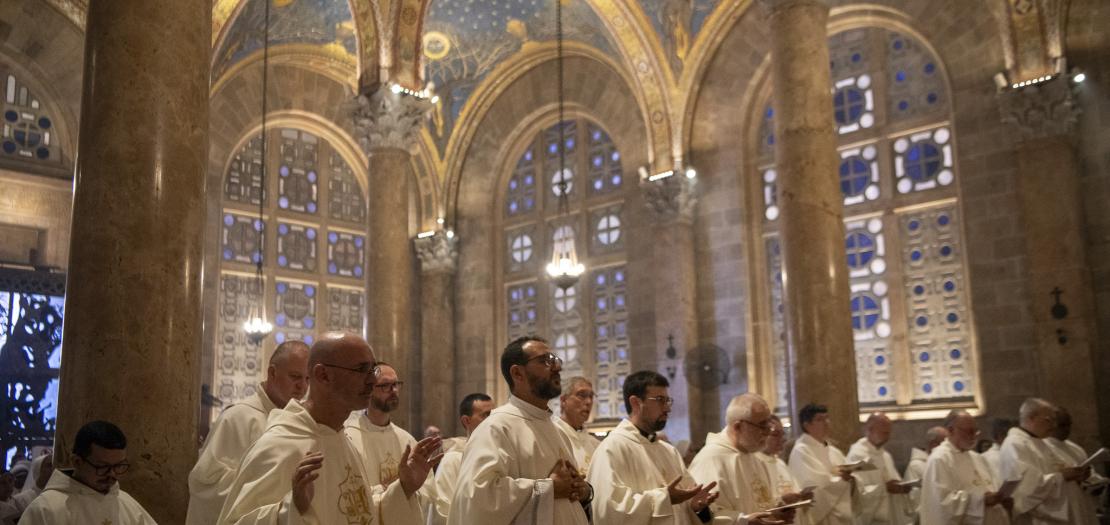
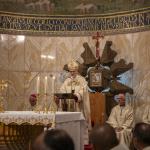
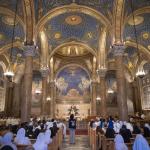
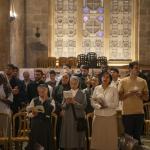
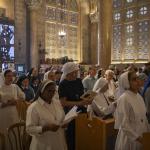
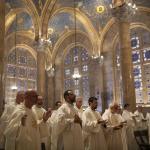
On Wednesday, June 17, the Chrism Mass was celebrated at the Basilica of the Agony on the Mount of Gethsemane, the place where Lord Jesus prayed, experienced the most painful moments of his passion, and was arrested.
The Chrism Mass is an annual gathering of the bishop with his clergy and the faithful, and in Jerusalem as well, the Latin Patriarch celebrated it as a sign of communion with the entire Church. It is usually held on Holy Thursday, the same day as the In Coena Domini liturgy, at the Church of the Holy Sepulcher, the Cathedral of Jerusalem.
This year, due to the conflict that has affected the Holy Land in recent months and the resulting ban on public gatherings, it was not possible to celebrate this moment on the usual date, and the decision was made to postpone it to today.
However, as Cardinal Pierbattista Pizzaballa, Patriarch of Jerusalem, recalled: "Today we find ourselves celebrating a Chrism Mass that the liturgical calendar would place at the heart of Holy Thursday, but which history has pushed to this moment. Yet, there is a truth that we must recognize with humility and wonder: there is no 'delay' for God's anointing. Instead, there is his kairòs, his full time, the moment when the Word stops being a memory and becomes living flesh. And today, here, in this city that has been a crossroads of peoples and the theater of passion and resurrection, the Word becomes flesh once again."
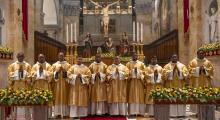
The celebration opened with the solemn entrance of Patriarch Pizzaballa into the Basilica of Gethsemane. In his homily, Pizzaballa reminded the priests, who together with him renewed their promises today, that "renewing promises also means looking forward. It means asking ourselves: what kind of pastors do we want to be for the future? Pastors who hide behind structures or pastors who spend themselves among the people? Pastors who only speak to already Christian communities or who go out, like Jesus, to seek those who are lost? Pastors who ignore divisions or who mend what has been torn? The anointing we received is not to divide, it is to unite. It is not to close, it is to open. It is not to judge, it is to save."
Immediately after the homily, the most important moment of the liturgy took place, namely the Patriarch blessed the oils for the catechumens and the sick, and consecrated the Holy Chrism. The latter, an oil enriched with aromas, plays a central role in the Catholic liturgy: it is indeed used in the sacraments of Baptism, Confirmation, and Holy Orders, as well as in the rites of dedication of new altars and places of worship.
A moment of strong symbolic impact was the so-called "insufflation": Cardinal Pizzaballa, repeating the gesture performed by every bishop during the Chrism Mass, infused the perfume into the oil and blew over it, creating a cross with his breath three times. An ancient rite that evokes the transmission of the Holy Spirit by the successor of the Apostles upon that matter which, from that moment on, will consecrate the new Christians and the new priests of the community.
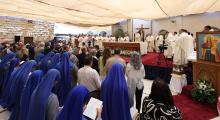
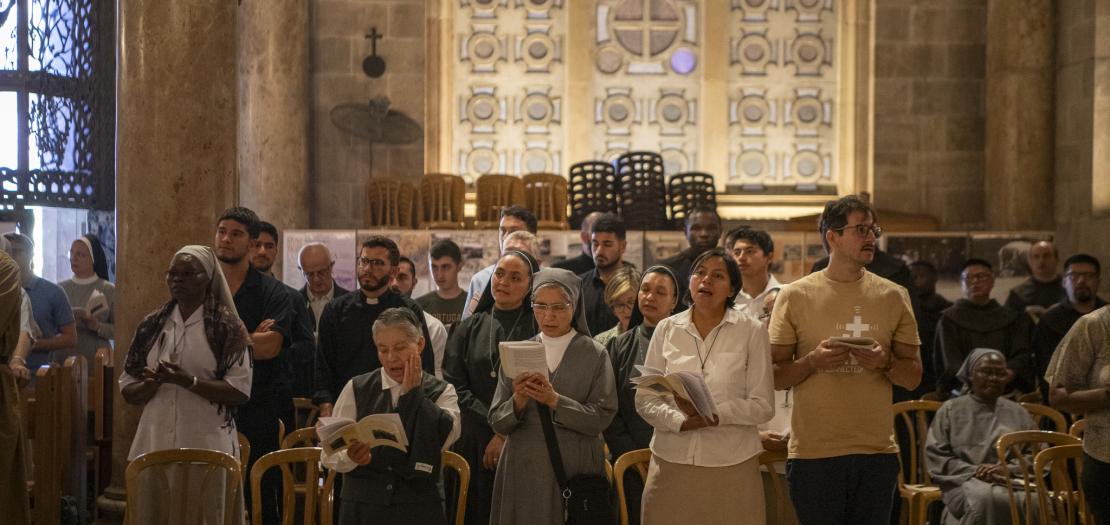
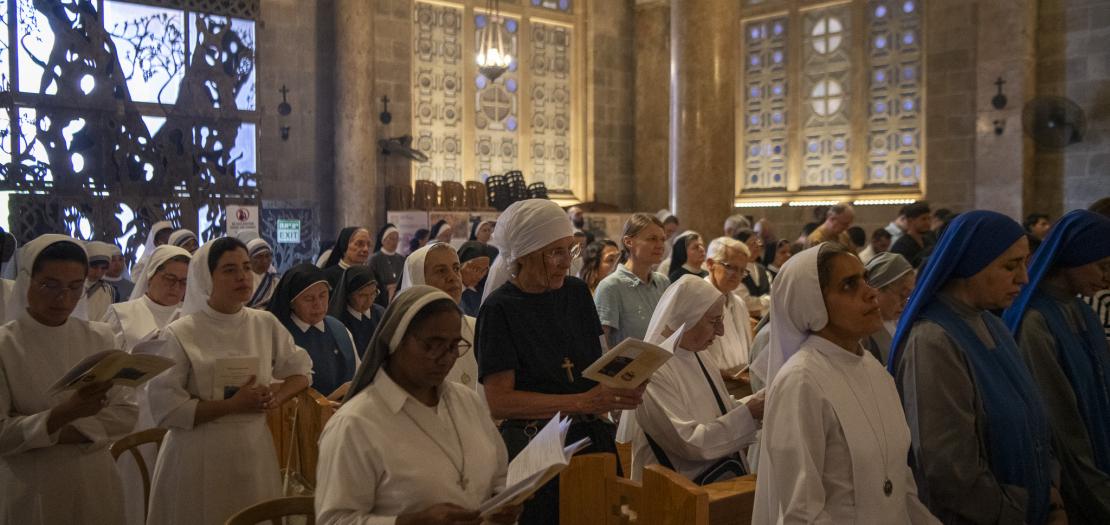
The celebration was attended by about one hundred priests from all over the Diocese, men and women religious of Jerusalem, some faithful, and even a few pilgrims who are beginning to visit the Holy Land. The choir conducted by the master Fr. Corrado Sica made the Holy Mass solemn and filled the basilica with polyphonic hymns specific to this liturgy.
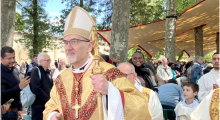
The celebration concluded with a convivial refreshment in the garden of the sanctuary, a moment of fraternity that sealed the spirit of communion between the leadership of the Church of Jerusalem and its priests.