Issued by the Catholic Center for Studies and Media - Jordan. Editor-in-chief Fr. Rif'at Bader - موقع أبونا abouna.org

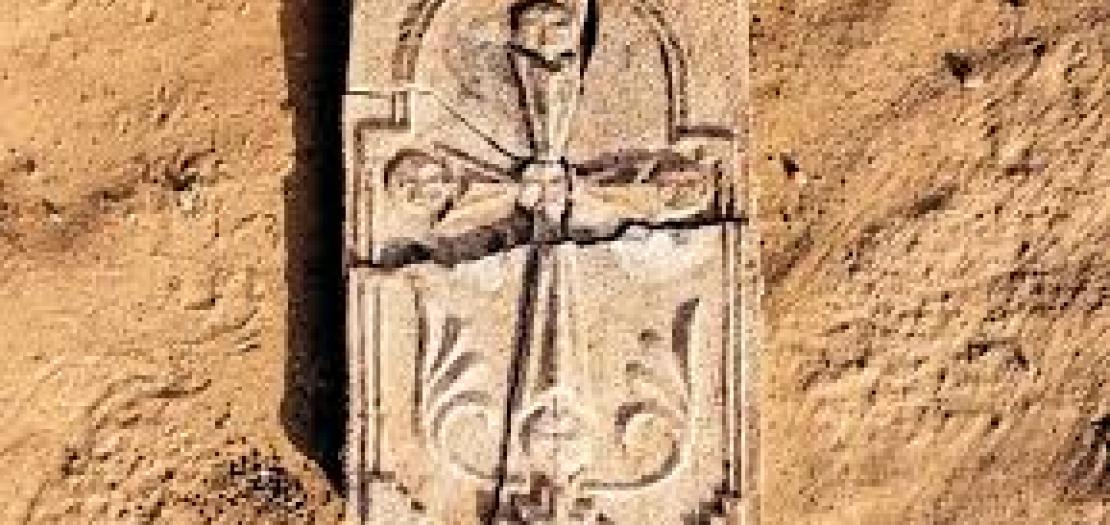
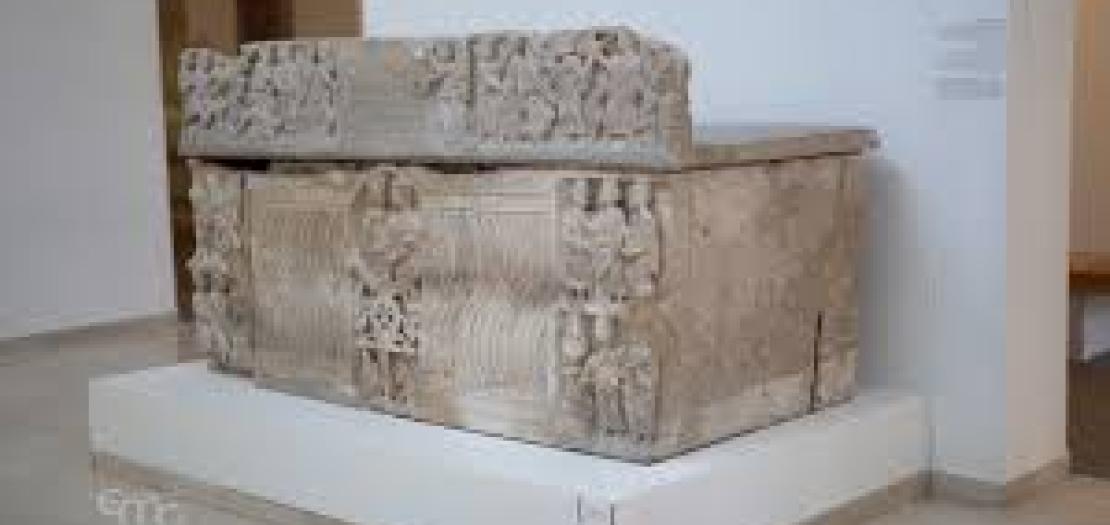
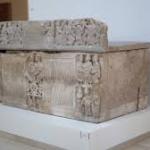
Among the finds on display at the Bible Lands Museum, as part of the exhibition “Judea and Rome,” dedicated to the final years of Judea during the Second Temple period and its destruction, are coins and sarcophagi dating back to the time of the birth of Christianity.
Dr. Yigal Bloch says: Exhibition curator, says that the exhibits we are presenting actually begin with Roman coins from the late Second Temple period, including those dating to the time of Jesus of Nazareth. These coins bear on one side the image of the emperor and the indication of the year of Tiberius Caesar; I believe it was the 17th year of his reign, the period during which Pontius Pilate governed Judea. On the opposite side appear three ears of wheat or a Roman priestly staff called a lituus. The exhibition also features the influence of Roman art on Christian art.
He adds: Here we have a mosaic depicting a peacock, considered in the Roman world a symbol of resurrection, as it loses its feathers every season and then regrows them. For this reason, the peacock also appears in the mosaics of churches and Jewish synagogues from the Byzantine period. The exhibition also includes sarcophagi dating to the period when Christianity became the official religion of the Byzantine Empire. Among these stands out a sarcophagus decorated with the monogram of Christ (Chi-Rho) above a cross set within a Roman triumphal wreath, along with depictions of episodes and miracles from the Old and New Testaments.
He continues: From the Old Testament we see the expulsion of Adam and Eve from Paradise, a symbol of original sin, and the sacrifice of Isaac by Abraham, interpreted in Christian tradition as a prefiguration of the subsequent sacrifice of Jesus, the Son of God. From the New Testament we find instead depictions of the entry of Jesus into Jerusalem, the crowing of the rooster, the miracle of the multiplication of the loaves and fishes, the transformation of water into wine at Cana, the healing of the woman with the hemorrhage, and the resurrection of the son of the widow of Nain. On another sarcophagus are carved scenes from the Book of Jonah, showing the sailors throwing the prophet into the sea, where he is swallowed by the great fish.
He goes on to say: “The prophet Jonah is indeed the biblical prophet sent to proclaim God’s message to the nations, that is, to the peoples not belonging to Israel. According to one of the most widely held interpretations, this was precisely the reason for his initial resistance to the mission. In the end, however, he was compelled to carry it out and to call the inhabitants of Nineveh to conversion; they repented and obtained the forgiveness of their sins. This episode actually foreshadows the Gospel of Jesus, destined not only for the Jews, but for all peoples. Among the objects on display is also a chalice from the Byzantine period used in the celebration of the liturgy.
He concludes: On this chalice appears an inscription in Greek with the word Hagios (“Holy”), taken from a liturgical hymn inspired by the 6th chapter of the Book of Isaiah: “Holy, Holy, Holy is the Lord of hosts, the whole earth is full of his glory.” In Christian tradition this text is interpreted as a reference to the Most Holy Trinity. Within the walls of the museum, the silent archaeological finds from the Second Temple period and the origins of Christianity become narrators of a story in which past and present meet, leaving open before every visitor the questions of faith and coexistence.