Issued by the Catholic Center for Studies and Media - Jordan. Editor-in-chief Fr. Rif'at Bader - موقع أبونا abouna.org

Dear friends, "May the Lord give you peace".
I am Fr. Francesco Patton, of the Custody of the Holy Land, and Custos of the Holy Land, and I am speaking to you from the Memorial of Moses on Mount Nebo in Jordan.
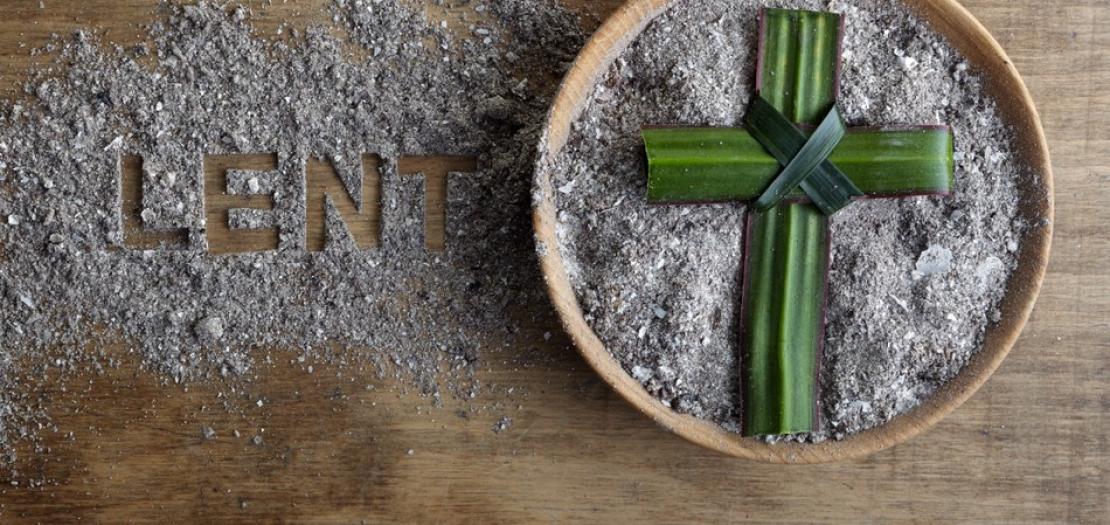
We are just at the beginning of the season of Lent and the Gospels of this first week invite us first of all to return within ourselves through the experience of the desert, then to look upward through prayer, and finally to look with charity and mercy upon our brothers and sisters.
Today these same themes are conveyed to us through the prayer of the "Our Father", a text that Tertullian, who lived in North Africa between the second and third centuries, defined as "a compendium of the entire Gospel", Breviarium totius Evangelii.
If on Ash Wednesday the Gospel of the Mass contained the invitation to pray to the Father in the secrecy of one’s room, today Jesus invites us to pray to Him with the horizon of fraternity. Indeed, the prayer that Jesus teaches us is not "My Father", but "Our Father".
On the one hand, we are invited to recognize that God, to use the words of Pascal, is not the abstract God of the philosophers, but has a paternal face, because we come from Him and because He takes care of us in every possible way, on the other hand, we are invited to recognize that praying together to the one Father educates us to recognize one another as brothers and sisters.
In the first part of the prayer we therefore learn to place ourselves properly before God and to acknowledge Him for who He is. This means recognizing His universal fatherhood, which grounds a new way of seeing creation, creatures, and people.
With the prayer that Jesus taught us, we therefore ask that the holiness of the Father be manifested and spread, and that it may illuminate the world, history, our person, and our life. We ask that His will of goodness, which redeems and renews us, be accomplished, and we express the desire to be attuned to that same will. We ask that His power of love and reconciliation transform this conflicted and selfish world of ours into His kingdom of love, justice, and peace.
In the second part, instead, we ask for what helps us live as brothers and sisters, the bread essential for daily life, which becomes at our tables an occasion of fraternal sharing, but also the Eucharistic Bread that makes us capable of loving because it conforms us to Jesus, we then ask for the capacity for mutual forgiveness that is necessary in all relationships, to live reconciled with God and with one another. Finally, we ask for particular support so as not to become victims of our fragility and to be delivered from evil in all its forms and manifestations.
Saint Francis of Assisi, whose eighth centenary of his death occurs this year, loved this prayer and also left us an example of how it should be prayed, not as a formula to be recited hastily but as a text to let resonate within us word by word, so that it may rise in our hearts and place us in deep harmony with God and with our brothers and sisters.
By way of example, in amplifying the expression "Thy will be done", Saint Francis feels that he is asking for something fundamental and expresses himself in this way: "Thy will be done, on earth as it is in heaven, so that we may love you with all our heart, always thinking of you, with all our soul, always desiring you, with all our mind, directing all our intentions to you and in everything seeking your honor, and with all our strength, spending all our energies and the senses of soul and body in following your love and not for anything else, and so that we may love our neighbors as ourselves, drawing all, according to our strength, to your love, rejoicing in the good of others as if it were our own and suffering with them in their troubles and giving offense to no one", Pater 5, FF 270.
Throughout this day, following the example of Saint Francis, let us try to set aside sufficient and necessary time to pray an "Our Father" without haste, allowing each individual expression to rise within our hearts so that our whole person may be filled with the presence of God and through us a spark of His paternal love may reach the people we will meet.
To each and every one of you I wish a serene day accompanied by the luminous, kind, and provident gaze of our Father who is in heaven, peace and good from the Memorial of Moses on Mount Nebo, in Jordan.