Issued by the Catholic Center for Studies and Media - Jordan. Editor-in-chief Fr. Rif'at Bader - موقع أبونا abouna.org

Jerusalem experienced Good Friday in a climate marked by war and the resulting restrictions.
The Holy City, which in these days should have welcomed thousands of faithful from all over the world, appeared silent and guarded. Yet, precisely within this fragility, the prayer of the Church continued to rise with strength, preserving the memory of the Passion of the Lord in the very place where it was accomplished.
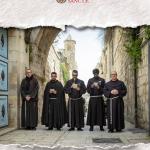
Despite the restrictions and security checks imposed, the Franciscan friars of the Custody of the Holy Land were allowed to go to the Holy Sepulcher, the heart of the Christian faith and the destination of every pilgrimage.
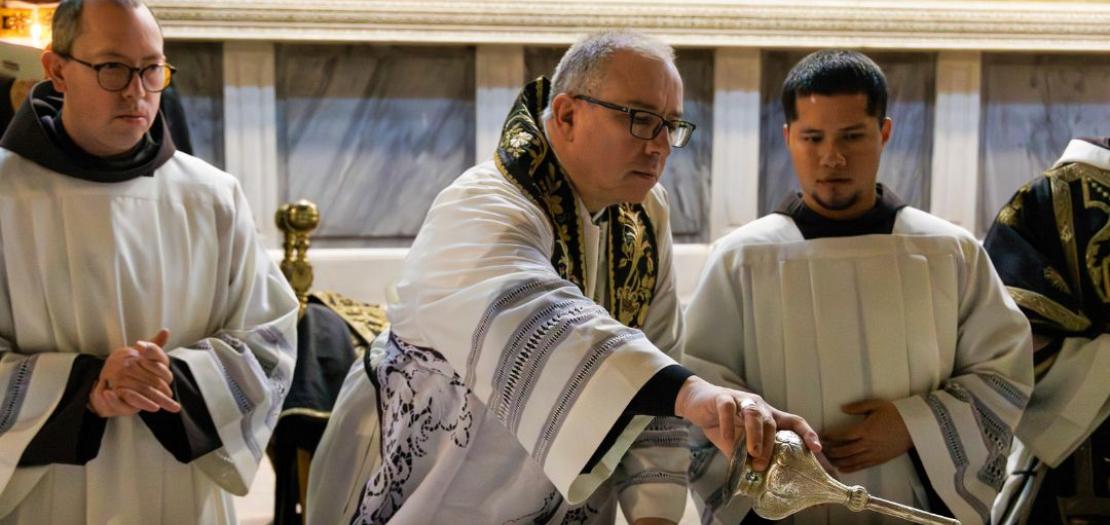
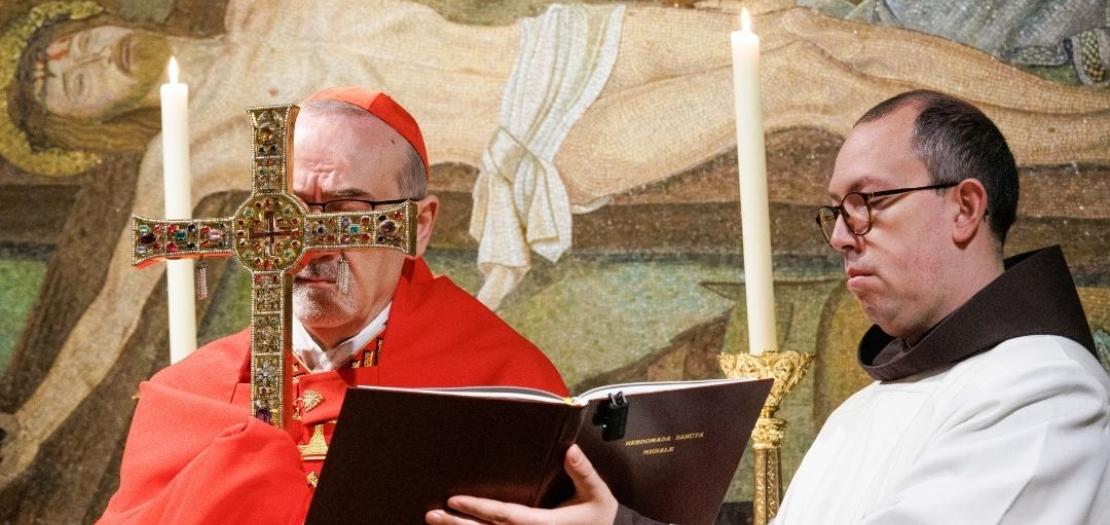
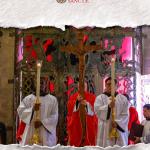
In this particular setting, the Basilica of the Resurrection welcomed the Latin Patriarch of Jerusalem, Cardinal Pierbattista Pizzaballa, who was able to preside over the solemn Liturgy of the Passion of the Lord.
A small group of friars took part with him in the celebration on Calvary, in a recollection that made the universal character of that prayer even more evident.
Before the Cross, where Christ gave his life for the salvation of the world, the intercession became an invocation for all, for the wounded Holy Land, for populations tried by conflict, for broken families, for children and the innocent who suffer, and for every part of the world where war continues to sow pain and death.
Particularly intense was the proclamation of the Passion according to the Gospel of John, solemnly chanted on Calvary by three cantors, according to the liturgical tradition.
The words of the Gospel narrative, intoned in the completely empty Basilica, resounded with a new strength, as if the very silence of the city became an echo of the drama of Golgotha.
In respect of the norms of the status quo, the doors of the Basilica of the Holy Sepulcher were opened and closed according to established times, marking the day with rigorous discipline.
This element too, in a context already marked by restrictions, recalled the complexity of Christian life in Jerusalem, where every liturgical gesture is preserved with attention and care, like a shared and fragile heritage.
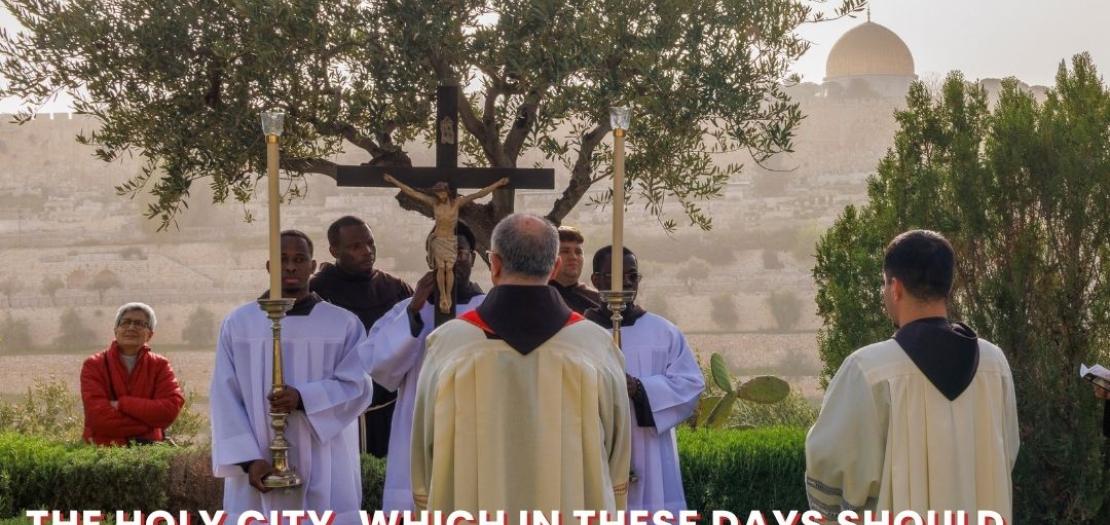
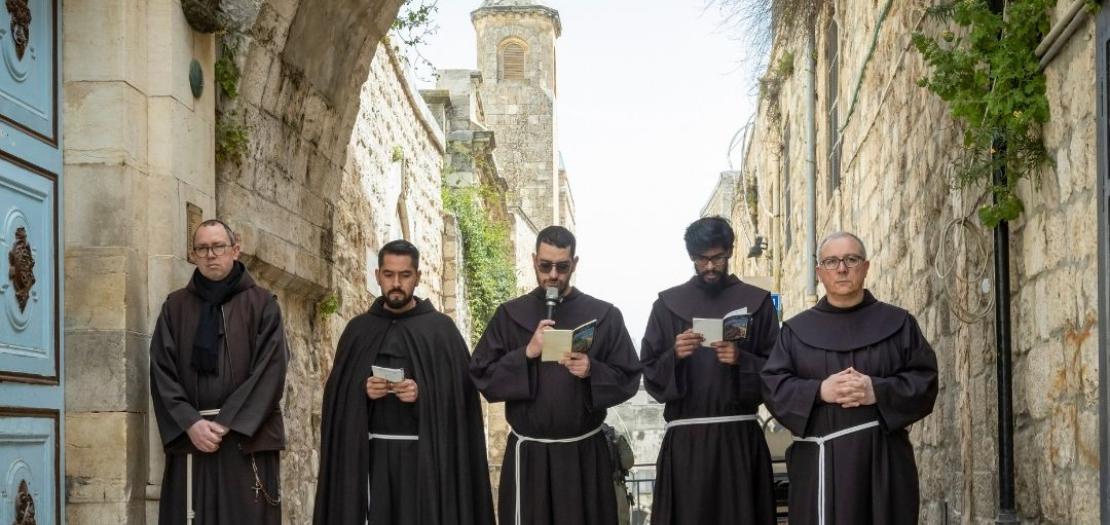
Before noon, the Custos of the Holy Land was able to walk along the Via Dolorosa, praying the Way of the Cross through the streets of the Old City.
A journey that, under normal conditions, would have been crowded with pilgrims, processions and songs from different languages and cultures.
This year instead the Via Dolorosa appeared bare, marked by an absence that spoke for itself, the absence of pilgrims, the absence of normality.
With a few friars at his side and in the presence of some journalists, the Custos raised the prayer of the Church in the name of all those who could not be present.
In that journey, carried out in silence and amid controls, the Way of the Cross became a gesture of universal intercession, an offering of prayer for those who suffer, for those who live in fear, for those imprisoned by violence, for those who have lost a home or a loved one, for those who continue to hope even when hope seems impossible.
The hour of Jesus' death, 3:00pm, came as a powerful reminder, not only the memory of a past event, but a sign of a redemption that continues to speak to the present.
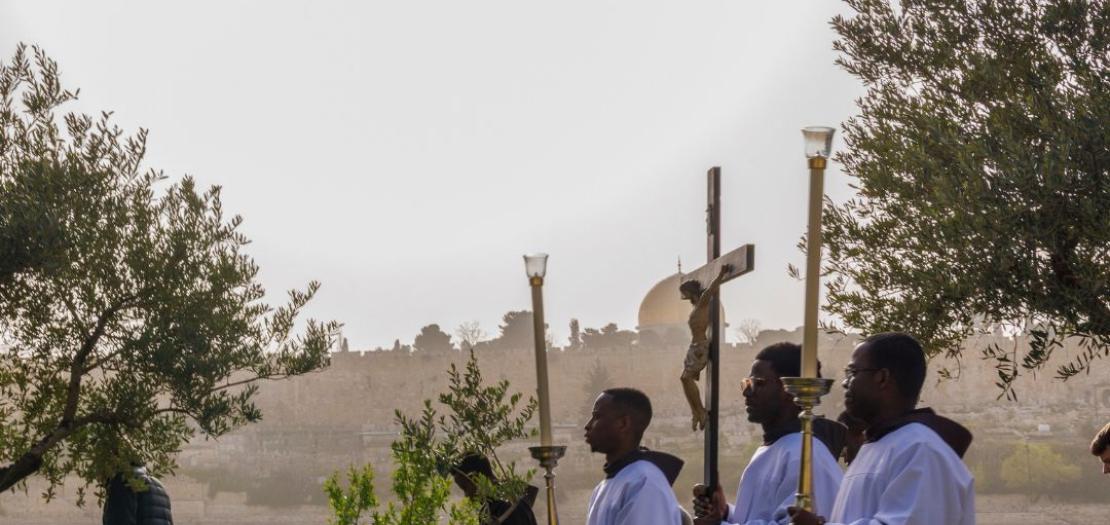
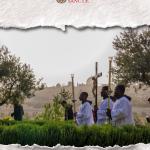
This is what the Custos recalled in his homily at Gethsemane where he celebrated with the friars and some faithful the Passion and the Way of the Cross along the paths of the Hermitage garden, surrounded by silence.
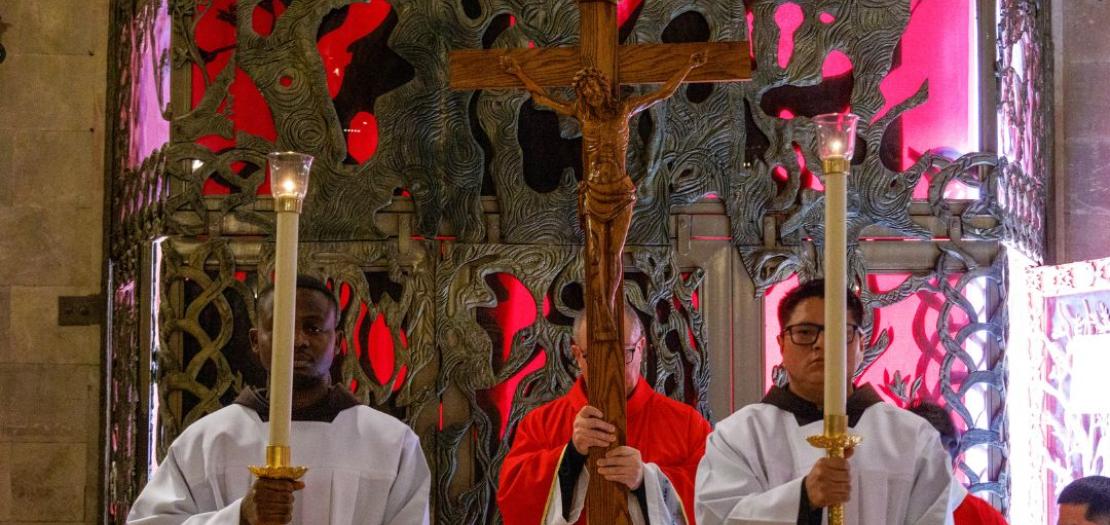
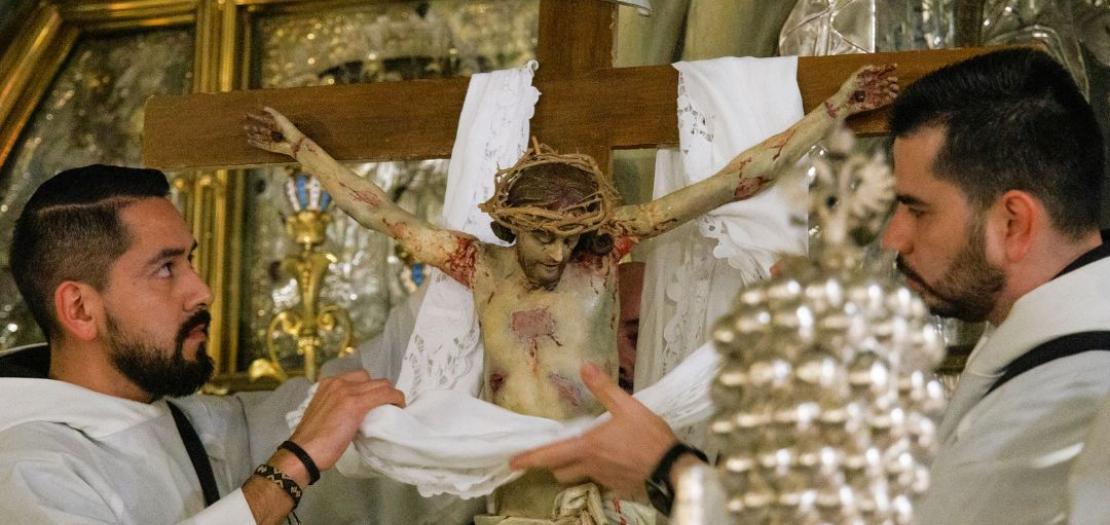
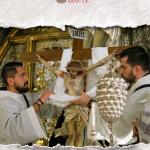
In the evening, the Custos and a small group of friars returned to the Holy Sepulcher for the moving prayer of the Funeral of Christ, an ancient Jerusalem tradition that professionally accompanies the statue of Christ on the cross to Calvary.
On Golgotha, a rite marked by the words of the Gospel includes the deposition from the cross, the nails and the crown of thorns are removed, the wounded body is anointed and prepared for burial at the Stone of Anointing and finally the image of the dead Christ is placed in the tomb.
Each year the celebration sees a large participation of clergy and faithful, who this year were able to follow the event only through media broadcasts.
Thus, even in time of war, Jerusalem has preserved its vocation, to be the place of the Passion and the Resurrection, a city where the suffering of the world meets the prayer of the Church.
The friars of the Custody, like silent sentinels at the Holy Places, continued to pray for all, so that from Calvary there may once again arise, for the Holy Land and for all humanity, the gift of peace.