Issued by the Catholic Center for Studies and Media - Jordan. Editor-in-chief Fr. Rif'at Bader - موقع أبونا abouna.org

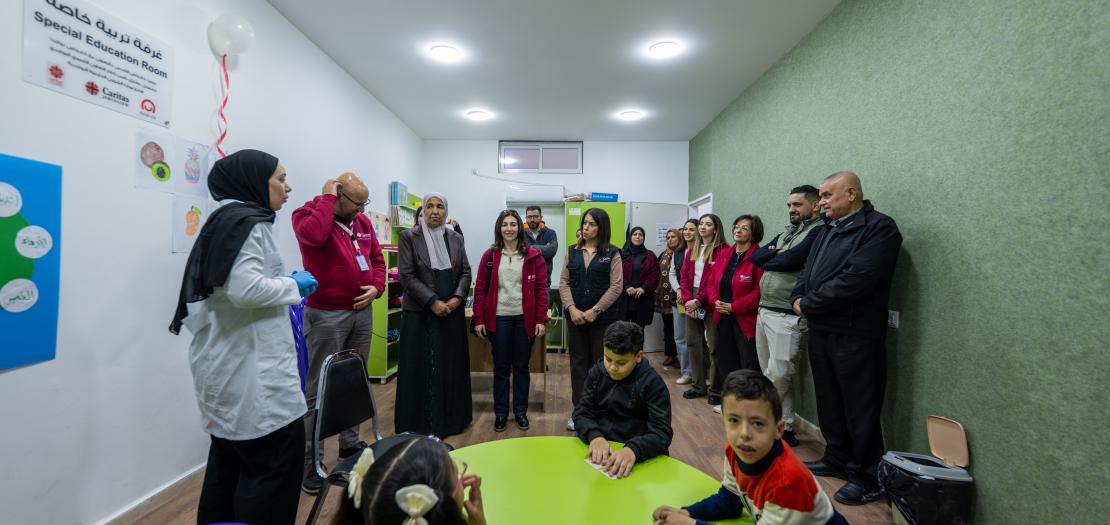
During a recent field visit across Beit Awwa and Dura in the Hebron area, the Caritas Jerusalem team, accompanied by Secretary General Mr. Anton Asfar, met families whose lives have shifted in quiet but powerful ways. The visit highlighted real transformation. Individuals who once struggled to find direction are now running projects of their own. When support is combined with training and follow-up, it creates lasting change that goes beyond financial improvement.
Caritas Jerusalem works through community-based rehabilitation to strengthen economic and social inclusion for persons with disabilities and their families. As Mr. Asfar explained during the visit, many of the people they met had been in devastating situations. Caritas first provided intensive training in marketing, project management, and basic business skills for persons with disabilities and their families. Upon completion of the training, beneficiaries received the financial support and equipment required to launch their micro-enterprises.
Mrs. Nisreen Awwad, Head of the Social Programs, reflected on the 13 small projects supported this year. She described them as doors that opened for families who had been waiting for a chance. She stressed that inclusion is not about sympathy. It is about recognizing potential that already exists but is often overlooked. Many people are ready to contribute. They only need someone to stand beside them.
In 2025, Amro, a 20-year-old living with a severe skin condition that requires daily medical care, opened his grocery shop. Before the intervention, he depended fully on his father and did not believe institutions would help him. Through training and full provision of supplies and equipment, the shop reopened. Today he manages his own income and contributes to household expenses. The shift is visible not only in the shop’s shelves, but in the way he speaks about his future. He no longer talks about limitations. He talks about plans.
At Beit Awwa Rehabilitation Center, children with disabilities receive individualized assessment and therapy across physiotherapy, occupational therapy, speech therapy, sensory integration, and special education. Families describe steady improvement in speech, mobility, and daily skills. Some children who were once referred for surgical procedures are progressing through consistent physiotherapy. Others who struggled in mainstream schools now receive tailored support that prepares them for inclusion when they are ready. The center also works closely with mothers, guiding them in home follow-up and raising awareness about the rights of persons with disabilities. The change here is gradual, but deeply rooted.
In 2024, Iman launched her spice and grocery shop with full support from Caritas. Equipment, shelves, refrigerators and supplies were provided from the ground up. What began as a small spice store has grown into a diversified shop serving her community. Income improved, and she strengthened her financial management skills through training. She now manages her resources carefully and plans her purchases strategically. Stability replaced uncertainty.
Badawi’s project brought a different kind of transformation. Before opening his construction and electrical tools shop, he spent most of his time at home. The project gave him daily structure and a main source of income. Together with his mother, he attended training sessions on sales and capital management. The financial improvement is clear, but so is the psychological one. He is present, engaged, and expanding.
In 2025, Raed moved from traditional open farming to a greenhouse structure supported through the program. The greenhouse allows better crop protection and more stable production. It improved efficiency and strengthened his income prospects. As Mrs. Nisreen Awwad noted during the visit, inclusion also means creating opportunities that allow persons with disabilities to contribute to environmental preservation while supporting their families.
By the end of the visit, it was evident that these stories represent only a part of a much larger need. Many others are still waiting for the same opportunity. As Mr. Asfar emphasized, Caritas Jerusalem will continue supporting persons with disabilities across the Palestinian territories, especially under the current socio-economic pressures. This work is made possible through the support of Caritas Poland and is co-financed within the framework of the Polish development cooperation of the Ministry of Foreign Affairs of the Republic of Poland.
What was seen during this visit were not small micro-projects. What was seen were individuals who shifted from dependency to contribution, from hesitation to confidence. Sometimes the difference begins with the decision to believe in someone’s idea.