Issued by the Catholic Center for Studies and Media - Jordan. Editor-in-chief Fr. Rif'at Bader - موقع أبونا abouna.org

Following is the text of the meditation by His Beatitude Cardinal Pizzaballa, Latin Patriarch of Jerusalem, on the second Sunday of Lent dated March 1, 2026:
Last Sunday, we saw that temptation enters the human heart, always seeking to diminish, or belittle in our eyes the work of God in the life of His creatures.
The serpent does this by entering into dialogue with the woman and implies that God had forbidden them to eat from all the trees in the garden. (Gen 3:1) In reality, we know that this is not the case: God had allowed them to eat from all the trees in the garden except one. (Gen 2:16-17).
The Tempter does the same thing with Jesus. At the time of His baptism in the Jordan, the Father addressed the Son by calling Him “Beloved Son,” (Mt 3:17) and in the desert the Tempter merely calls Him “son.”
And he tempts Him precisely on this point: “If you are the Son...” (Mt 4:3, 5)
The devil certainly cannot deny that Jesus is the Son of the Father: he knows this very well and, throughout the Gospel accounts, he is always the first to want to reveal Jesus' identity, to the point that Jesus himself commands him to be silent. Jesus is therefore the Son. But is He the beloved Son? Will God take care of him or leave him at the mercy of pain, human violence, and death?
Jesus is the Son, and he is the beloved Son, a Son who is certain of the Father's love for Him. A love that gives him everything, without taking anything back: everything has been given to Him by His Father. (cf. Mt 11:27)
Jesus, in the desert, remains faithful to this Word, trusts in the Father, does not fall into the temptation of seeking life and glory elsewhere, outside of his relationship with the Father.
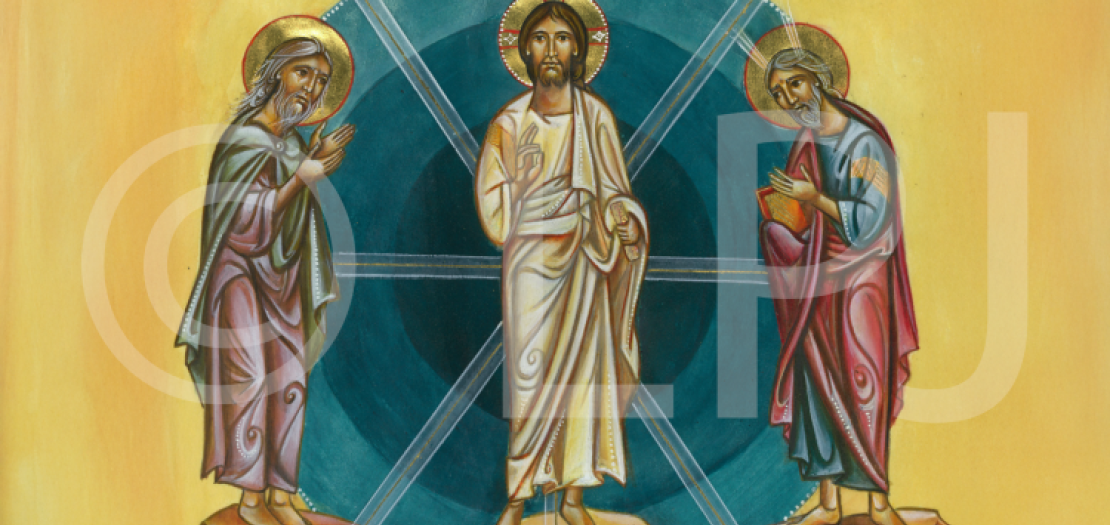
All this shines forth today in full, on the mountain of the Transfiguration. (Mt 17:1–9)
There, in fact, that voice that Jesus did not lose sight of in the desert is heard again: ‘This is my beloved Son, in whom I am well pleased’. (Mt 17:5)
The light that shines on Jesus' face and garments is not a reward for his faithfulness, but is simply the revelation of what has always existed there, and has even withstood the pressure of temptation, the communion between the Father and the Son.
From his baptism onwards, throughout his time of trial, Jesus does nothing else throughout his life but respond to the Father's Word with radical obedience lived out of love.
This is the beauty of his existence, what transfigures it and makes it luminous. All this beauty, however, does not remain an isolated experience to the Father and the Son, reserved exclusively for them. In fact, there are several other characters on the mountain.
First of all, there are three disciples whom Jesus ‘took’ with him. (Mt 17:1) The Evangelist uses the same language found in the episode of the temptations (Mt 4:5, 8): there it is the devil who took Jesus with him, in order to tempt him. Jesus, on the other hand, takes his disciples with him to reveal to them that the path to a full life passes through a relationship of trusting obedience to the Father, the obedience that is fit to beloved children.
On the mountain there are also Moses and Elijah, men who listened to the whisper of God's voice, (cf. Ex 33:11; 1 Kgs 19:12),who at times forgot it, but continually returned to trust again.
This journey of trusting obedience, born from the experience of knowing oneself to be a beloved son, and which always begins anew, is also the path that awaits us in this Lent.
The voice of the Father himself shows us the way: his voice, after all, is addressed to the disciples who are with Jesus on Mount Tabor: ‘Listen to him’. (Mt 17:5)
We can truly trust and listen to Jesus: he was the first to listen, to keep the Father's voice, even in the midst of trials. And when we listen to him, we are certain that we are listening to the Father's voice and hearing his own words addressed to our lives as well: 'You are beloved children.'
However, the account of the story tells us that the disciples, upon hearing the Father's voice, fell to the ground in fear (When the disciples heard this, they fell prostrate and were very afraid.' (Matt. 17:6)
And immediately afterwards the first words they hear are those of Jesus, as he touched them: ‘Get up and do not be afraid’. (Matt. 17:7)
Those who listen to the Son are lifted up every time they fall.
And they are freed from fear, not because of their merits and abilities, but because God always reveals himself anew as Father, the Father of beloved children.
+Pierbattista