Issued by the Catholic Center for Studies and Media - Jordan. Editor-in-chief Fr. Rif'at Bader - موقع أبونا abouna.org

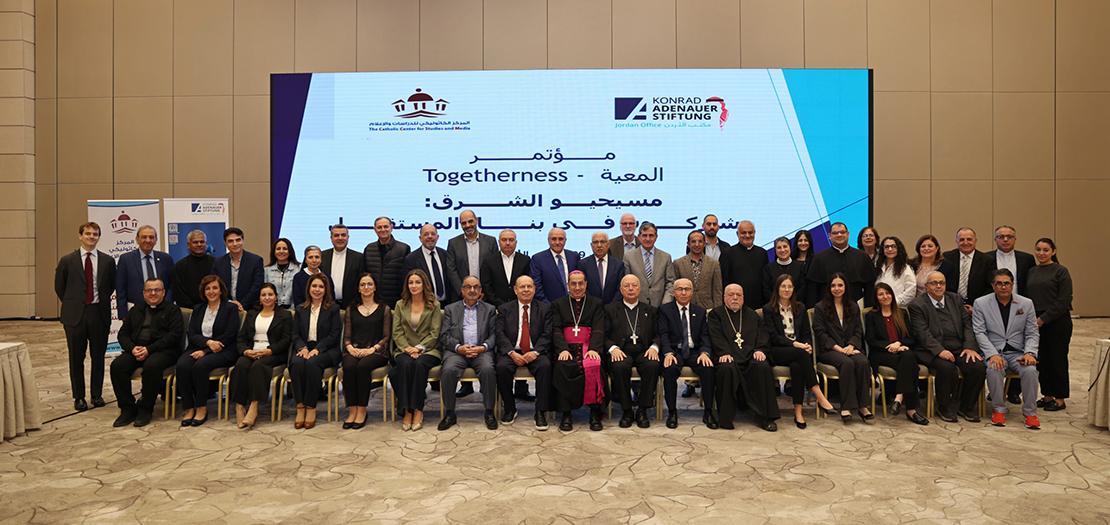
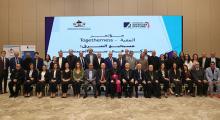
The two-day “Togetherness” conference titled, “Christians of the East as Co-Builders of the Future,” concluded in Amman on Friday, 30 October 2026. The conference organized by the Catholic Center for Studies and Media (CCSM) in cooperation with the German Konrad Adenauer Stiftung, was held at Landmark Hotel, bringing together official, ecclesiastical, academic, and intellectual figures from Jordan, several Middle Eastern countries, and Germany amidst discussions focusing on the importance of the historic partnership between Muslims and Christians, as well as strengthening their shared role in building the future of the region.
The conference provided a platform for dialogue and exchange of expertise relevant to the presence and future of Christians in the Middle East, against the backdrop of the region’s political, economic, and social transformations, as well as the challenges related to conflict, emigration, and demographic changes, while drawing on the concept of “Togetherness,” which highlights the importance of joint action among the different components of society.
The conference, which kicked off on Thursday, 29 October, 2026 under the patronage of Prime Minister Dr. Jafar Hassan and was deputized by Minister of Tourism and Antiquities Dr. Imad Hijazin, included the opening addresses by CCSM Director Fr. Dr. Rif’at Bader, German Ambassador to Jordan Dr. Bertram von Moltke, the Minister of tourism and Antiquities, in addition to an address delivered by Mr. Thomas Rachel, German Federal Government Commissioner for Freedom of Religion or Belief and Member of the German Bundestag.
The opening ceremony featured speeches by Fr. Rif'at Bader, Director General of the Catholic Center for Studies and Media; German Ambassador to Jordan Bertram von Moltke; and the Minister of Tourism and Antiquities. A keynote address was delivered by Thomas Rachel, the German Federal Government Commissioner for Religious Freedom or Belief and a Member of the German Bundestag. The opening session was moderated by Veronika Ertl, Resident Representative of the Konrad Adenauer Foundation in Jordan.
The first day of the conference included three discussion sessions.
The first session titled, “Togetherness Across Denominations: Christian Unity as a Force for the Future,” featured Father Dr. Bassem Al-Rai, professor at the Lebanese University and lecturer at Saint Joseph University in Beirut; Dr. Viola Raheb, program director at Pro Oriente Foundation; and Dr. George Tareef, historian and former lecturer at the University of Jordan. The session was moderated by Mr. Omar Abawi, executive director of Caritas Jordan.
The second session titled, “Together Across Borders: The Christian Diaspora as a Bridge To a Future Transnational Identity,” featured Fr. Dr. Albert Hisham Naoum, director of the Media Office of the Chaldean Patriarchate in Iraq; Professor Dr. Lara Hanna Wakim, National Coordinator in Lebanon for the United Nations Environment Program’s Faith for Earth Coalition and professor at the Holy Spirit University of Kaslik; and Dr. Bernard Sabella, former executive director of the Department of Service to Palestinian Refugees at the Middle East Council of Churches. The session was moderated by Dr. Bader Al-Madhi, assistant professor at the German Jordanian University.
The third session titled, “Togetherness for the Common Good: A New Vision for Christian-Muslim Partnership,” was held with the participation of Gabriel Moushe Gawrieh, member of the Syrian Parliament and head of the Assyrian Democratic Organization; Dr. Wadiaa Khoury, associate professor and researcher at Saint Joseph University and the Lebanese University; and Dr. Jamal Al-Shalabi, professor of political science at Hashemite University. The session was moderated by Dr. Amer Al-Hafi, academic adviser at the Royal Institute for Inter-Faith Studies.
The conference continued on Friday, October 30 , with discussion sessions examining the situation of Christian communities in Jordan, Lebanon, Egypt, Iraq, Syria, and Palestine, as well as the challenges and opportunities associated with Christian participation in public life and their contribution to shaping the future of their societies.
The second day of the conference, namely Friday, October 30, included Latin Patriarchal Vicar in Jordan Bishop Iyad Twal; Dr. Heba Makram Shrobim, member of the Egyptian Senate; and Mr. Habib Afram, advisor to the Lebanese President for Human Rights and president of the Syriac League. The session was moderated by Professor Dr. Abeer Dababneh of the University of Jordan.
Furthermore, the participants included Bishop Hanna Jallouf, Syrian Catholic Titular Bishop and Apostolic Vicar of Aleppo, Syria; Dr. Saad Salloum, Professor of Political Science at Al-Mustansiriya University and Director of the Masarat Foundation for Cultural and Media Development in Iraq; and Dr. Bernard Sabella, from Palestine. The session was moderated by Professor Dr. Amani Ghazi Jarrar, Acting Secretary-General of the Arab Thought Forum.
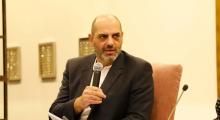
In a statement marking the conclusion of the conference, CCSM Director Fr. Rif'at Bader, said the importance of the gathering lies in moving beyond discussions of the challenges facing Christians in the Middle East towards exploring their active role in building the region's future.
He said that Christians are not merely communities seeking to preserve their presence, but rather an integral part of their societies, and full citizens who are partners in building their homelands alongside their Muslim brethren and all other members of their communities.
Fr. Bader added that the conference provided an opportunity to highlight the concept of moving from a focus on mere survival to active participation, and from an emphasis on protection to the promotion of equal citizenship and shared responsibility through cooperation among churches, activating the role of diaspora communities, empowering young people and women, and developing Christian-Muslim initiatives in education, development, humanitarian work, and serving the common good.
Fr. Bader expressed profound gratitude and appreciation to His Majesty King Abdullah II Ibn Al-Hussein and His Royal Highness Crown Prince Al-Hussein Ibn Abdullah II, and commending the continuous efforts of the Hashemite leadership to entrench national unity, promote interfaith harmony, defend the Christian presence in the Middle East, and safeguard Muslim and Christian holy sites in Jerusalem under the Hashemite Custodianship.
He also thanked Prime Minister Dr. Jafar Hassan for patronizing the conference and Minister of Tourism and Antiquities Dr. Imad Hijazin who deputized for him at opening ceremony, while expressing his pride in Jordan's model of common living, dialogue, and engagement among its diverse religious and cultural components.
He also highlighted Jordan's preparations to commemorate the 2,000th anniversary of the Baptism of Lord Jesus Christ in 2030, in its capacity as an opportunity to showcase the Kingdom's rich Christian heritage, enhance its position as a global Christian pilgrimage destination, and present its experience of interfaith dialogue and harmony to the world.
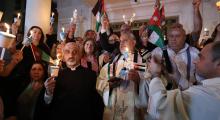
During their interventions, the participants expressed their profound sadness and sorrow over the terrorist attack targeting the Greek Orthodox Church of St. George in the township of Hmoud, Karak Governorate, which claimed the lives of nine Jordanian citizens. They also extended their heartfelt condolences and sympathies to His Majesty King Abdullah II, the families and relatives of the victims, and the Jordanian people as an extended family, while wishing those injured a speedy recovery.
They affirmed their rejection of all forms of terrorism, extremism, and violence, while praising the expressions of solidarity demonstrated by Jordanians Muslims and Christians, which reflected the depth of national unity and the cohesion of the social fabric. They also expressed their appreciation for the Jordan Armed Forces and the security agencies for their efforts in protecting the homeland and its citizens, as well as safeguarding the Kingdom’s security and stability.