Issued by the Catholic Center for Studies and Media - Jordan. Editor-in-chief Fr. Rif'at Bader - موقع أبونا abouna.org

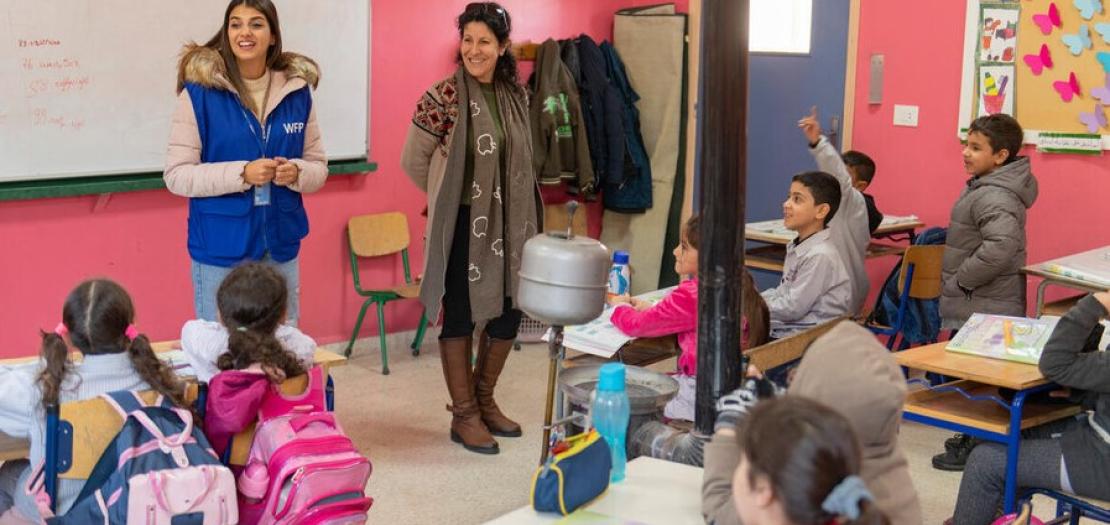
Families in Lebanon cannot be expected to spend what little money they have on school fees when they do not know whether they will be able to feed their children, according to a leading Catholic charity.
Aid to the Church in Need (ACN) is continuing emergency support for Christian schools across Lebanon as conflict, displacement and economic hardship leave thousands of families struggling to afford their children's education.
Marielle Boutros, who coordinates ACN’s projects in Lebanon, said the continuing insecurity is forcing parents to concentrate their limited resources on the most basic necessities.
She said: “We are still in a state of war and nobody knows what is going to happen. If you are a parent, even in a safer area, you are not going to spend the little you have on tuition fees when you can’t be sure if you will have the money to feed your family.”
The warning comes five years after ACN significantly increased its support for Lebanese schools following the collapse of the banking system, when families lost savings and many could no longer afford school fees.
ACN helped prevent Christian schools from closing and currently supports nearly 13,500 pupils and more than 1,000 teachers in around 170 schools in Lebanon.
But Ms. Boutros said circumstances had deteriorated far beyond what she imagined at the beginning of the crisis.
“The situation five years ago was really very bad, and we had little hope for the future. If you’d asked us, we’d say we didn’t know how things might be in a further five years. But we didn’t imagine that it would go this far.”
Successive periods of conflict have caused further displacement and destruction, particularly in southern Lebanon.
Ms. Boutros added: “In 2024 we had displacement and in the South of Lebanon people were not able to pay tuition fees, many of them lost access to their agricultural fields.
“But the 2026 war has been worse because some damages are irreparable. It’s not that people don’t have access to their lands, it’s that there is nothing to go back to.”
The upheaval has also thrown children’s education into uncertainty.
Some schools continued teaching online during the conflict and others have reopened following the ceasefire, but schools in more dangerous areas remain unable to operate normally because of continuing air strikes and displacement is extensive.
Ms. Boutros said: “There are some schools that don’t have any students, because they have all left and are scattered over the country.”
ACN is also helping the Christian schools continue to pay teachers’ wages, amid fears that more could be lost through emigration.
“The teachers have to be paid, in order to maintain their link to the school and avoid losing them, because we don’t have a pool of talented teachers as we did before, due to emigration,” she said.
Christian schools play a particularly important role in Lebanon because many educate children from different religious communities, including Muslims, as well as Christians.
ACN sees keeping the schools functioning not only as a way of protecting children's education but of helping Christian communities remain rooted in the country.
Across Lebanon, Syria and the Holy Land, the charity is currently helping more than 15,000 pupils remain in more than 200 Christian schools, while almost 2,500 teachers receive financial assistance.