Issued by the Catholic Center for Studies and Media - Jordan. Editor-in-chief Fr. Rif'at Bader - موقع أبونا abouna.org

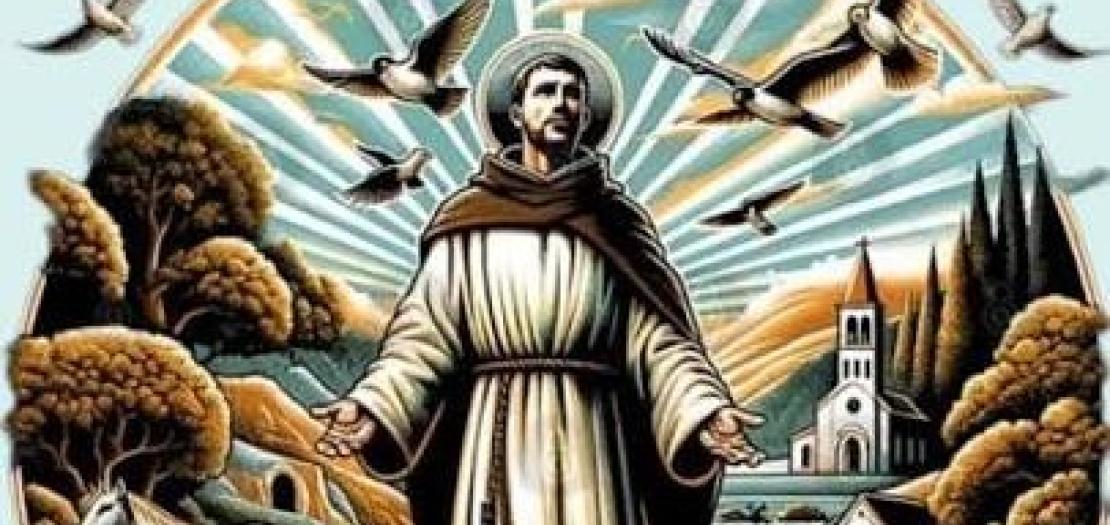
At St. Joseph’s Cathedral in Abu Dhabi, the lights slowly dimmed. Only the sanctuary remained more illuminated, while the church entered into silence. From the back of the church, the Capuchin friars began their procession, all wearing the brown Franciscan habit.
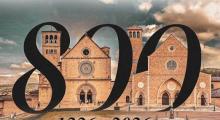
On October 3, 800 years after the death of Saint Francis of Assisi, the Cathedral gathered for the solemn celebration of the Transitus, the commemoration of his passage from this world to heaven, traditionally remembered by the Franciscan family as the “Easter” of Francis. Parishes across the Apostolic Vicariate of Southern Arabia also celebrated the Transitus on this day.
The celebration in the Apostolic Vicariate of Southern Arabia is part of the wider Franciscan Jubilee journey of the universal Church marking the 800th anniversary of the Transitus of St. Francis.
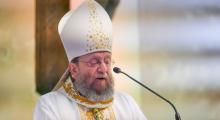
Its particular solemnity was also expressed by the fact that in the Cathedral of Abu Dhabi Bishop Paolo Martinelli presided over the Transitus and the subsequent Mass.
The statue of St. Francis lying in death was carried forward and placed at the foot of the altar. Around it, the torches were set in place, creating a simple but powerful scene of vigil, prayer, and farewell. The whole setting helped the faithful enter into the mystery being celebrated: Francis placing his life completely in the hands of God.
A particularly meaningful gesture was the “washing of the feet,” carried out by the bishop and the friars among one another. It recalled the Gospel that Francis asked to be read at the end of his life, and expressed the heart of the Franciscan vocation: fraternity, humility, service, and love in the footsteps of Christ.
The rite recalled the last hours of the Saint of Assisi, but it did not stop at death. The Transitus itself already expresses the meaning of the passage. Francis’ death is not remembered simply as an end, but as an entrance into the fullness of life in Christ.
The Paschal candle was carried through the church, as the light of the Risen Christ reaching St. Francis. The bells began to ring with joy. The lights of the Cathedral were switched on. The altar candles were lit. The choir sang the Canticle of the Creatures: “Most High, omnipotent, good Lord.” The standing statue of St. Francis was then carried to the sanctuary.
Just after the Transitus, Bishop Paolo presided over the Mass. In his homily, he recalled that Francis became a man of peace through a journey of conversion, allowing Christ to transform his heart. His encounter with the Crucified One changed the way he looked at reality, suffering, poverty, the poor, and death itself. “In those wounds he found the healing of every other wound, the meaning of every suffering, the meaning of life.”
For Francis, death was no longer the final enemy. United and conformed to Christ, he was able to call death “Sister,” because it had become “a passage toward the fullness of life risen in Christ, where every reality is transfigured forever.” This is the legacy he leaves to the Church: to live as joyful children of God, transfigured by the Resurrection, and to walk in fraternity toward the fullness of Life, the fullness of the light of Christ.
The celebration of the 800th anniversary of the Easter of Francis of Assisi invited the faithful to look at life with the eyes of faith and to recognize the presence and action of God in all things. It was also an occasion to thank God for the gift of Francis and for his life according to the Gospel. His passing reminds the Church that every day is an opportunity to begin again, to renew the response to the Lord’s call, and to remember that all are called to holiness.
In the Gulf, where Capuchin Franciscan friars have served the Church since the mid XIX century, this anniversary takes on a particular meaning. The witness of St. Francis continues to call the faithful to be builders of peace, fraternity, dialogue, and Gospel joy.