Issued by the Catholic Center for Studies and Media - Jordan. Editor-in-chief Fr. Rif'at Bader - موقع أبونا abouna.org

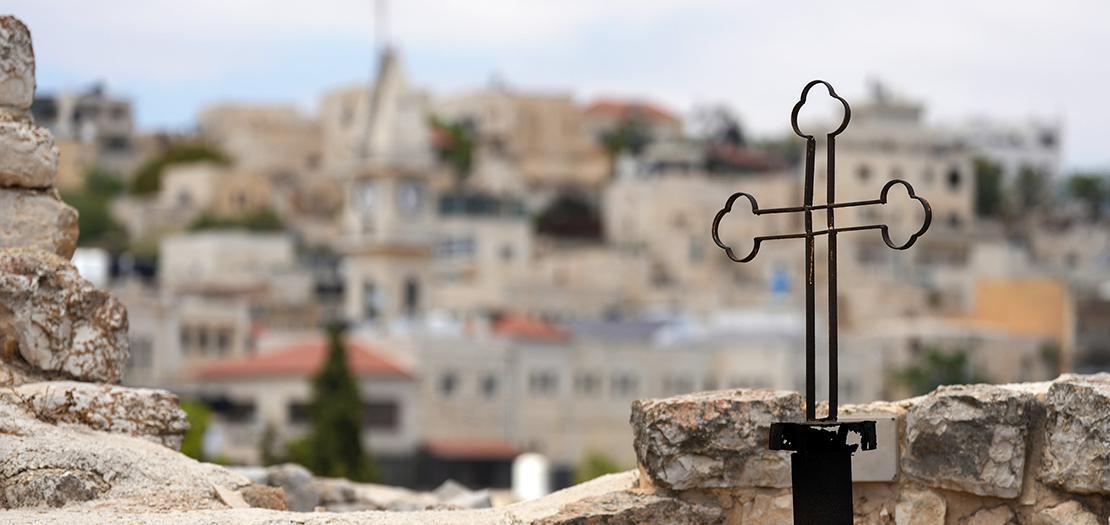
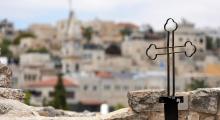
Gonçalo Figueiredo de Barros, the honorary president of the Equestrian Order of the Holy Sepulcher in Portugal has warned against the mounting dangers jeopardizing the future of the Christian presence in the Holy Land, and described the repeated attacks on the town of Taybeh, the last entirely Christian town in the West Bank, as serving as an alarm bell regarding the future of Christians in the land where Christianity was born and from which its message spread to the world.
In an article titled, “The New Betrayal of Christ,” de Barros referred to the attacks, fires, destruction of property, and threats to land that Taybeh is suffering from amidst fear that new Israeli settlement outposts will be established. He noted that the town, historically known as Ephraim, is where Jesus withdrew with his disciples before his Passion, according to the Gospel of John, stressing that its importance is not confined to its churches and historical ruins, but to the families, children, and young people who continue to live there, as well as those who preserve their faith and their roots in their land.
A worrying decline in the number of Christians
De Barros dwelt on the continuous decline in the number of Christians in Palestine over the past decades, citing figures from his article indicating that their percentage dropped from about 11 percent in 1925 to 8 percent in 1950, to 3 percent in 1975,to 2 percent in 2000, and less than 1 percent in 2025. He noted that the decline appears even more noticeable in Bethlehem, where, according to the figures he cited, the Christian share dropped from 86 percent in 1950 to less than 8 percent in 2025.
Pointing out that these figures reflect decades of emigration, conflicts, economic hardships, and insecurity, he warned that the greatest danger is that younger generations come to believe that they have no future in the land of their fathers and forefathers. He also criticized the lack of media and political attention to this issue despite its historical and humanitarian dimensions, stressing that although Christians are a peaceful minority, their presence must neither be ignored nor their suffering be downplayed.
Turning solidarity into practical steps
In this context, de Barros highlighted the importance of the visit paid by Cardinal Pierbattista Pizzaballa, Latin Patriarch of Jerusalem, to Taybeh in August 2026 as well as the message of solidarity and encouragement it extended, urging residents to stand firm and not give in to fear. He referred to the Patriarch’s assurance that the Church will do everything in its power to preserve the Christian presence in the Holy Land, while emphasizing that the Church cannot bear this responsibility alone.
The author referred to the efforts of the Latin Patriarchate in Jerusalem, along with the Custody of the Holy Land, the Franciscan Order, the Knights of the Holy Sepulcher, as well as other Church and humanitarian institutions in supporting Christian communities. He also called for turning this solidarity into practical steps by supporting schools, hospitals, housing and agricultural projects, and small economic enterprises, in addition to providing job opportunities for young people so that they can remain in their land.
He also stressed the importance of pilgrimage to the Holy Land, by not being merely confined to visiting religious and archaeological sites, but rather serving as an opportunity to meet with local Christian communities in addition to supporting them spiritually and economically by praying with them, getting acquainted with the challenges they face, as well as supporting their institutions and businesses, which strengthens their feelings that they are not forgotten.
An international responsibility that transcends statements of condemnation
De Barros affirmed that the international community bears a responsibility that goes beyond issuing statements of condemnation, and this requires directing efforts to create the political, diplomatic, and economic conditions that provide families the opportunity to live in safety, freedom, and dignity with genuine prospects for the future. He considered that preserving the Christian presence does not constitute only a religious or humanitarian issue, but contributes to protecting pluralism, enhancing common living, and building bridges of peace among the region’s various communities.
He emphasized that Christians in the Holy Land are called upon to contribute to building a more pluralistic and balanced society, recalling Cardinal Pizzaballa’s description of them as “salt, light, and leaven.” He also affirmed that defending their presence does not mean siding with one party against another, but rather defending human dignity, pluralism, historical memory, and the possibility of building a shared future.
A Holy Land without Christians... a new betrayal of Christ
Concluding his article, de Barros stressed that the issue of Taybeh goes beyond the town itself and concerns the future of the entire Holy Land. He warned that the disappearance of Christian communities could turn the holy places into mere historical landmarks, after they lose the presence of the believers who have preserved their faith and traditions through generations.
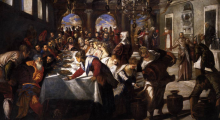
The honorary president of the Knights of the Holy Sepulcher in Portugal concluded his article by saying: “A holy land without Christians may still have churches, grottos, and ancient stones, but it would be a gravely impoverished holy land, in which Christ is betrayed once again, after the betrayal of Judas.”