Issued by the Catholic Center for Studies and Media - Jordan. Editor-in-chief Fr. Rif'at Bader - موقع أبونا abouna.org


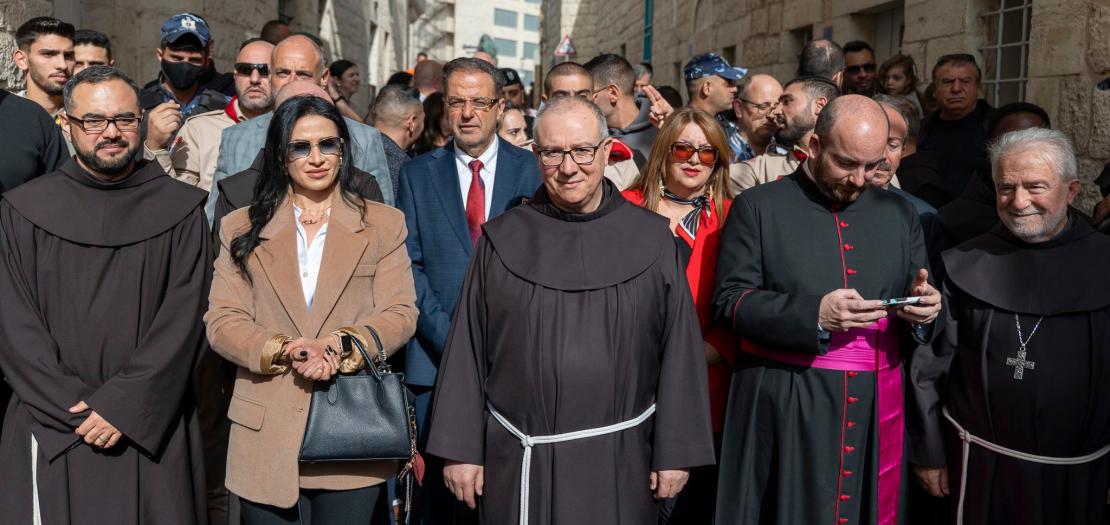


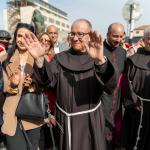

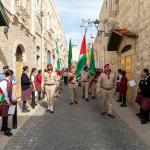
On Saturday 29 November, as tradition dictates, the Custos of the Holy Land made his solemn entrance into Bethlehem for the beginning of Advent.
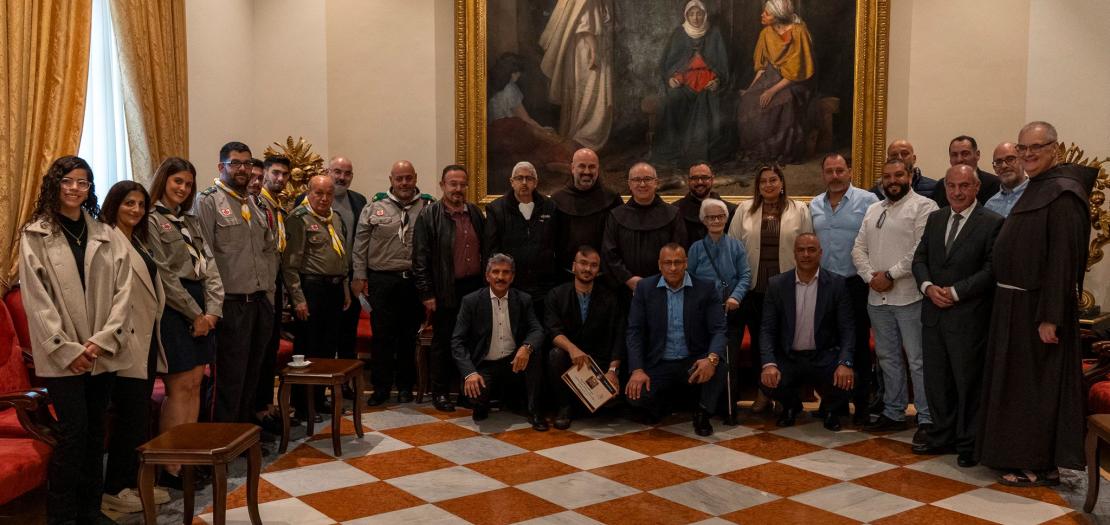
The parish of Jerusalem welcomed the Custos, Fr. Francesco Ielpo, in the parish of Saint Savior, with greetings and expressions of gratitude, before setting off in procession towards the Mar Elias convent.
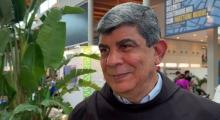
There the Custos greeted the local community and gave a few interviews. The procession then moved towards the Bethlehem checkpoint, through which he enters according to the agreements of the status quo.
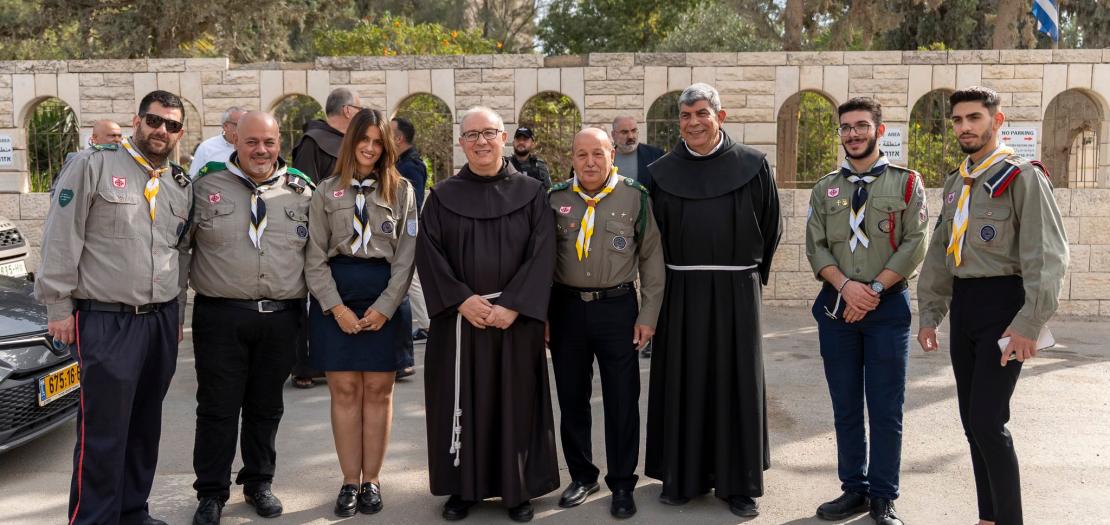
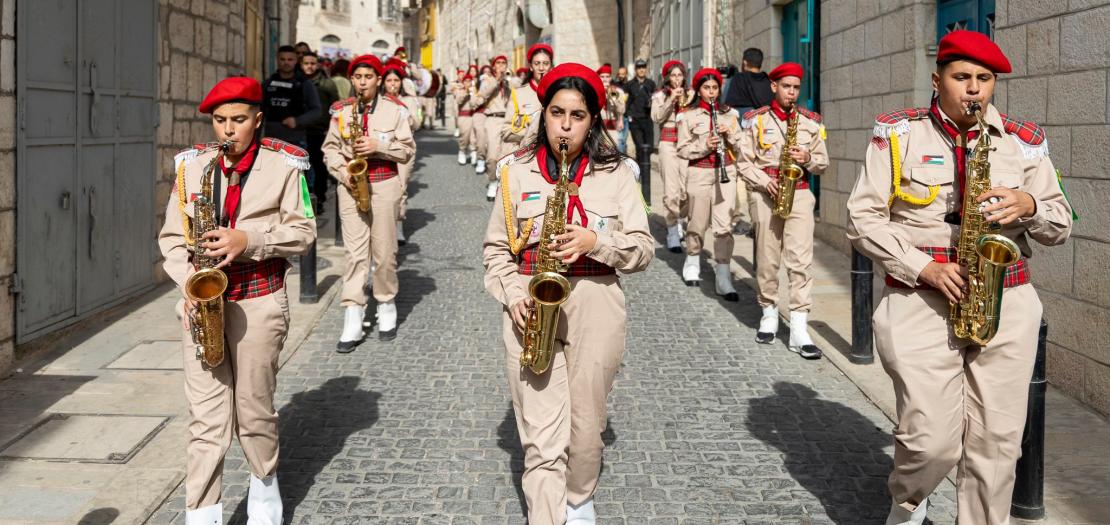
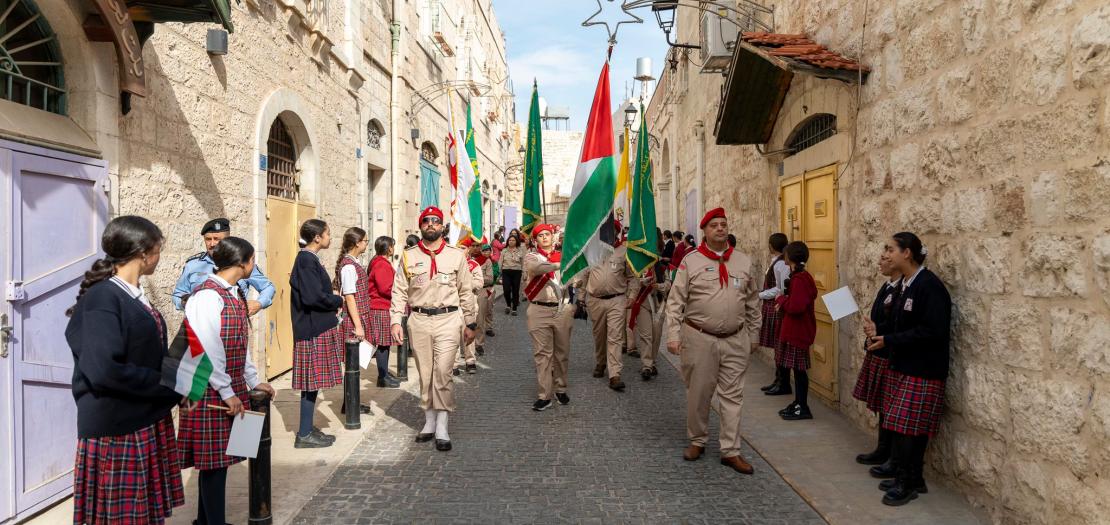
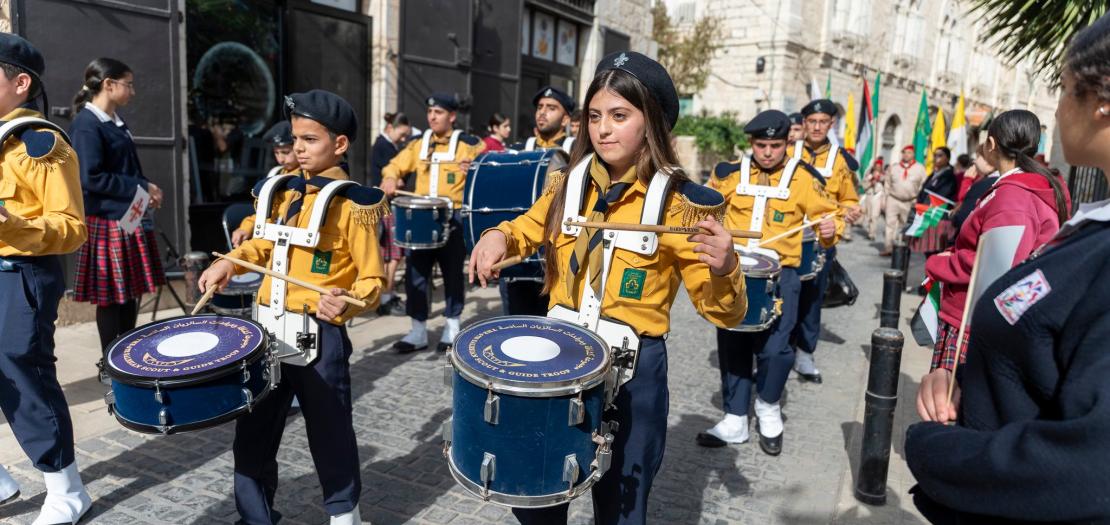
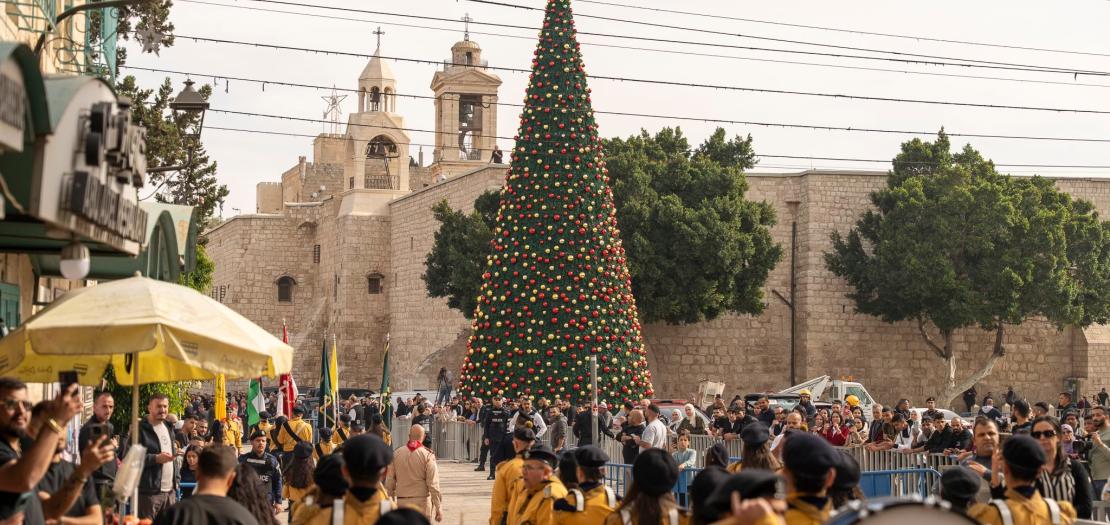
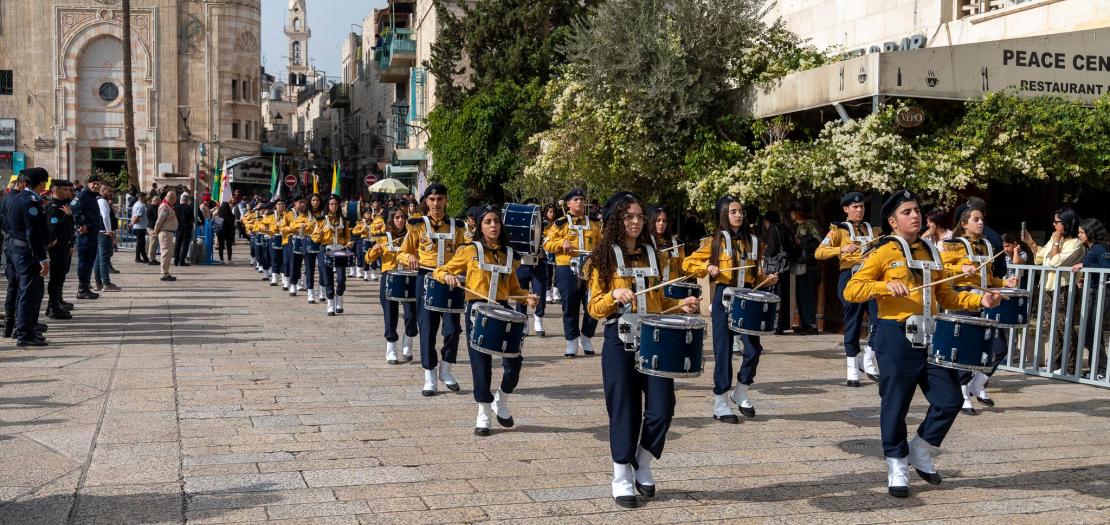
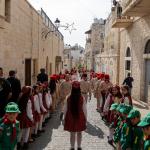
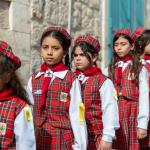
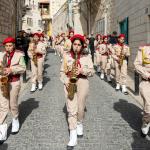
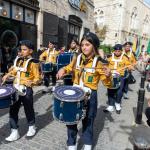
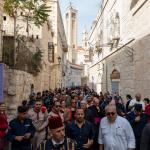
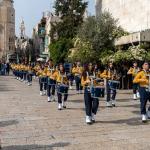
Arriving at the "Catholic Action" center in Bethlehem, the civil authorities and the local community welcomed the Custos and the friars of the Custody of the Holy Land. The scouts then began the procession with their band and accompanied the Custos along Star Street to the Basilica of the Nativity.
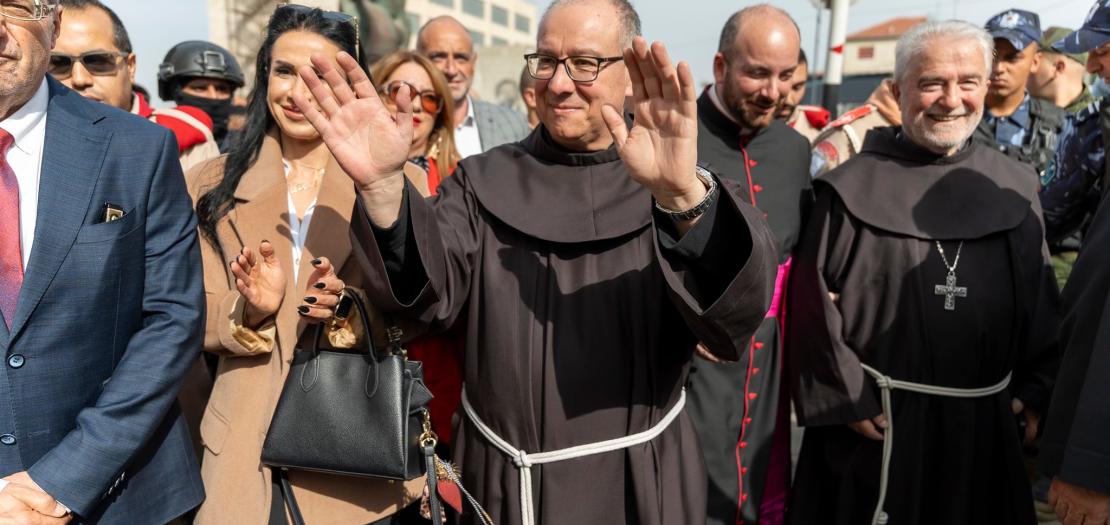
The Custos and the Franciscan friars were accompanied by the scouts’ musical band along the traditional Star Street, where Fr. Ielpo greeted the local community, students and the elderly.
Local civil and religious authorities walked with him, in continuity with the centuries-old tradition that accompanies the Franciscan presence in the Holy Land.
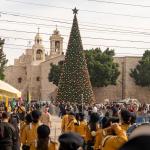
Once in Manger Square, welcomed by the students of the Terra Santa College of Bethlehem as well as by other civil authorities, citizens and local faithful, the Custos entered the Basilica of the Nativity through the door that leads into the Orthodox Basilica, where he was received by the authorities of the Local Orthodox Churches.
He then proceeded, accompanied by the faithful and the friars of the Custody, to the Church of Saint Catherine. There the Custos was welcomed by Fr. Marcelo Cicchinelli, Guardian of the Nativity.
After visitation and the kissing of the Cross, the Custos greeted the community with a message that the parish priest, Fr. Rafael Tayem, translated into Arabic for the parish and the faithful present.
In his message, Fr. Ielpo emphasized how this return represents a "great sign of hope", recalling that God never abandons His children, not even when history seems to move away from our desires for harmony and reconciliation.
In his address, the Custos then stressed that Advent is not a passive waiting but a trusting one, rooted in the certainty that God continues to draw near. Christian waiting is "the certainty that the Lord comes, and always comes to bring light into our nights".
These words resonate in a land that for centuries has alternated between hopes and wounds, and that in this celebration finds once again a moment of unity. Bethlehem, the place of the Incarnation, becomes once more the symbolic center of a story in which, despite everything, God continues to enter.
The reference to the Incarnation is powerful and timely: history, even in suffering, remains God’s story, who in Bethlehem chose to become man and who still today continues to walk alongside humanity. It is precisely this continuity that enables the faithful to look ahead with confidence, aware of God’s fidelity and His presence in the most complex passages of collective life.
The return of the solemn entrance is not only the recovery of a tradition but the announcement of a possible new beginning. At a time when the wounds of war are still open, the celebration becomes a declaration of resilience, a choice of light against the temptation of discouragement.
Thus, Bethlehem becomes not only a place of Christian memory but a living symbol, a universal invitation to hope.
First Vespers: the procession to the Grotto of the Nativity
In the early afternoon, the Franciscan friars prayed First Vespers, presided over by the Custos. The procession then continued to the Grotto of the Nativity, where the Custos incensed the silver star that marks the place where, according to tradition, the Savior was born. He then incensed the Latin altar and the manger, in an atmosphere of silence and recollection, in view of the Advent that we are called to live in the coming weeks.
The Eucharistic celebration for the First Sunday of Advent
On Sunday 30 November, in the Church of Saint Catherine, the Custos celebrated the solemn Mass for the beginning of Advent together with the parish and the local community, who came in great numbers, joyful to welcome the Custos in his first Advent and Christmas in the Holy Land.
In his homily, Fr. Ielpo wished to highlight the meaning of Advent for the Christian communities of the past.
In particular, he explained how Christians lived, and still live, a paradox: Christ had already come, had given everything, yet history did not seem to change. Injustices, violence and fears did not disappear. This is the mystery of the "already and not yet", the idea that something has begun but is not yet fulfilled.
Today this paradox is no less real: we live in a world where technology moves quickly, but many hearts lag behind, where we speak of progress while entire nations are still on their knees, where we rush to build even though "nothing remains stone upon stone" except God’s fidelity.
The invitation of the Gospel, recalled with particular force, could not be more direct: "Watch".
Not a simple distracted looking, but a gaze capable of grasping what escapes the noise of the world.
To watch in order to recognise the signs of a discreet presence. To watch so as not to be enchanted by the ephemeral. To watch in order to remain awake in an age of permanent distraction.
It is a command that today sounds almost countercultural: in a time that wants us fast, hyper-connected and saturated with stimuli, we are asked to slow down, focus our gaze and not let slip what truly matters.
Bethlehem, the city that knows waiting
It is no coincidence that this invitation comes precisely from Bethlehem. The city where, according to tradition, God chose to enter the world without noise, "with small and silent steps", as the Custos recalls. It is a lesson still alive: what truly changes history often begins in the shadows, far from the spotlight, in daily gestures that will never make the headlines.
From Bethlehem also comes the most powerful image: we are all waiting. Waiting for a light that may brighten difficult times. Waiting for a future that does not fear fragility. Waiting for a good that we do not yet see but that may surprise us just when we believe that everything has remained the same.
And from Bethlehem, on this First Sunday of Advent, the final words sound like a universal blessing: to ask for eyes capable of vigilance and a heart capable of waiting.
To receive a peace that is not naive but courageous.
And to discover, once again, that hope can blossom even in the most tried places.