Issued by the Catholic Center for Studies and Media - Jordan. Editor-in-chief Fr. Rif'at Bader - موقع أبونا abouna.org

On the shores of the Sea of Galilee, the setting of numerous Gospel events, the memory of the miracles of Jesus continues to speak to pilgrims of every age. Among these places full of meaning is Tabgha, where tradition places the miracle of the multiplication of the loaves and fishes and the so called Primacy of Peter, the entrustment to the Apostle of the task of guiding the Church.
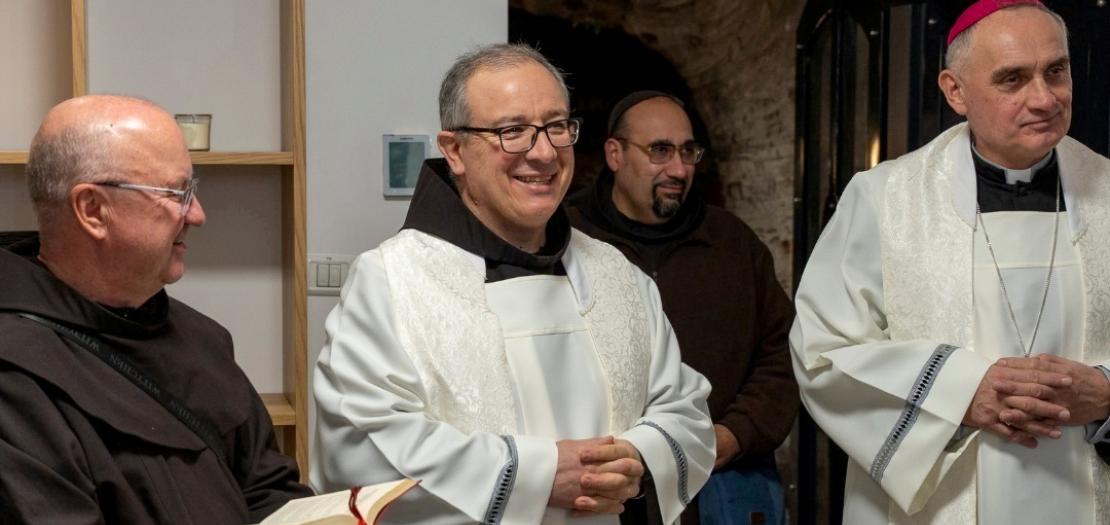
It is precisely here that today the Custos of the Holy Land, Fr. Francesco Ielpo, blessed and inaugurated the renewed Franciscan convent of Tabgha. The renovation works have given new life to the spaces of the fraternity, overlooking the Sea of Galilee, making them more functional and welcoming for the community of friars who here welcome the pilgrims who arrive in prayer.
The fraternity as a sign of the Gospel
In his address of thanksgiving, the Custos underlined how the Franciscan fraternities, placed at the service of the Holy Places, are a concrete sign of the Gospel lived.
“The fundamental question of every vocational search is simple and profound: Where do you live?”, recalled Fr. Ielpo, evoking the question addressed to Jesus in the Gospel. “Jesus does not indicate a geographical place, but opens to a relationship: Come and see, that is, stay with me”.
In this spirit is placed the blessing of the renewed convent: the desire is that the community that will live there may become a sign of where Jesus dwells today, not so much within the walls of a building, but within an authentic fraternal relationship, capable of making Christ present among his own.
“May every pilgrim be able to say: we have been to the house of Jesus, because he met friars who live a true communion”, added the Custos. A blessing that concerns not only the renewed spaces, but above all the fraternity called to animate them.
A restoration between memory, challenges and service
Also in the words of the architect responsible for the works, Dr. Luis Riera, the sense of service to the Custody of the Holy Land, to the Church and to the local community emerged strongly. The restoration of the convent, not without difficulties, presented several challenges.
First of all the conservation challenge: in the convent hall a wall of Byzantine origin was brought to light, thus enhancing the history of the place. Added to these were logistical and legal complexities, linked to respect for the budget and local regulations.
Finally, a more personal challenge: placing oneself at the service of the mission of the Custody, dialoguing with the friars to restore a house that is truly functional and welcoming, respecting the pre existing structures. A work conceived so that those who will live there can truly feel at home and continue, day after day, their mission.