Issued by the Catholic Center for Studies and Media - Jordan. Editor-in-chief Fr. Rif'at Bader - موقع أبونا abouna.org

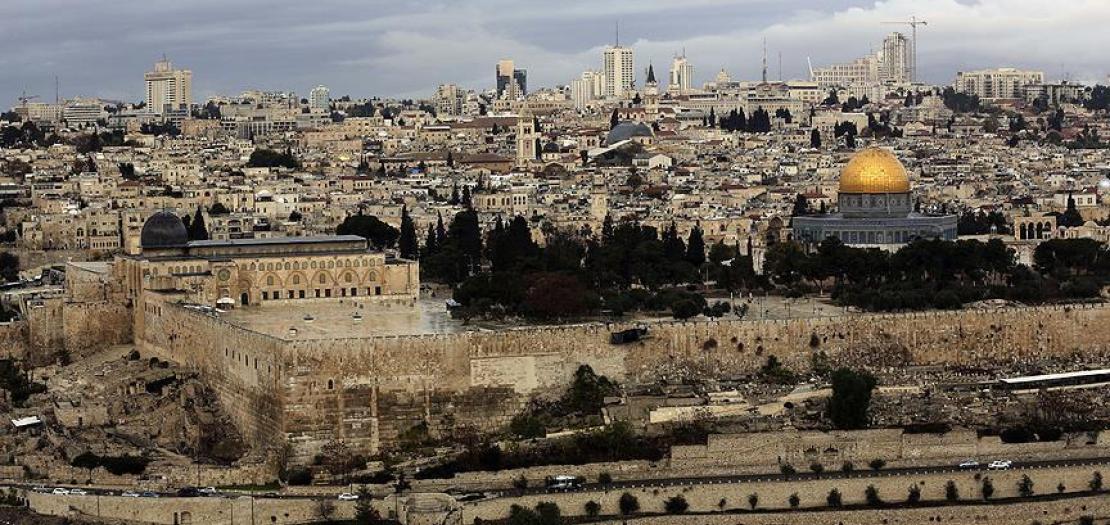
For decades, Jerusalem rested on a fragile balance, sustained not by force but by inherited practices, recognised limits, and a shared ethic of restraint. Today, this balance is unravelling. Faith is increasingly mobilised as a political instrument, sacred space has become a site of confrontation, and profound transformations of the city are taking place with little legal or political restraint.
Historically, the stability of the city did not rely on the assertion of exclusive authority. Rather, it reflected an understanding of Jerusalem as a sensitive space, where preserving peace required respect for established practices, religious rhythms, and historical responsibilities. That is what came to be known as the Status Quo. Sometimes tacit and often imperfect, this understanding was nonetheless broadly recognised by all the communities concerned.
The weeks leading up to Ramadan are no longer marked solely by anticipation. They are increasingly preceded by anxiety, confrontation, and fear. What should be a period of inward reflection, family gathering, and tranquillity has become associated with escalation, provocation, and violence. This shift should trouble us all, not only Muslims, but anyone concerned with the integrity of Jerusalem, the sanctity of religious occasions, and the preservation of shared space. Jerusalem is first and foremost a moral imperative, one that subsumes any security issue that may arise.
For Muslims, Ramadan is a time of discipline and virtuous conduct, lived and practised both collectively and privately. When observed at Al Aqsa Mosque, its meaning is intensified. Sacred space, temporal sanctity, and religious obligations converge. The month cannot be separated from the place. Any disruption at Al Aqsa carries significance far beyond the city itself, resonating with Muslims around the world.
Yet what should be a period of calm and solemnity has increasingly been defined by tension. Worshippers approach prayer with caution rather than ease, and entry into the sanctuary is managed through control rather than care. The well-established provisions of the Status Quo that govern behavior at the site are steadily being eroded. Over time, these pressures have threatened both the sanctity of Ramadan and the dignity of the space in which it is observed.
Jerusalem has undergone a similar transformation. Once sustained by shared understandings, the city is now shaped by borders. Some are visible, in checkpoints, barriers, and security infrastructure that divide space and movement. Others are less visible, but no less consequential. They appear in administrative controls, discriminated access, and the constant fragmentation of identity and belonging. Together, they conspire to create cognitive borders, which delineate certain areas for Israelis, and others for Palestinians, leaving few spaces where all can meet on equal terms, with freedom and dignity. In this way, Jerusalem is gradually stripped of its character as a city shared by all.
History reminds us that another approach is possible. For much of Jerusalem’s history, it was treated as a sacred trust governed as a responsibility rather than claimed as a possession. The Status Quo recognizes the complexities of the city, building understanding among religious communities through established rules, historical practice, and legal arrangements designed to preserve dignity, protect worship, and manage holy sites. It was never intended to privilege one faith community over another, but to ensure that no single group could impose its will on a place that is revered by many. The strength and legitimacy of the Status Quo lay in trust, continuity, and respect, protecting sacred space from triumphalism, provocation, and desecration.
This understanding has long defined the Hashemite custodianship of the Muslim and Christian holy sites. Custodianship is expressed through service, through the protection of access, dignity, and continuity. It is a trust held on behalf of others, shared in responsibility, and safeguarded from political agendas and displays of zealotry. Jordan’s Custodianship sustains a Jerusalem that speaks in its multiple voices, where all its residents and communities are equal stakeholders.
Ramadan should not serve as a test of containment or restraint. It should be a time of conscience. The means to restore calm and affinity are neither abstract nor impossible. They include respect for established rules of decorum, the prevention of provocation, and zero tolerance for nationalistic triumphalism. Specifically, it honours a core provision whereby “Muslims worship, non-Muslims visit” the sacred esplanade of Al Aqsa. These measures have worked in the past when applied consistently and early, rather than reactively.
The sacred sites of Jerusalem should not be approached as flashpoints to be managed, but as places of reflection and sanctity. Jerusalem, finally, should not be framed as a problem to be solved, but honoured as a moral responsibility shared by all.